Commercial Security Fencing in Torbay: A Complete Guide for Devon Businesses
If you run a business anywhere in Torbay or the surrounding Devon area, you will already know that protecting your premises is not something you can afford to cut corners on. Whether you operate from an industrial unit on a Newton Abbot trading estate, a retail unit near Torquay harbour, or a storage yard down in Brixham, the fencing around your property is your first line of defence against theft, vandalism, and trespass.
We have been fitting commercial security fencing across Torquay, Paignton, Brixham, Newton Abbot, Totnes, and Kingsbridge for years, and in that time we have seen firsthand what works and what does not. This guide pulls together everything we have learned so you can make an informed decision about the right security fencing for your business.
Why Commercial Premises in Torbay Need Proper Security Fencing
Torbay is a beautiful part of the world, and we would not want to live anywhere else. But like any coastal area with a mix of residential, commercial, and tourist activity, it has its share of crime. Businesses in Torbay face particular challenges that make security fencing essential rather than optional.
The seasonal nature of the local economy plays a role. During the summer months, the population of Torbay swells dramatically as tourists flock to Torquay harbour, Paignton seafront, and Brixham's famous fishing port. With increased foot traffic comes increased opportunity for opportunistic crime. Commercial premises near tourist hotspots can be vulnerable, particularly at night when the crowds have gone home.
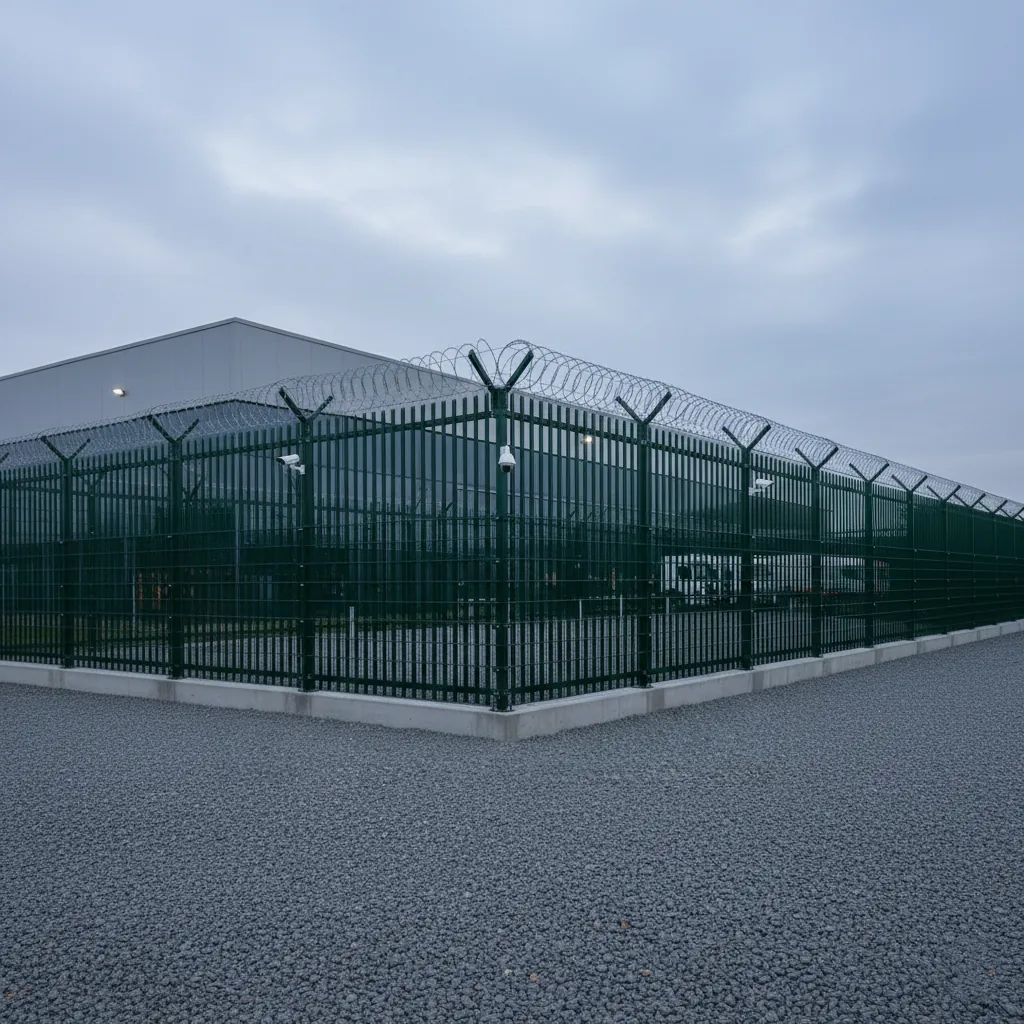
Then there is the geography. Many commercial and industrial sites in Torbay are located on the outskirts of the main towns, in trading estates and business parks that are quieter after hours. The industrial estates around Newton Abbot, for example, can be relatively isolated in the evenings and weekends. A solid security perimeter is what stands between your assets and someone who fancies their chances after dark.
We have worked with businesses who came to us only after a break-in or incident of vandalism, and the story is always the same: they wish they had sorted the fencing sooner. The cost of a decent security fence is a fraction of what a single theft or serious vandalism incident can cost you, and that is before you factor in the increase in insurance premiums that often follows a claim.
Types of Commercial Security Fencing
Not all security fencing is the same, and the right choice depends on your premises, your budget, and the level of risk you are dealing with. Here are the main options we fit for commercial clients across Torbay and Devon.
Palisade Fencing
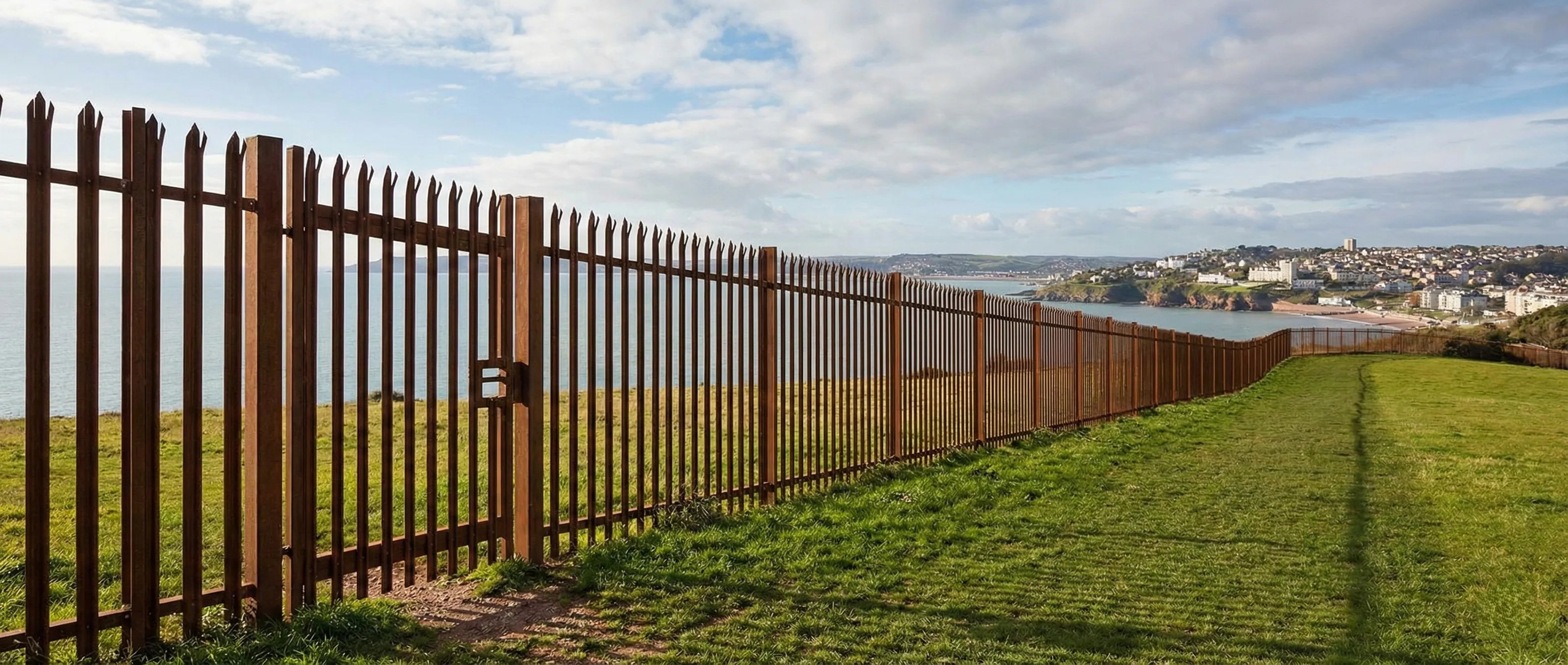
Palisade fencing is the fencing most people picture when they think of commercial security. It is the steel fence with the vertical pales and the distinctive "W" or "D" shaped cross-section, usually topped with pale tops that make it extremely difficult and painful to climb over.
It is popular for good reason. Palisade fencing is genuinely intimidating to look at, and that visual deterrent value should not be underestimated. Most opportunistic criminals will take one look at a properly installed palisade fence and move on to an easier target. The pale tops come in different styles, from relatively tame rounded tops to more aggressive triple-pointed tops for higher security sites.
Palisade is also physically very difficult to climb. The pales are spaced so that you cannot get a decent foothold, and the cross-rails make it hard to get a grip. It is robust enough to resist cutting with hand tools, and the steel construction means it will last for decades with minimal maintenance.
We install a lot of palisade fencing on industrial estates around Newton Abbot, particularly near the racecourse area where there are several trading estates with a mix of manufacturing, storage, and distribution businesses. It is also a common choice for construction sites across Torbay where the fence needs to be secure but also temporary, as palisade panels can be taken down and re-erected as the site progresses.
Mesh Fencing
Mesh fencing is the other major option for commercial security, and it has some distinct advantages over palisade. It tends to look neater and more modern, which makes it a good choice for businesses where appearance matters as well as security.
There are several types of mesh fencing, but the two most common for commercial applications are V-mesh and 358 anti-climb mesh.
V-mesh fencing, sometimes called V-profile mesh, has a folded profile that gives the panels extra rigidity. It is a good all-round security fence that looks smart and provides a decent level of security for most commercial applications. You will see it around business parks in Torquay and retail units in Paignton where the client wants security without the industrial look of palisade.
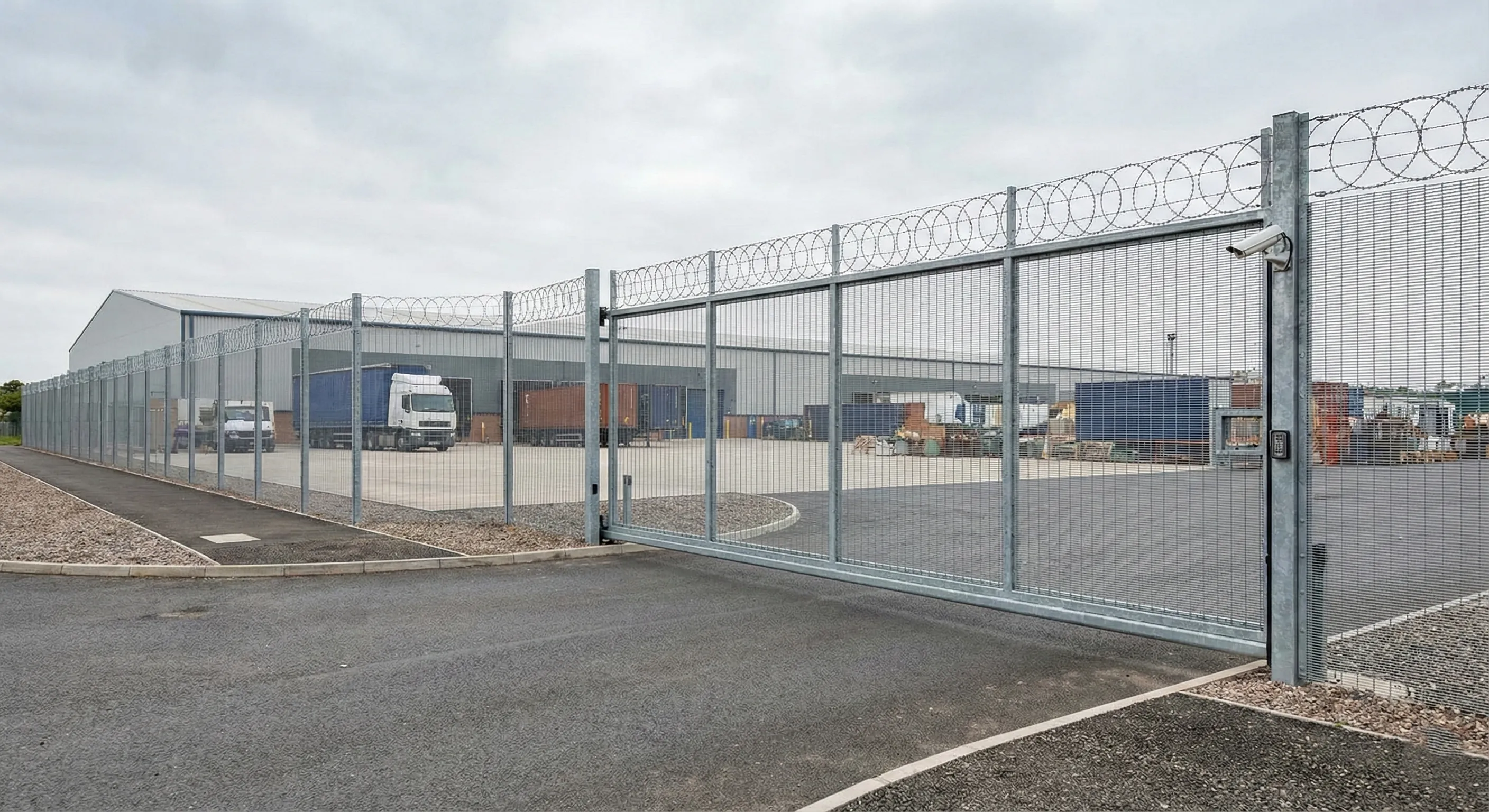
358 mesh, also known as anti-climb mesh or prison mesh, is a higher security option. The mesh is made up of very small apertures, typically around 76mm by 12.5mm, which are too small to get fingers through for climbing and too small to pass cutting tools through from the outside. It is extremely difficult to climb and very hard to cut, making it the preferred choice for high-security sites.
The other advantage of mesh fencing is visibility. Unlike palisade, which can create blind spots, mesh fencing allows you to see through it. This means CCTV cameras can cover the full perimeter, and staff or security personnel can see what is happening on the other side of the fence. For sites where surveillance is part of the security setup, mesh is often the better choice.
Anti-Climb Fencing Variations
Anti-climb fencing deserves its own mention because it is not so much a type of fencing as a category that includes several different products. The 358 mesh we mentioned above is one example, but anti-climb features can be added to other types of fencing as well.
For palisade fencing, the pale profile itself is an anti-climb feature, and you can add rotating barriers or spiked toppings to make climbing even more difficult. For mesh fencing, the small aperture size is the anti-climb feature. There are also dedicated anti-climb systems like rotating spike barriers that can be fitted to the top of existing walls or fences.
The key thing to understand about anti-climb fencing is that it is designed to make climbing physically very difficult, time-consuming, and painful. The longer it takes someone to get over your fence, the more likely they are to be spotted, caught on camera, or simply give up and go elsewhere.
Security Ratings Explained: LPS 1175, SR1, SR2, and SR3
If you have been researching commercial security fencing, you have probably come across terms like LPS 1175, SR1, SR2, and SR3. These are security ratings, and they tell you how much resistance a fence can offer against a determined attack. Understanding them is important because your insurance company may specify a particular rating, and you want to make sure you are getting what you need.
LPS 1175 is a standard published by BRE Global (the Building Research Establishment) that tests physical security products against different levels of attack. The ratings are broken down into Security Ratings (SR1 through SR5), with each rating specifying the tools and time an attacker is given to try to breach the fence.
SR1 is the entry level for tested security fencing. It is designed to resist opportunistic attacks using basic hand tools like pliers, screwdrivers, and small hacksaws. SR1 fencing is suitable for lower-risk commercial premises where the main concern is deterring casual trespass and opportunistic theft.
SR2 is a step up and is designed to resist attacks with a wider range of hand tools, including bolt cutters and heavier cutting tools. This is the rating most commonly specified by insurers for commercial premises with moderate risk, such as retail units, standard industrial units, and storage compounds.
SR3 is for higher-risk sites and is designed to resist more determined attacks with a broader range of tools and more time. SR3 fencing is typically specified for sites holding high-value goods, critical infrastructure, or premises with a documented history of security incidents.
If you are not sure which rating you need, we can help you work through it. We will look at what you are protecting, where your premises are located, what your insurer requires, and what your risk profile looks like. You can read more about our security fencing services for a broader overview.
Choosing the Right Fencing for Different Commercial Premises
Different types of business have different security needs. Here is how we approach fencing for some of the most common commercial premises we work with across Torbay and Devon.
Industrial Units on Newton Abbot Trading Estates
Newton Abbot has several industrial estates and trading estates, including those around the racecourse area and along the A381 corridor. These estates are home to manufacturing businesses, distribution companies, and tradespeople who often have valuable equipment, materials, and vehicles on site.
For these premises, palisade fencing is usually our recommendation. It provides a strong physical barrier, it is visually intimidating, and it stands up well to the knocks and bumps that happen in a working industrial environment. We typically recommend 2.4m or 3m height with triple-pointed pale tops for industrial units, combined with matching steel gates for vehicle access.
Retail Units in Torquay
Retail premises in and around Torquay, including those near the town centre and harbour commercial areas, have a different set of requirements. Security is important, but so is appearance. A retail business does not want its premises to look like a prison.
For retail units, V-mesh fencing is often the best choice. It provides a good level of security, it looks clean and professional, and it allows visibility into and out of the site. If the retail unit is in a higher-risk area or stocks high-value goods, we might recommend upgrading to 358 anti-climb mesh.
Storage Yards
Storage yards, whether they are holding building materials, vehicles, or equipment, are a prime target for theft. We work with a number of businesses across Paignton and Torbay who use storage yards as part of their operations.
For storage yards, the fencing needs to be tall, secure, and difficult to climb. Palisade or 358 mesh are both good options, and we often recommend adding a barbed wire or razor wire topping for yards holding particularly valuable goods. Gates need to be equally robust, with proper locking mechanisms and, where appropriate, access control.
Construction Sites
Construction sites are temporary, but they often hold tens or hundreds of thousands of pounds worth of equipment and materials. We fit temporary security fencing on construction sites across Torbay, Newton Abbot, and the surrounding areas.
For construction sites, palisade fencing is the standard choice. It is robust enough to survive the duration of the project, it can be moved and re-erected as the site changes, and it provides a clear visual deterrent. We also fit site hoarding where a more solid barrier is required, particularly for sites near residential areas where dust and noise control are considerations.
Brixham Fishing Industry Premises
Brixham has one of the busiest fishing ports in the UK, and the businesses operating around the harbour and the surrounding industrial areas have specific security needs. Fishing gear, equipment, and landed catch all have significant value, and the harbour area is busy and accessible.
For premises around Brixham harbour and the associated commercial areas, we typically recommend a combination of palisade or mesh fencing with secure gates. The marine environment means we pay particular attention to the finish and coating of the steel to ensure it stands up to salt air, and we often recommend polyester powder-coated fencing for these locations.
Height Considerations for Commercial Fencing
Fence height matters more than many people realise. A fence that is too low is not much of a deterrent, while a fence that is too high may run into planning issues or create problems with neighbours.
For most commercial applications, we recommend a fence height of between 2.4m and 3m. This is tall enough to be a serious deterrent to climbing while remaining within the bounds of what is generally acceptable for commercial premises.
Going below 2m is rarely advisable for commercial security, as it is simply too easy to climb over. Going above 3m is possible but may require planning permission, particularly if the fence is adjacent to a highway or residential property. We can advise on this based on your specific location and circumstances.
The height of gates should match the height of the fencing. A 3m fence with a 2m gate is a weak point that an intruder will exploit. We always match gate height to fence height and ensure the gates are as robust as the fencing itself.
Gates and Access Control
A fence is only as secure as its weakest point, and for many commercial sites, that weak point is the gates. We have seen plenty of sites with excellent perimeter fencing and a gate that would not keep out a determined teenager.
Gates need to be specified to the same security standard as the fencing. For palisade fencing, that means steel palisade gates with heavy-duty hinges and locks. For mesh fencing, it means mesh gates with the same mesh specification as the panels.
Access control is the other piece of the puzzle. Depending on your premises, you might need:
- Manual gates with padlocks - the simplest option, suitable for smaller sites with few users
- Keypad or combination locks - better for sites with multiple users, as you can change the code if needed
- Key fob or card access systems - good for larger sites where you need to track who is coming and going
- Automated gates with intercom or remote access - the most convenient option, particularly for vehicle access, and can be integrated with CCTV
We work with trusted access control partners to provide integrated solutions where needed, so your gates, fencing, and security systems all work together as one system.
Insurance Requirements and Reducing Premiums
Your insurance company cares about your security fencing, and they should. A proper security fence reduces the risk of theft and vandalism, which reduces the likelihood of a claim. Many insurers will specify minimum security requirements for commercial policies, particularly for businesses holding stock, equipment, or materials of significant value.
If your insurer specifies a particular security rating (such as SR2 or SR3), it is important that your fencing meets that standard. We can provide certification for rated fencing systems to satisfy insurer requirements.
Even where your insurer does not specify a particular standard, upgrading your security fencing can sometimes reduce your premiums. It is always worth speaking to your insurer before you have fencing installed to find out what they require and whether improved security would qualify you for a better rate. We are happy to provide specifications and quotes that you can pass on to your insurance company.
Maintenance of Commercial Security Fencing
One of the good things about steel security fencing is that it requires relatively little maintenance, but "relatively little" is not the same as "none". A bit of ongoing care will keep your fence performing and looking good for years longer.
Here is what we recommend:
- Annual visual inspection - walk the perimeter and check for damage, loose fittings, signs of attempted intrusion, and any corrosion starting to show through the coating
- Check gates and hinges - gates get more wear and tear than the fencing itself, so check that hinges are operating smoothly, locks are working properly, and the gate is not sagging
- Touch up any coating damage - if the galvanising or powder coating gets scratched or chipped, treat the area with a suitable zinc-rich paint to prevent rust taking hold
- Keep vegetation clear - climbing plants and brambles can damage fencing over time and provide cover for intruders, so keep vegetation trimmed back
- Address damage promptly - if a fence panel gets damaged by a vehicle or by attempted intrusion, get it repaired or replaced quickly so you do not have a weak point in your perimeter
We offer maintenance contracts for commercial clients who would rather have us handle this on a scheduled basis, and we are always happy to come out and assess damage if you have had an incident.
Planning Considerations for Commercial Fencing
Planning permission is something that catches a few businesses out. In general, commercial fencing does not always require planning permission, but there are circumstances where it does.
You will likely need planning permission if:
- The fence will be over 2m high adjacent to a highway
- The fence will be over 2.4m high in other locations (though this can vary by local authority)
- Your premises is in a conservation area or Area of Outstanding Natural Beauty (parts of Torbay and the South Hams fall into these categories)
- The fencing would affect visibility for highway users
- Your premises is a listed building or within the curtilage of a listed building
Torbay Council and the surrounding local authorities have their own policies, and if you are in a conservation area near Torquay harbour or in the South Devon AONB around Totnes and Kingsbridge, there may be restrictions on the type and appearance of fencing you can install.
We can advise on planning considerations as part of our site survey, and we have experience working within the constraints that apply in different parts of Torbay and Devon. If planning permission is needed, we can help you understand what is likely to be acceptable.
Cost Factors and Return on Investment
Let us talk about money, because we know that is what matters to most business owners reading this.
The cost of commercial security fencing depends on several factors:
- The type of fencing - palisade is generally the most cost-effective for high security, while 358 mesh is more expensive but offers higher security and a better appearance
- The height of the fencing - taller fencing costs more in materials and sometimes in installation
- The length of the perimeter - straightforward, but worth noting that longer runs can sometimes bring the per-metre cost down
- Ground conditions - if we are fencing across difficult ground, existing concrete, or sloping terrain, installation takes longer and costs more
- Gates and access control - gates are priced separately and can range from a few hundred pounds for a simple manual gate to several thousand for automated gates with access control
- Security rating - higher rated systems cost more because the materials and construction are more robust
As a rough guide, you should expect commercial security fencing to cost from around £40 to £100+ per metre installed, depending on the factors above. Gates are additional.
Now for the return on investment. We always frame it like this: what would a single break-in cost your business? If you have £50,000 worth of equipment in your unit and someone gets in and takes half of it, that is £25,000 gone, plus the cost of downtime, plus the excess on your insurance, plus the likely premium increase at renewal. A security fence that costs £5,000 to £10,000 starts looking like very good value indeed.
And that is before you consider the less tangible costs. The disruption to your business, the stress on you and your staff, the time spent dealing with police and insurers, and the loss of confidence that comes from knowing your premises has been breached. Prevention is always cheaper than dealing with the aftermath.
Local Knowledge Matters
We are a local company, and we believe that matters. We know the commercial areas of Torbay and the surrounding towns because we work in them every week. We know which industrial estates in Newton Abbot tend to have issues with fly-tipping and trespass. We know the particular challenges of securing premises near Brixham harbour in a marine environment. We know which parts of Torquay and Paignton are in conservation areas where fencing choice is restricted.
When we come out to do a site survey, we are not just measuring up. We are looking at the specific risks and conditions of your location, and we are drawing on years of experience fitting fencing for businesses just like yours across the area. That local knowledge means we can recommend the right solution for your premises rather than a one-size-fits-all answer.
Summary
Commercial security fencing is not a luxury, it is a practical investment in protecting your business. Whether you need palisade fencing for an industrial unit on a Newton Abbot trading estate, mesh fencing for a retail unit in Torquay, or a full perimeter security system for a storage yard in Paignton, the key is choosing the right product for your specific needs and having it installed properly.
If you are thinking about new fencing or upgrading your existing perimeter, we would be happy to come out, have a look at your premises, and talk through the options. There is no pressure and no obligation, just straightforward advice from people who do this every day.
Related services: Security Fencing | Palisade Fencing | Commercial Security Fencing
Give Joe a call on 01803 494348 or visit our contact page to book a site survey. We cover Torquay, Paignton, Brixham, Torbay, Newton Abbot, Totnes, Kingsbridge, and the surrounding areas.