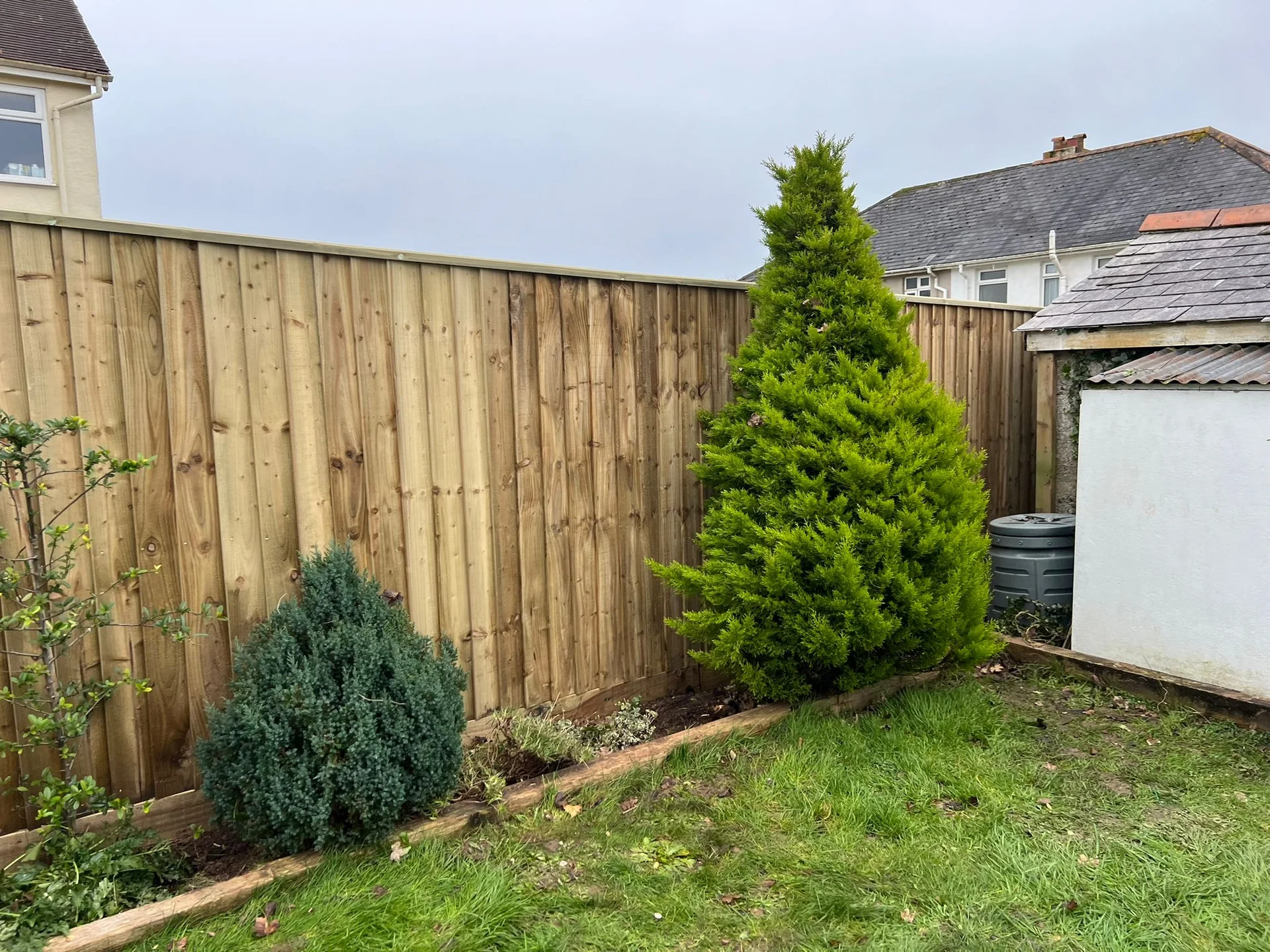
Why Storm-Proofing Your Fence Matters in South Devon
If you have lived in Torbay for any length of time, you will know that the weather here has a habit of turning quickly. One minute you are enjoying a crisp autumn walk along Torquay Harbour, the next the wind is howling in off the English Channel and your garden fence is taking a battering. We have spent years installing and repairing fences across Torquay, Paignton, Brixham and the wider South Devon area, and if there is one thing we have learned, it is that a little preparation before the storm season can save you a fortune in repairs afterwards.
November is the month when the weather really starts to bite. The named storms start rolling in from the Atlantic, and properties along the Torquay seafront, the exposed slopes above Babbacombe Bay, and the open stretches near Berry Head in Brixham feel the full force of the coastal winds. Inland areas like Newton Abbot and Totnes might not get the salt-laden gales, but they still catch plenty of wind, especially on the higher ground.
This guide walks you through everything we recommend doing to storm-proof your fence before the worst of the winter weather arrives. Some of it you can do yourself over a weekend, and some of it is best left to a professional. We will be honest about which is which.
Understanding Wind Loading: Why Your Fence Acts Like a Sail
Before we get into the practical steps, it helps to understand why fences fail in storms. The concept you need to know about is wind loading.
Wind loading is the force that wind exerts on a solid surface. A fence panel, especially a closeboard or waney lap panel, is essentially a flat sheet of wood. When the wind blows against it, the panel catches that wind and the force is transferred to the posts and the fixings. The taller and wider the panel, the more wind it catches. This is why a 6-foot panel fence is far more vulnerable in a storm than a 3-foot picket fence.
We often see this play out in real life. Properties along the Paignton seafront, where there is nothing between the garden and the beach to slow the wind down, take an enormous amount of force on their boundary fences. The same is true for homes on the exposed headland near Berry Head, where the wind comes straight off the Channel. Up in Babbacombe, the cliffs create their own wind patterns, and fences on the seaward side can struggle.
The key insight is this: a fence does not fail because the wood is weak. It fails because the entire structure is catching more wind than the posts and fixings can handle. Storm-proofing is about reducing that catch, strengthening the anchors, and making sure every component is working together.
How to Check If Your Fence Panels Are Loose
The first thing we recommend is a thorough inspection of your existing fence. You are looking for movement, damage, and weakness. Do this before the storms arrive, not after.
The Push Test
This is simple but effective. Walk along your fence line and give each panel a firm push at chest height. A solid, well-fixed panel should barely move. If you can feel the panel rocking, flexing, or shifting in its frame, that is a warning sign. A panel that moves in a gentle breeze will move a lot more in a 60 mph gust.
Pay particular attention to the panels at the ends of a run. These end panels take more strain because they are supported on only one side by a post. The other side is either a corner or a free end, and that makes them the most vulnerable to wind.
Check the Gravel Boards
Gravel boards sit at the bottom of the fence, between the ground and the panels. They are there to keep the panel off the soil and prevent rot, but they also add structural rigidity. If a gravel board is cracked, rotting, or loose, the panel above it loses support. Check that each gravel board is securely fixed and not bowing in the middle.
Look for Gaps Around the Posts
Where a panel meets a post, there should be a snug fit. Over time, wood shrinks, nails work loose, and gaps open up. If you can see daylight between the panel edge and the post, the panel is not properly supported on that side. In a storm, the wind will work the panel back and forth in that gap until either the panel cracks or the fixings pull out.
Replacing Nails With Galvanised Screws
This is one of the most effective and affordable upgrades you can make to an existing fence, and we recommend it to almost every homeowner we visit in Torbay.
Most mass-produced fence panels are assembled with galvanised ring-shank nails or, in cheaper panels, plain steel nails. Nails are fine when the fence is new and the wood is tight, but after a few years of seasonal expansion and contraction, nails start to work loose. The wood around them softens, and the nail holes enlarge. In a storm, a loose nail is almost useless.
Screws grip differently. A screw has a threaded shaft that bites into the wood, and it holds its grip far better than a nail over time. We recommend replacing the key fixings on your fence with galvanised decking screws, which are designed for outdoor use and will not rust.
Which Fixings to Upgrade
Focus on the fixings that hold the panel to the post. These are the ones that take the most strain in a storm. If your panels are held in place with nails driven through the panel frame into the post, remove those nails and replace them with 60mm or 75mm galvanised screws. Two screws per side, top and bottom, is usually sufficient.
If you have arris rails (the horizontal rails that run across the back of a closeboard fence), check the fixings where the rail meets the post. These are critical. A loose arris rail means the entire panel has no structural support.

Use the Right Screws
Do not use indoor screws. Do not use drywall screws. They will rust within a season and the heads will strip when you try to drive them. You want exterior-grade, galvanised or coated decking screws. If you want the best possible longevity, stainless steel screws are even better, though they cost more. Given what a new fence panel costs, the price difference is worth it.
Checking and Reinforcing Post Concrete Bases
The posts are the foundation of your fence. If the posts are solid, the fence has a fighting chance in a storm. If the posts are loose, no amount of screw-tightening on the panels will save you.
How to Check Your Posts
Give each post a firm push at the top. It should not move. If you can rock a post back and forth, the concrete base is either cracked, too shallow, or has been undermined by water.
Look at the base of the post where it meets the ground. If you see a ring of soil that has been washed away, leaving a gap around the concrete, water has been getting in and eroding the ground. This is common on sloping ground, which we see a lot of in Torquay and Brixham, where the hills mean water runs straight down to the fence line.
Check for rot at the base. Tap the post with a hammer near the ground. If it sounds hollow or feels soft, the post is rotting from the bottom up. A rotting post will snap at ground level in a storm, and there is no fix for that other than replacement.
Using Postcrete for Reinforcement
If your posts are slightly loose but not rotten, you can reinforce the concrete base. Postcrete is a rapid-setting concrete mix designed specifically for fencing posts. It sets in around 10 minutes, which makes it ideal for quick repairs.
To reinforce a loose post, dig away the soil around the existing concrete base to expose it. If the concrete is cracked, break out the loose pieces. Then mix and pour fresh Postcrete around the base, mounding it slightly above ground level so that water runs away from the post rather than pooling around it.
For new post installations, we always dig to a minimum depth of 600mm, and 750mm for taller fences or exposed locations. The rule of thumb is that the hole depth should be at least one-third of the above-ground post height. In exposed coastal spots like the clifftops above Meadfoot Beach or the open ground near Berry Head, we go deeper. The wind loading on those sites is significant, and a shallow post will not hold.
When the Ground Is the Problem
Sometimes the issue is not the post or the concrete but the ground itself. In parts of Torquay and Paignton, the soil is very free-draining and sandy, which means concrete can shift over time as the ground moves. In Shaldon and Teignmouth, the clay soil near the estuary can expand and contract dramatically between wet and dry periods, which cracks concrete bases. If your ground is causing repeated post failures, you may need a different approach, such as longer posts set deeper, or a concrete spur to reinforce the existing post.
When to Call a Professional
There comes a point where DIY repairs are not enough, and calling a professional is the safer and more cost-effective choice. Here are the situations where we would always recommend picking up the phone.
Multiple Loose or Rotting Posts
If more than one or two posts are loose or rotting, you are looking at a systemic problem. Patching individual posts will buy you time, but the rest will follow. A professional can assess whether a full post replacement is needed or whether the fence can be saved with targeted reinforcement.
Panels Already Damaged
If panels are cracked, split, or bowing, they have lost their structural integrity. A cracked panel will not hold screws properly, and it will fail in the next storm. Replacing panels is a job that requires removing the old panel safely, cutting the new panel to size if needed, and fixing it securely. It is not difficult, but it does require the right tools and a second pair of hands.
Fences on Boundaries or Slopes
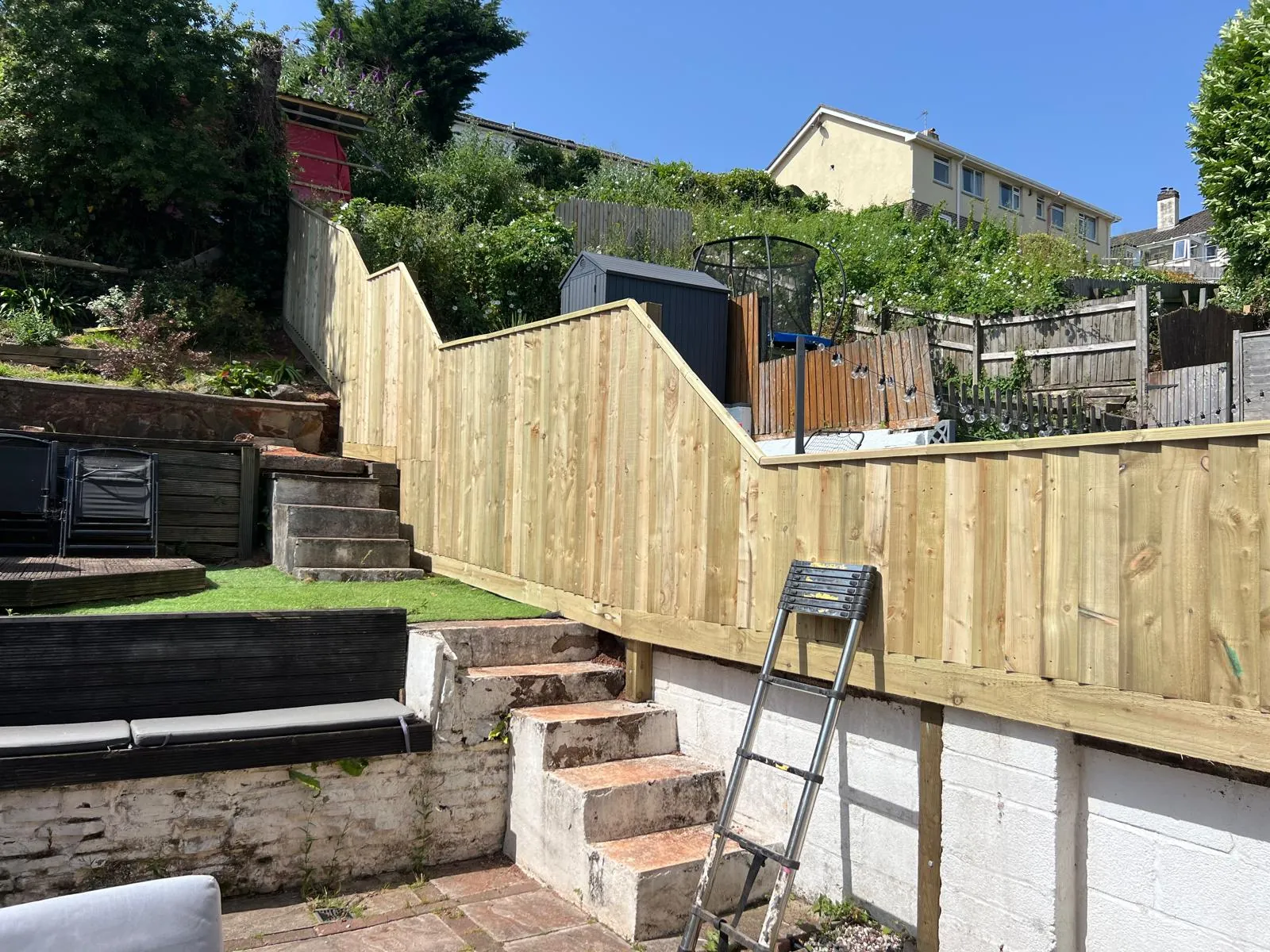
If your fence is on a boundary shared with a neighbour, or if it runs across a slope, repairs become more complicated. Boundary fences need to be replaced in a way that respects the property line, and sloping ground requires stepped or raked panels, which take experience to get right. We do a lot of this work in the hills around Babbacombe and St Marychurch, where the ground drops away sharply and a straight panel run is not possible.
You Are Not Confident Working at Height
If your fence is 6 feet or taller and you are not comfortable on a ladder or working with heavy panels above shoulder height, do not risk it. Fence panels are heavy and awkward, and a fall from even a modest height can cause serious injury. We have the equipment and the experience to do this work safely.
Types of Fences That Handle Wind Better
If you are planning to replace your fence rather than repair it, it is worth thinking about what type of fence will stand up best to South Devon storms. Not all fences are created equal when it comes to wind resistance.
Closeboard Fencing
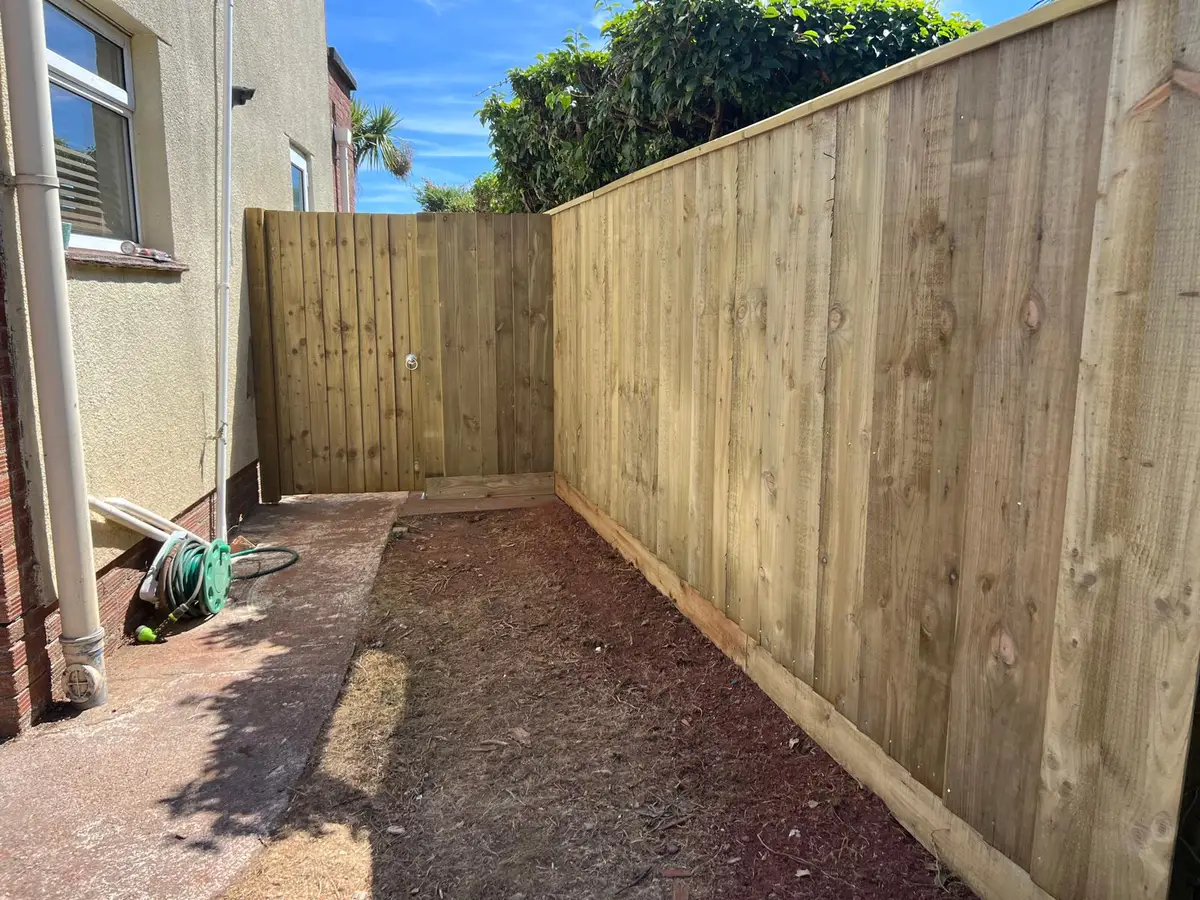
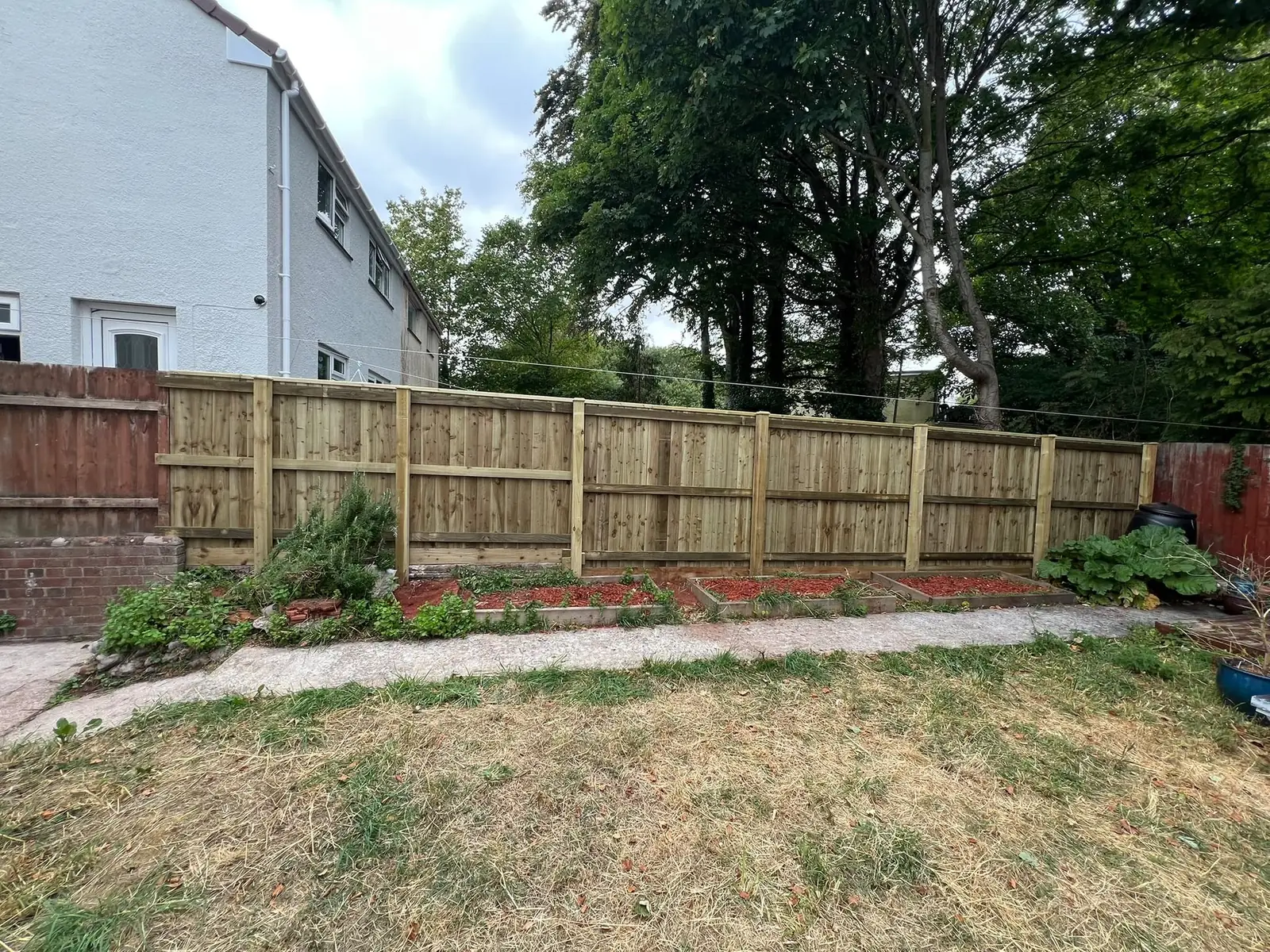
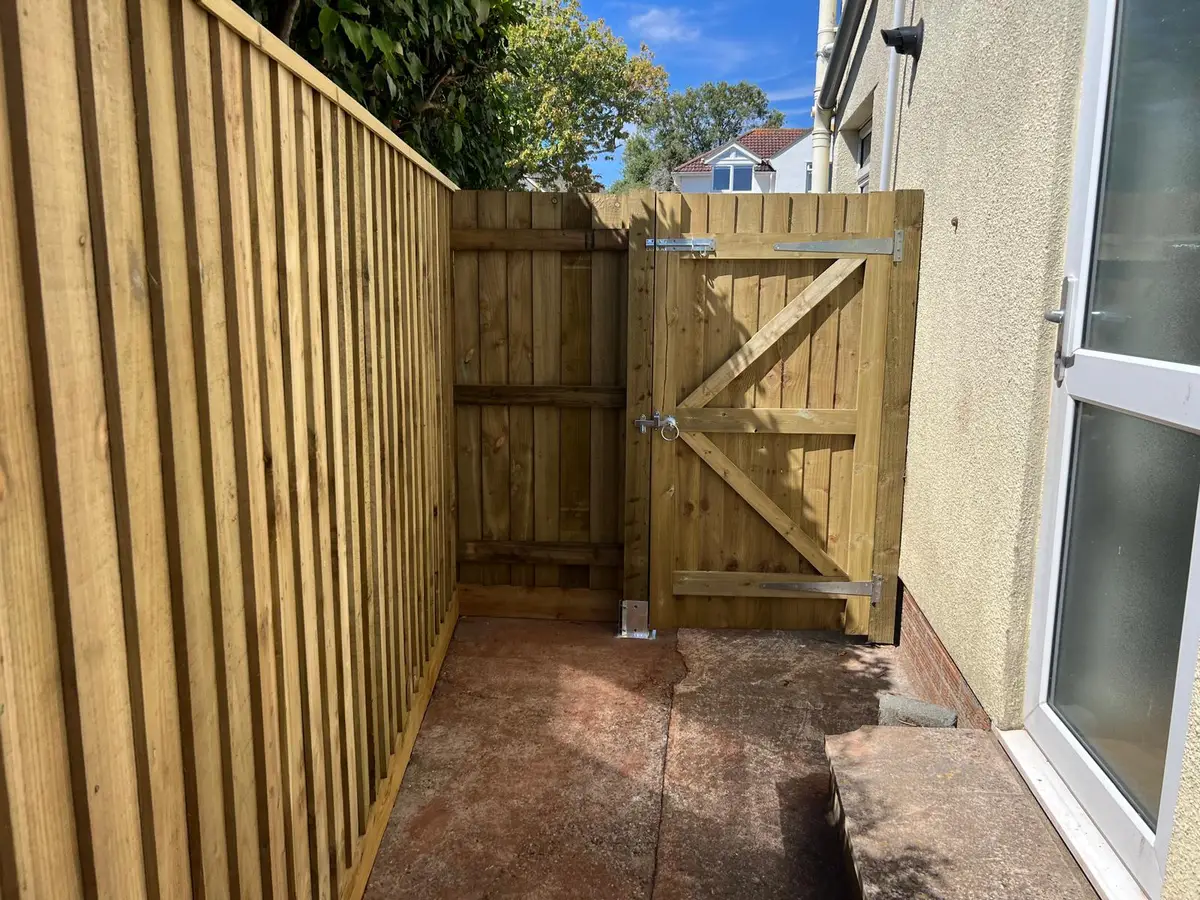
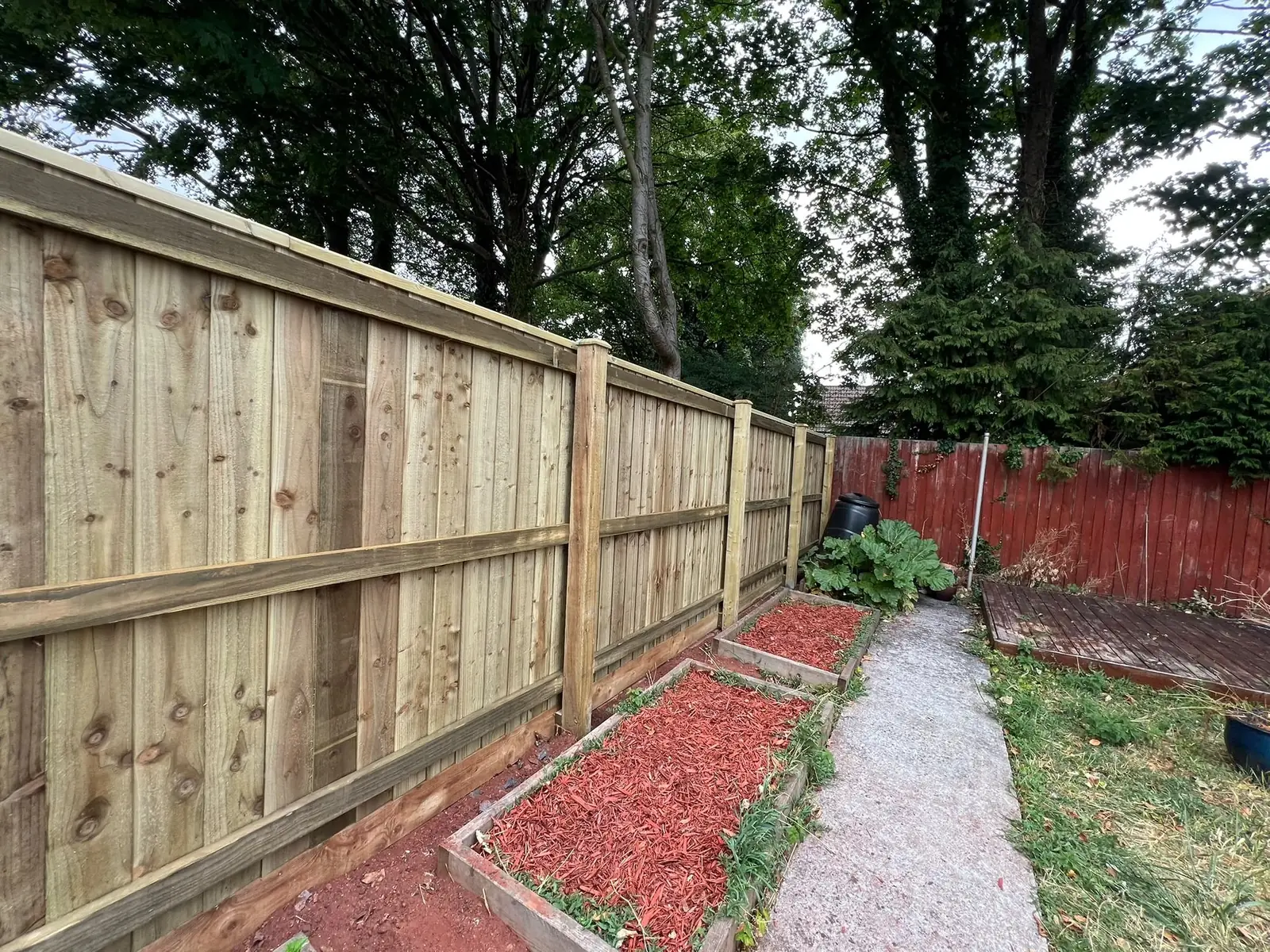
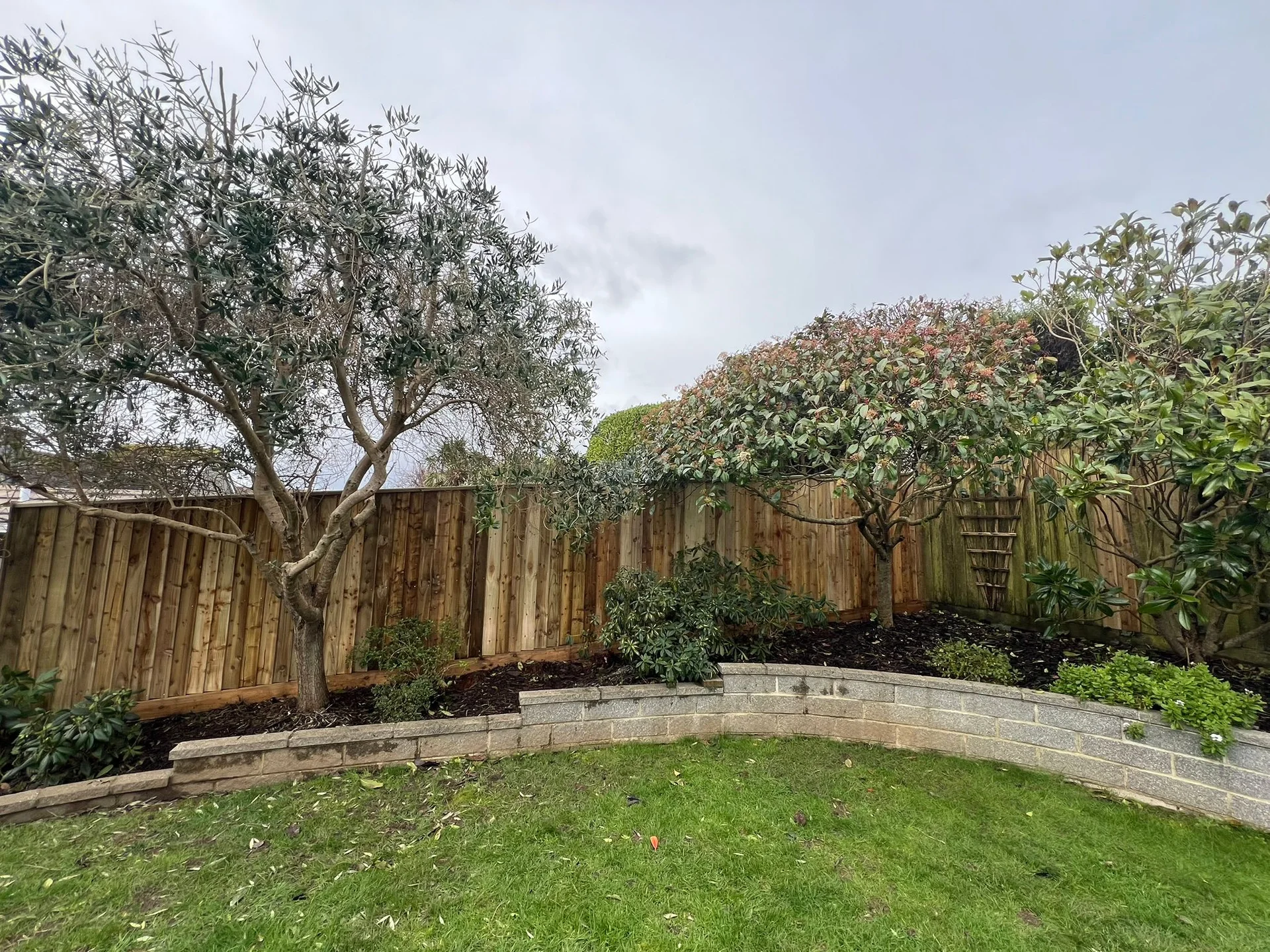
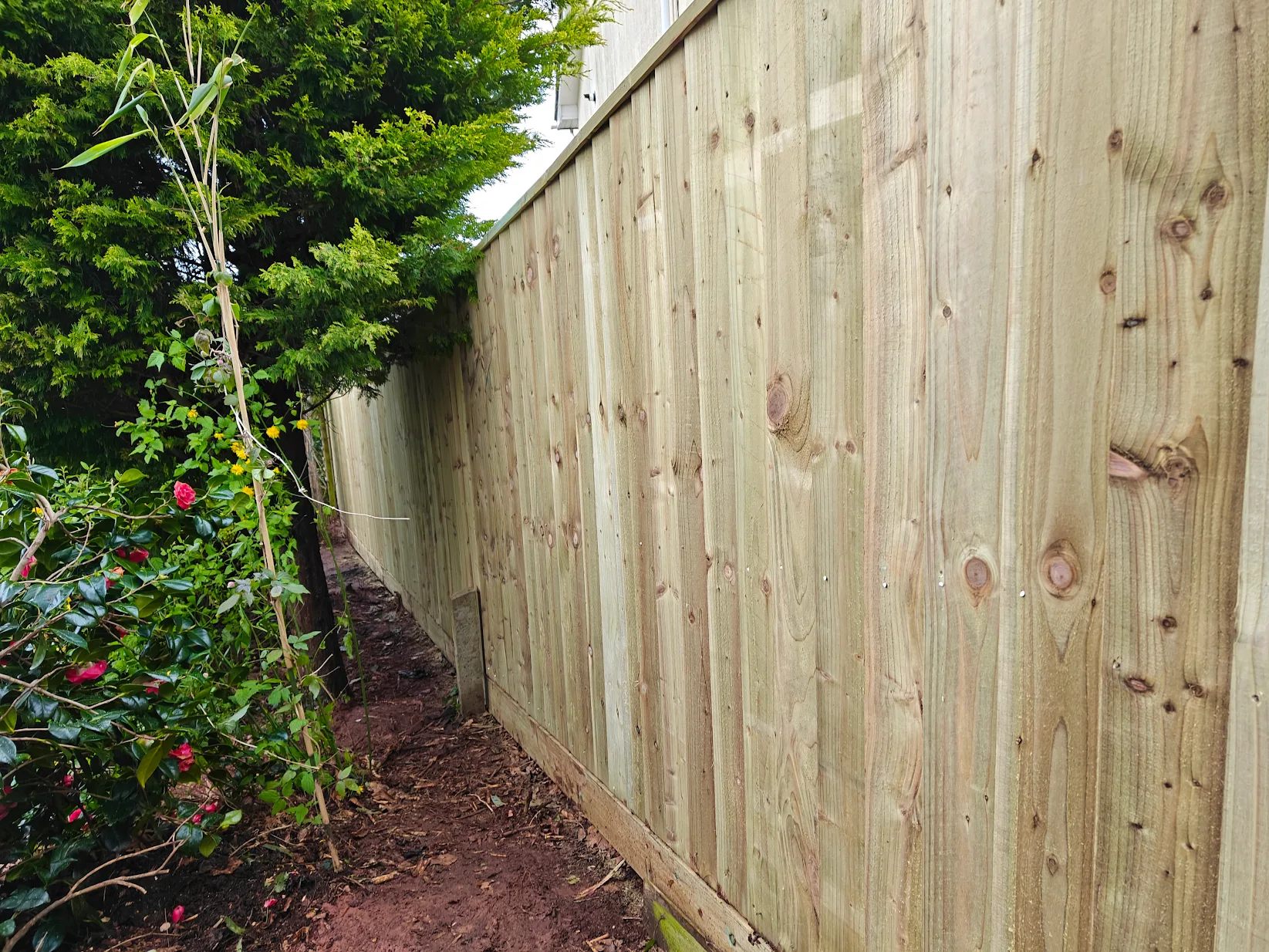
Closeboard fencing, also known as featheredge fencing, is constructed from individual vertical boards nailed to horizontal arris rails. Because each board is individually fixed, closeboard fencing is extremely strong and durable. It is the type of fencing we install most often in exposed locations, and for good reason.
However, closeboard fencing is also a solid barrier, which means it catches the wind just like a panel fence. The difference is that the structure is stronger, so it can handle more force before it fails. If you are in an exposed spot, closeboard with concrete posts is about as robust as it gets.
Hit-and-Miss Fencing
If wind loading is a serious concern, hit-and-miss fencing is worth considering. This style alternates boards on the front and back of the rails, leaving gaps for wind to pass through. Because the wind can flow through the fence rather than slamming into a solid wall, the wind loading is dramatically reduced.
Hit-and-miss fencing is popular in coastal areas, and we have installed it for several clients along the seafront in Paignton and on exposed properties near Dartmouth Castle, where the wind comes in off the estuary. It is slightly less private than a solid fence, but the wind performance is excellent.
Picket Fencing
Picket fencing is the original wind-resistant design. The gaps between the pickets let wind pass straight through, which means wind loading is minimal. Picket fencing is ideal for front gardens and lower boundaries where privacy is not the primary concern. We install a lot of picket fencing in Torquay and Shaldon, where it suits the coastal aesthetic and handles the weather well.
Venetian and Slatted Panels
Venetian panels, with their horizontal slats and gaps, offer a middle ground between solid panels and picket fencing. They look modern, provide partial privacy, and let some wind through. They are not as wind-resistant as hit-and-miss, but they are significantly better than solid waney lap panels.
The South Devon Coastal Factor
Living in Torbay means your fence has to cope with more than just wind. The salt in the coastal air accelerates corrosion of metal fixings and can affect certain timber treatments. If you are within a mile or two of the sea, which covers a large proportion of Torquay, Paignton and Brixham, you need to factor this in.
Use galvanised or stainless steel fixings, not plain steel. Choose pressure-treated timber rather than dip-treated, as the preservative penetrates deeper into the wood. And consider applying a wood preservative every few years to extend the life of your fence, especially on the seaward side.
We also recommend checking your fence after every named storm, even if it looks fine from a distance. Small problems, like a single loose screw or a hairline crack in a post, are easy to fix if you catch them early. Leave them, and the next storm will turn a small problem into a collapsed fence.
A Final Word on Timing
The best time to storm-proof your fence is before the storms arrive, not after. If you are reading this in November and the first named storm of the season has already blown through, do not wait. Check your fence now, fix the small issues, and call us if there is anything you are not sure about.
A few hours of maintenance and a handful of screws can be the difference between a fence that survives the winter and one that ends up in your neighbour's garden. We have seen both outcomes more times than we can count, and we would much rather help you prevent the damage than clean up afterwards.
Related services: Emergency Fence Repair
If you would like us to come and assess your fence, give Joe a call on 01803 494348 or visit our contact page. We cover Torquay, Paignton, Brixham, and the surrounding areas across Torbay and South Devon, and we are happy to give you honest advice about what needs doing and what can wait.