If you have lived in Torbay for any length of time, you already know that our gardens throw up challenges that homeowners in landlocked counties simply do not face. We have salt-laden winds rolling in off the English Channel, sloping plots carved into the hillside between Torquay Harbour and the Downs, and soil that ranges from heavy red Devon clay to thin, stony ground near the coast. Fencing that works perfectly in a flat, sheltered garden in Newton Abbot can struggle on an exposed boundary near Marine Drive.
That is why, when we sit down with a homeowner to talk through their options, closeboard fencing is the style we recommend more often than any other. It is not the cheapest fence you can buy, but it is the one that consistently delivers the best value over a twenty-year horizon. In this guide, we are going to explain exactly what closeboard fencing is, how it is built, and why it suits Torbay gardens so well. We will also cover cost, longevity, and the practical decisions you need to make if you are planning a new boundary this autumn.
What Is Closeboard Fencing?
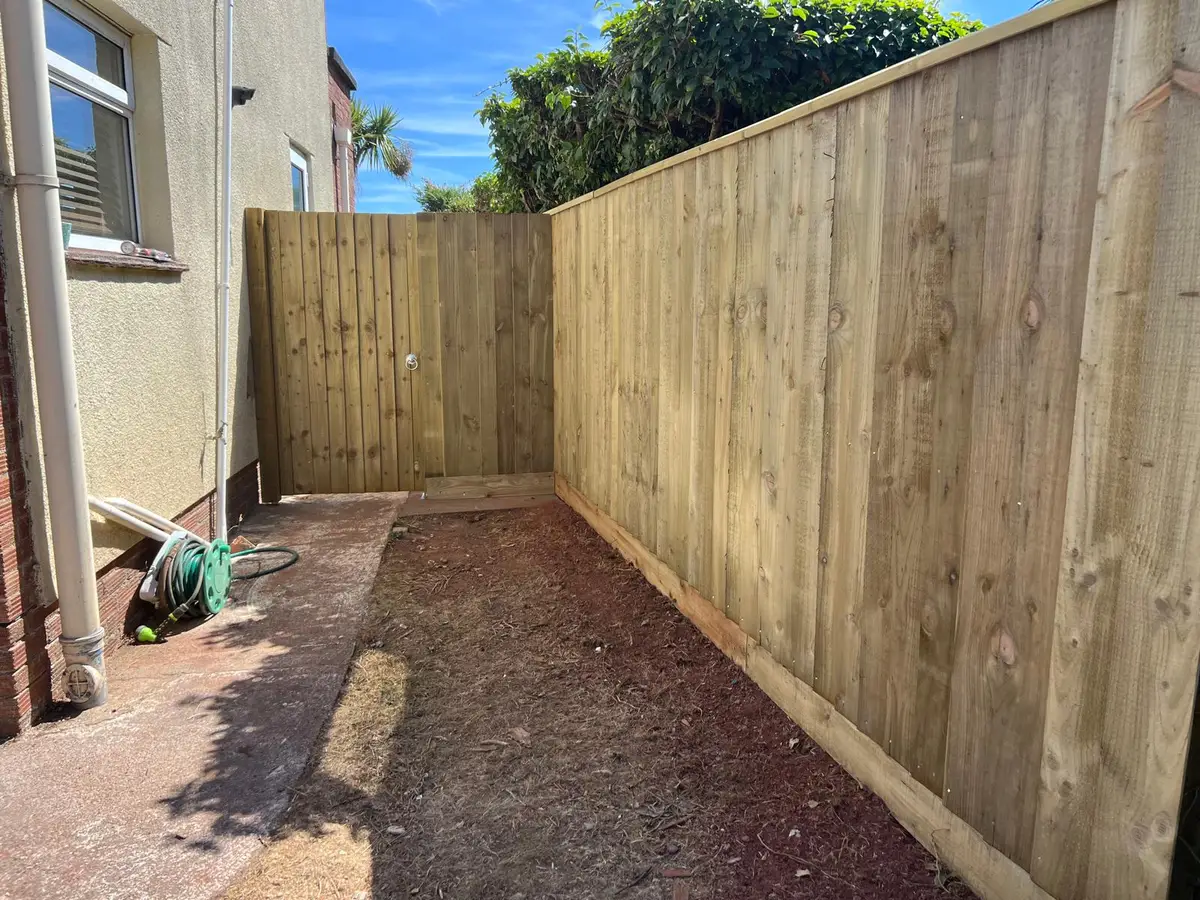
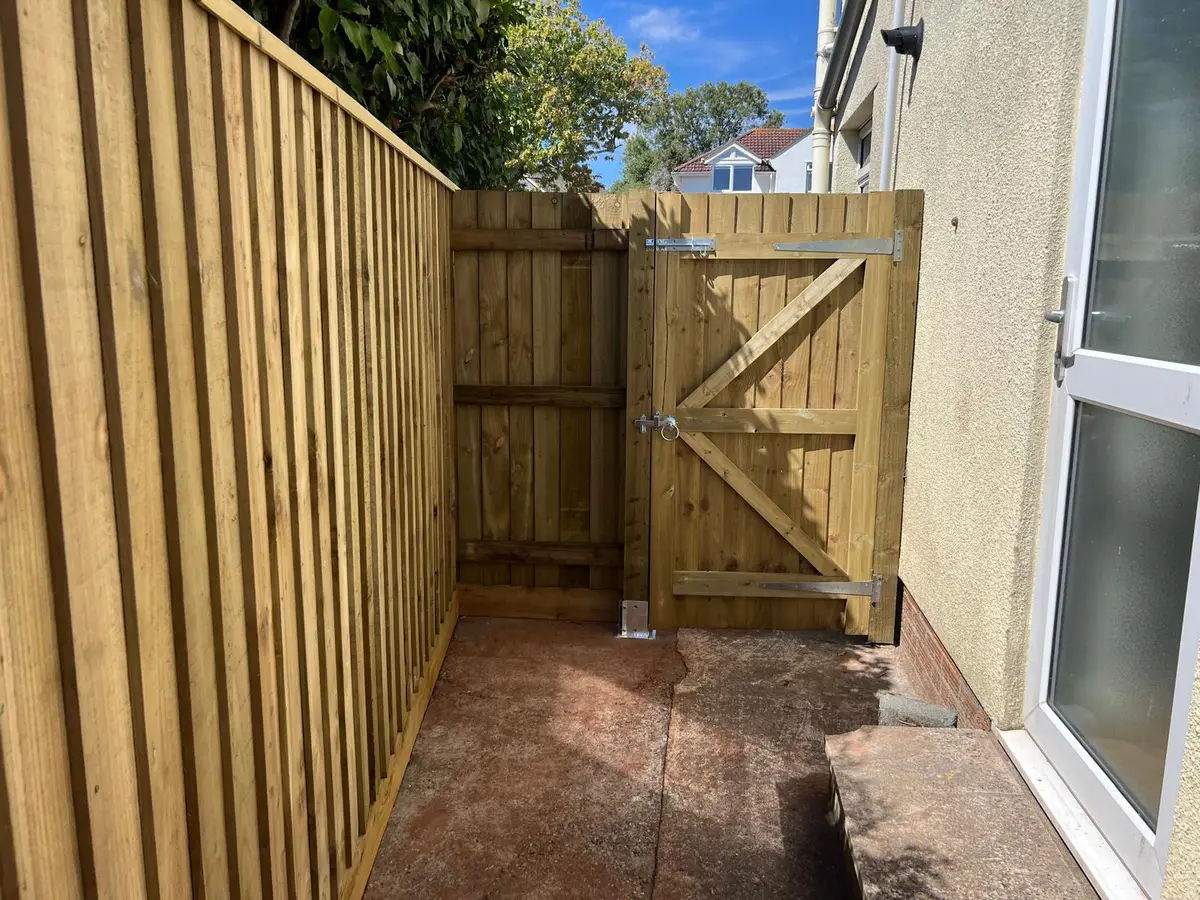
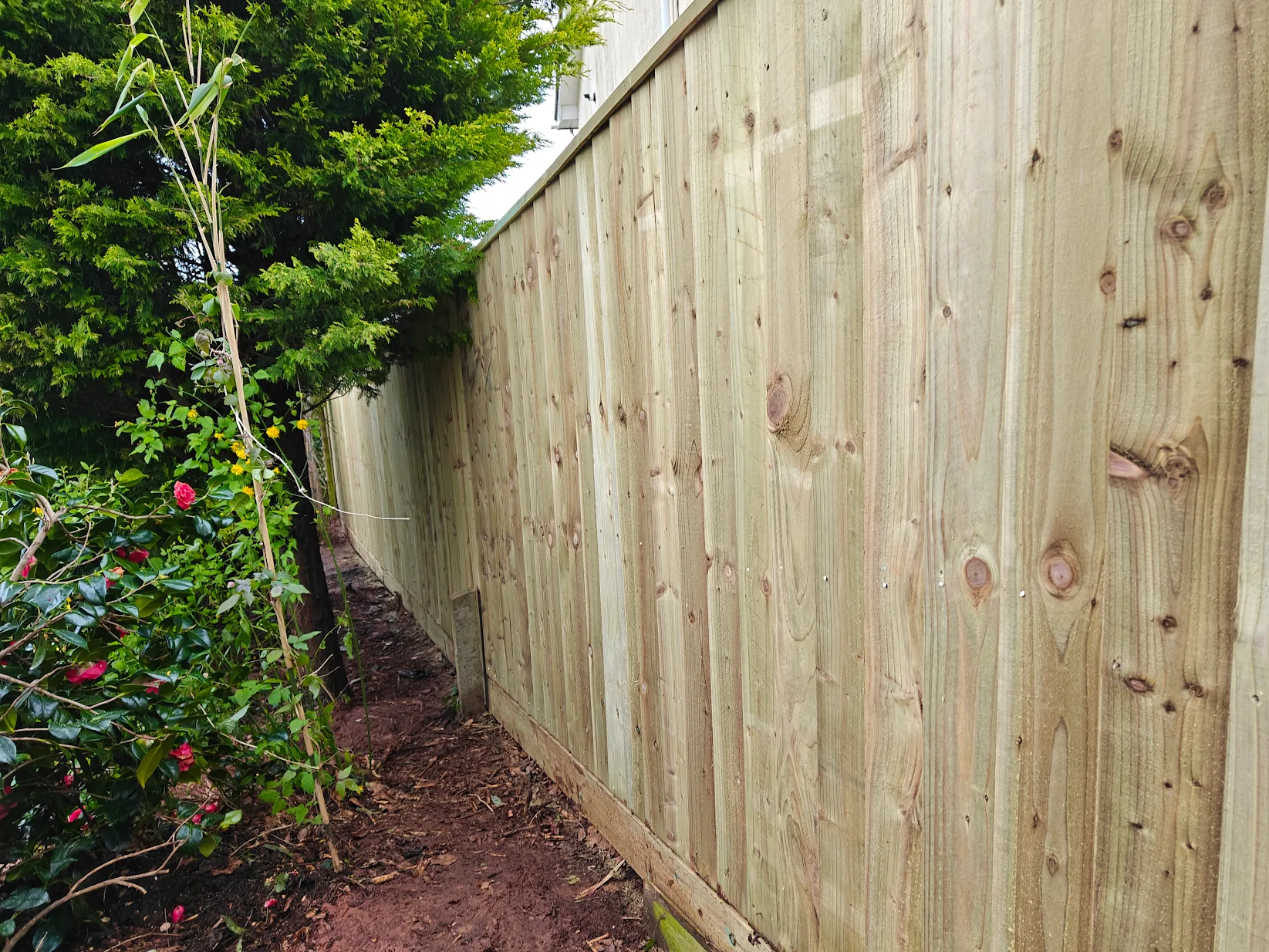
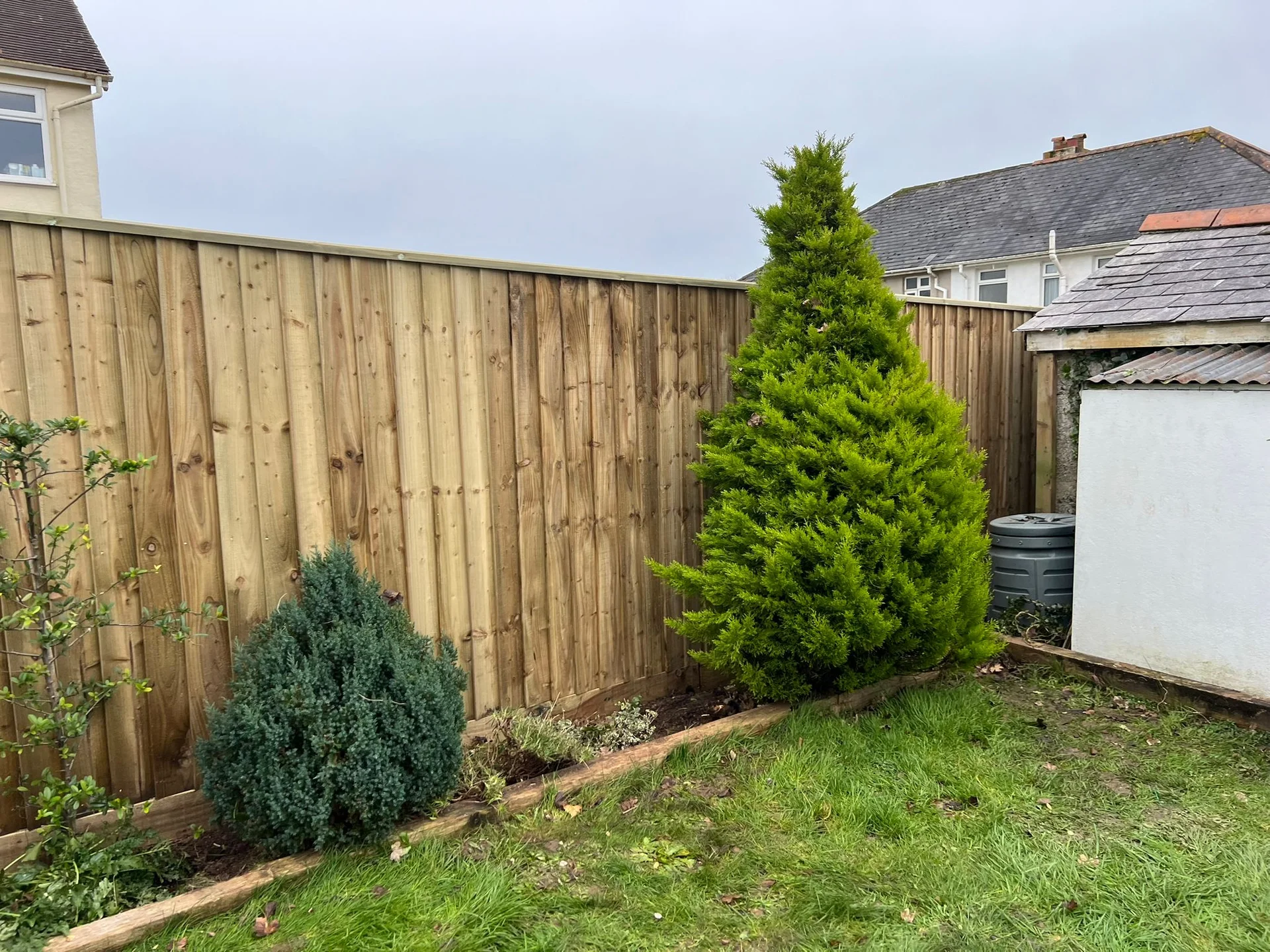
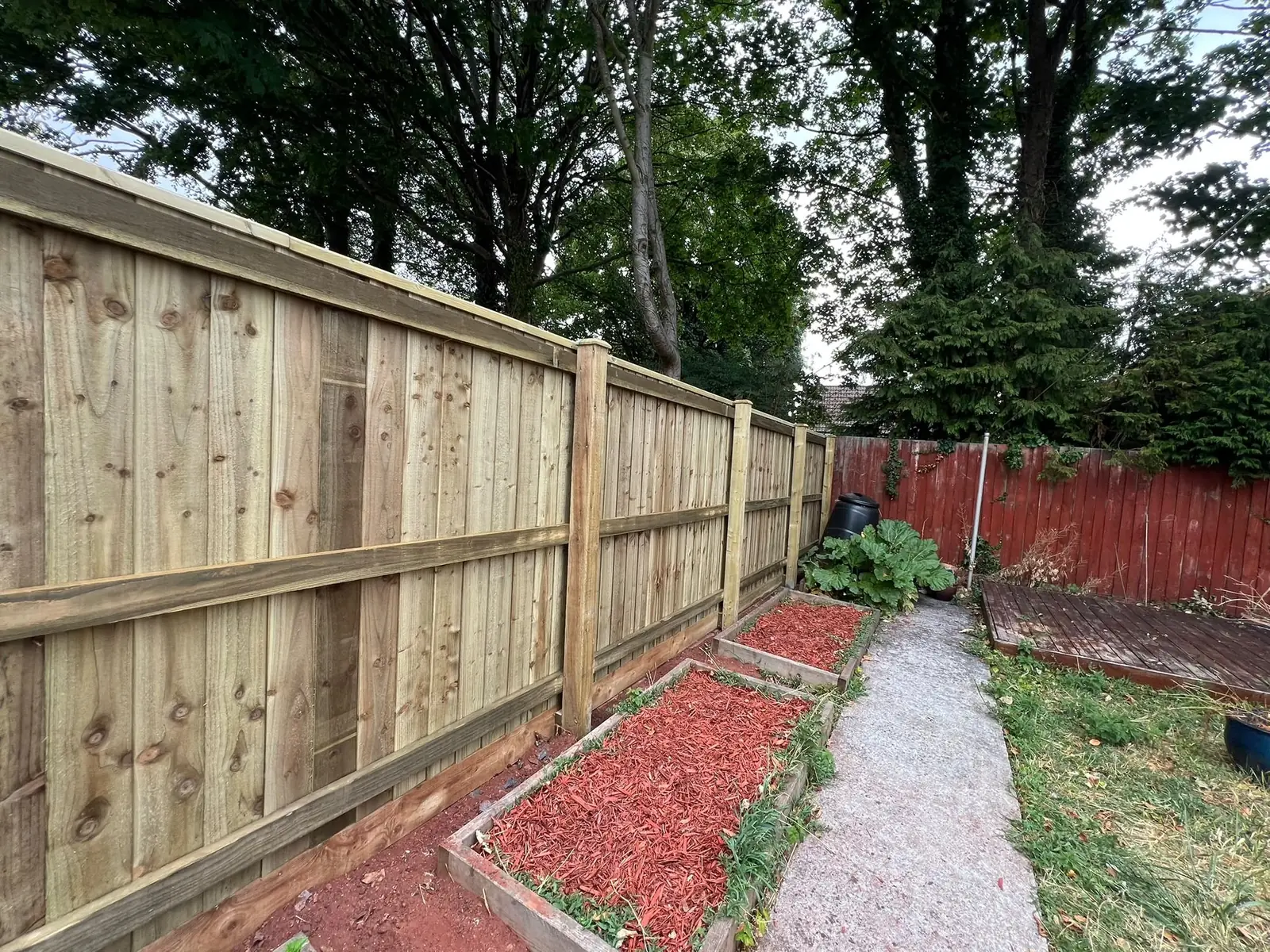
Closeboard fencing, sometimes called feather-edge fencing, is a style of fence built from individual vertical boards rather than pre-assembled panels. Each board is tapered, thicker on one edge than the other, which is where the name "feather-edge" comes from. The boards are nailed individually to horizontal wooden rails that run between the posts. The boards overlap by at least 25mm, creating a solid, continuous face with no gaps for wind to whistle through or for neighbours to peer through.
This is an important distinction from panel fencing. A waney-edge or lap panel is manufactured in a factory as a single unit, usually 6ft wide, and dropped between two posts. It is quick to install and cheaper up front, but it has structural weaknesses that show up quickly in exposed coastal positions. Closeboard fencing, by contrast, is built up board by board on site. That makes it stronger, more adaptable, and far easier to repair if a single board gets damaged.
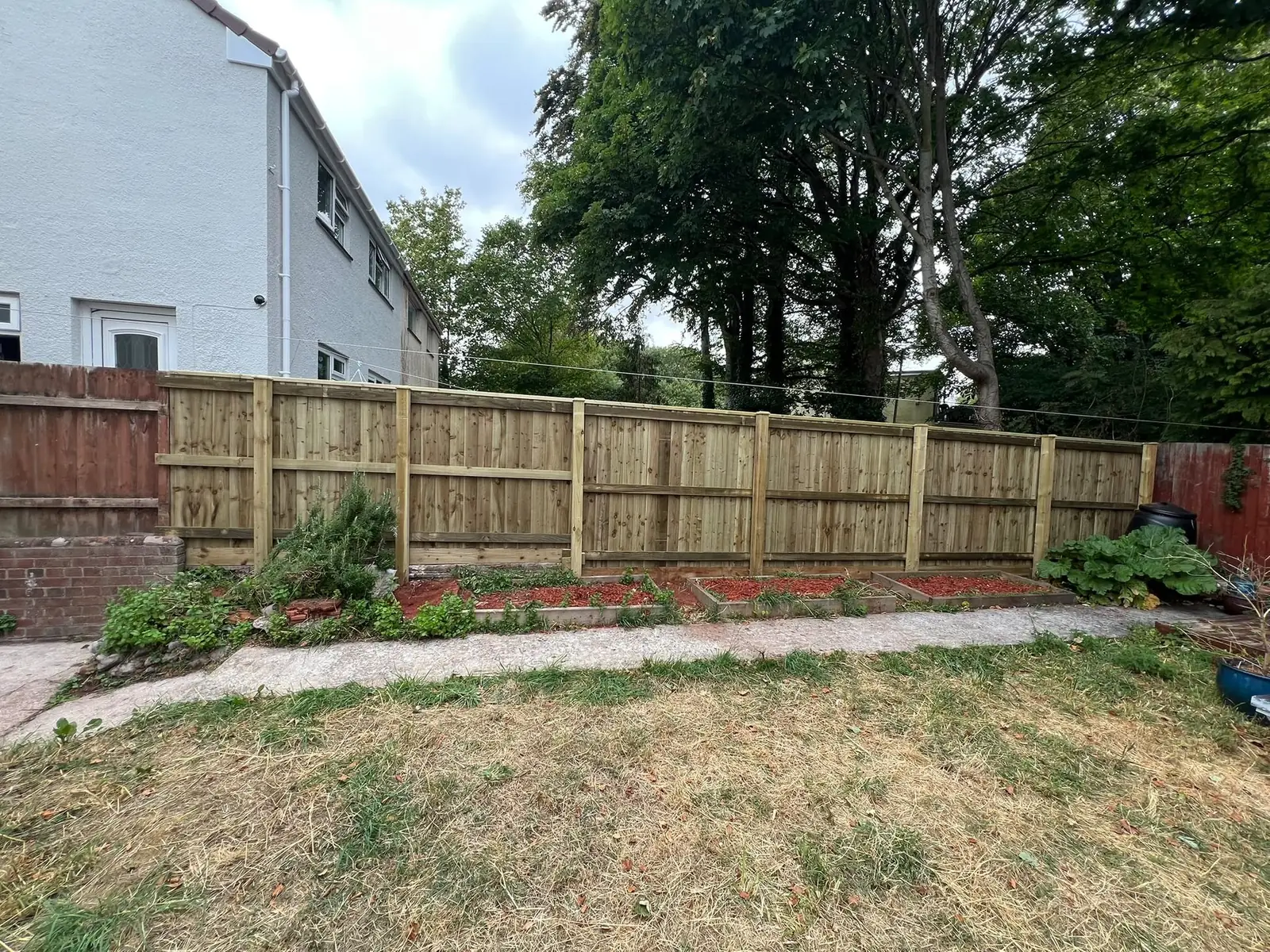
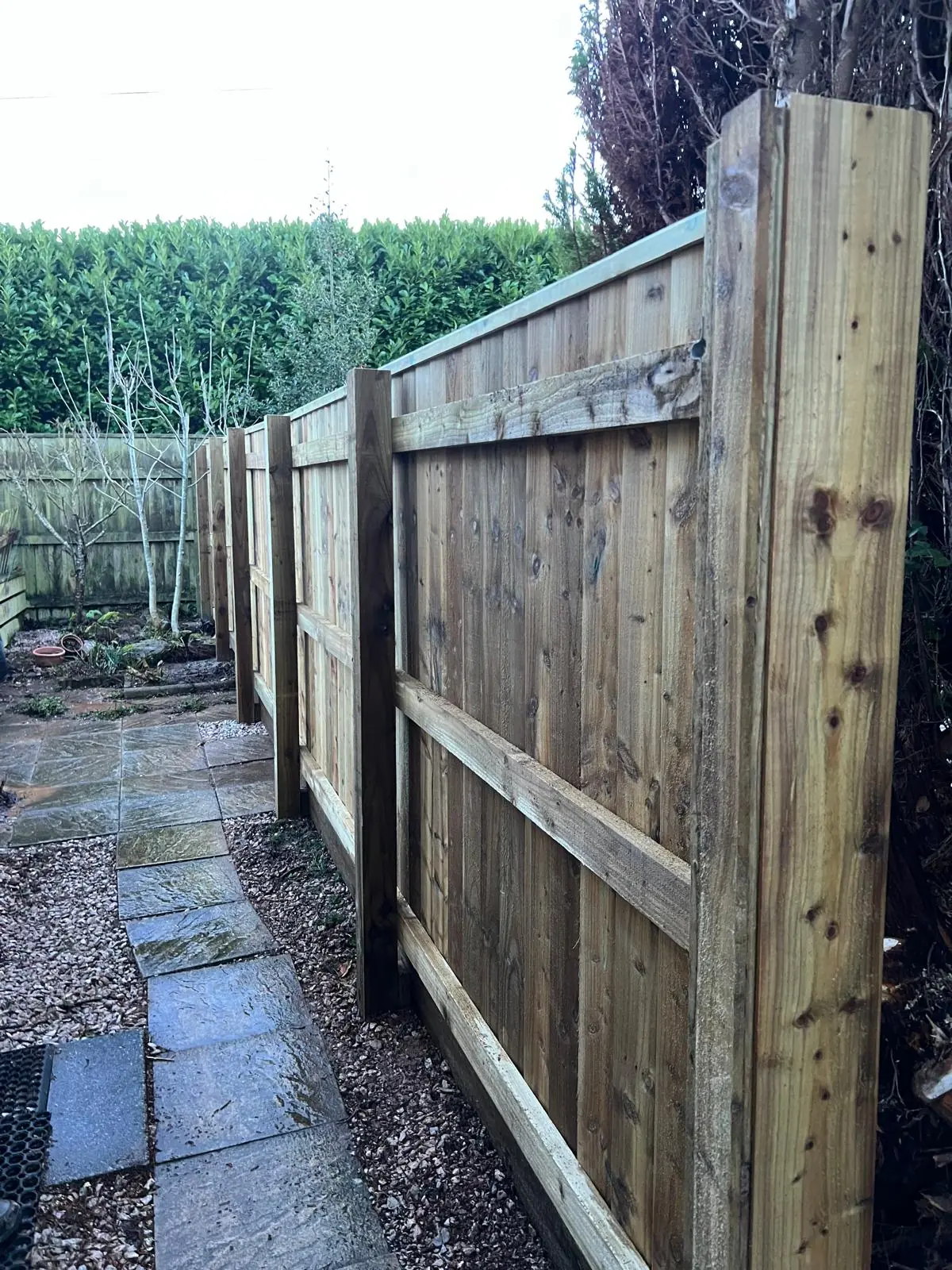
There are two main ways to construct a closeboard fence. The traditional method uses morticed timber posts with horizontal arris rails slotted into the mortices and secured with wedges. The more common modern method uses concrete or timber posts with timber rails fixed to the face of the post with brackets or cleats. Both methods produce a strong fence, but the choice of post material has a big bearing on longevity, which we will come to shortly.
Why Closeboard Handles Coastal Wind Better Than Panels
Anyone who has walked along Babbacombe Downs on a blustery January afternoon understands the sheer force of the wind that funnels in from the bay. Now imagine a 6ft lap panel acting as a sail in that wind. The entire panel takes the load, and because it is a single rigid unit, there is nowhere for that force to go. The panel either blows out of its brackets or snaps at the weakest point, which is usually the thin framing where the lap boards are stapled to the battens.
Closeboard fencing behaves completely differently. Because the boards are fixed individually to the rails, the wind load is distributed across the whole structure rather than concentrated in one panel. If a gust hits one section, the posts and rails absorb the force together. The boards themselves are thicker and heavier than the waney-edge timber used in lap panels, typically 22mm at the thick edge, so they do not flex and crack the way thin panel boards do.
There is another subtle advantage. If you have a fence line that catches the wind at an angle, a closeboard fence can be built with slight variations in board overlap or post spacing to reinforce the most exposed sections. With panels, you get a one-size-fits-all solution that cannot be tuned to the conditions. We have replaced countless blown-out panels on boundaries near Marine Drive and along the seafront at Preston, and in nearly every case the homeowner opted for closeboard on the replacement because they had learned the hard way that panels do not last in those positions.
Following Sloping Gardens Without Ugly Steps
Torquay is built on a series of hills running down to the sea, and that means a huge number of gardens have significant slopes. If you live anywhere near Cockington Country Park, or on the slopes above Meadfoot Beach, or in the winding lanes around Chelston, you will know exactly what we mean. A garden that drops two metres from front to back is completely normal here.
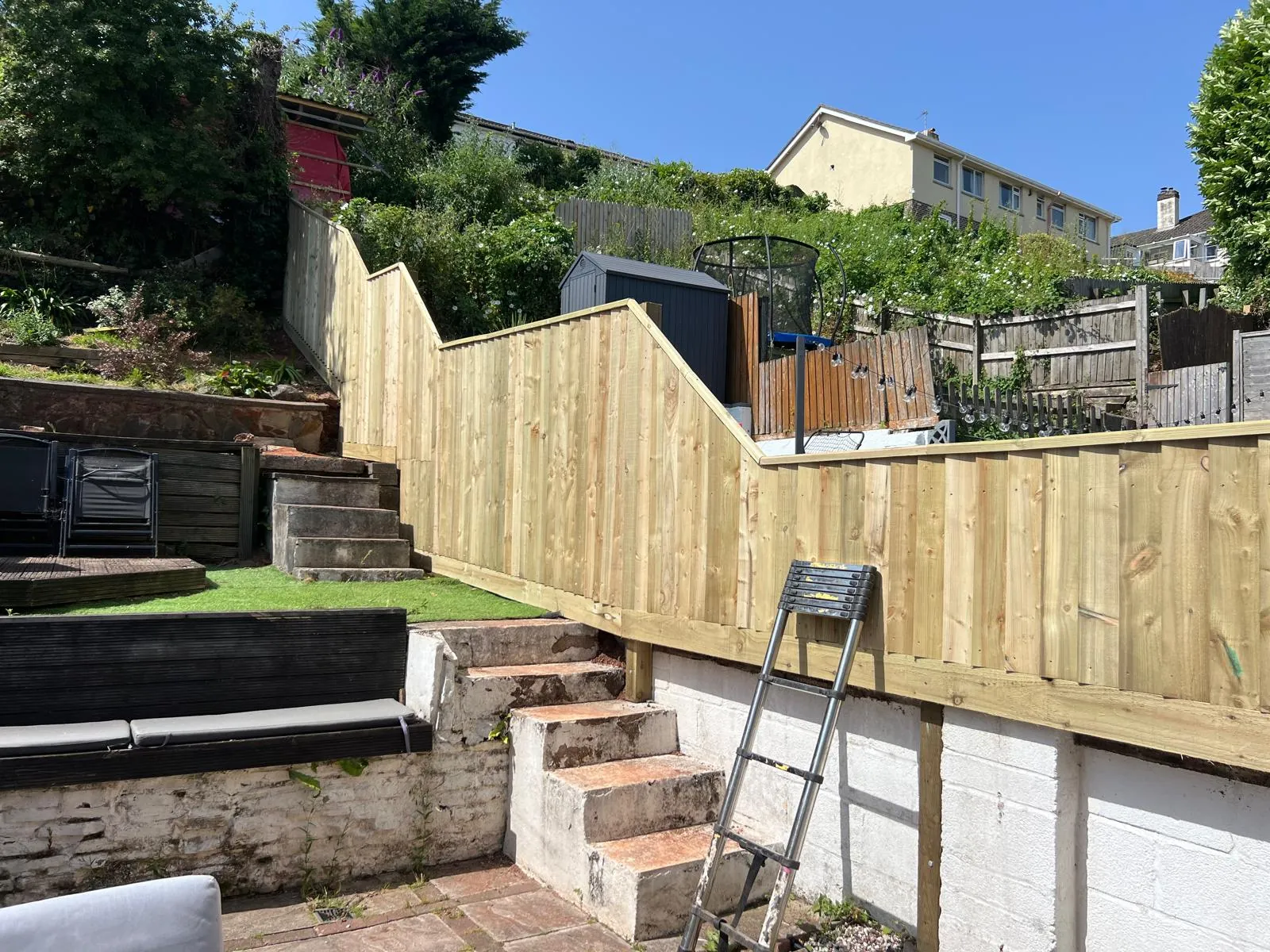
Panel fencing on a slope is a headache. Each panel is a rigid rectangle, so when the ground falls away, you have two choices. You can step the panels down, which leaves triangular gaps underneath each panel and looks distinctly odd, or you can try to rake the panels to follow the slope, which puts stress on the frame and is only possible on very gentle gradients. Either way, the result is rarely tidy.
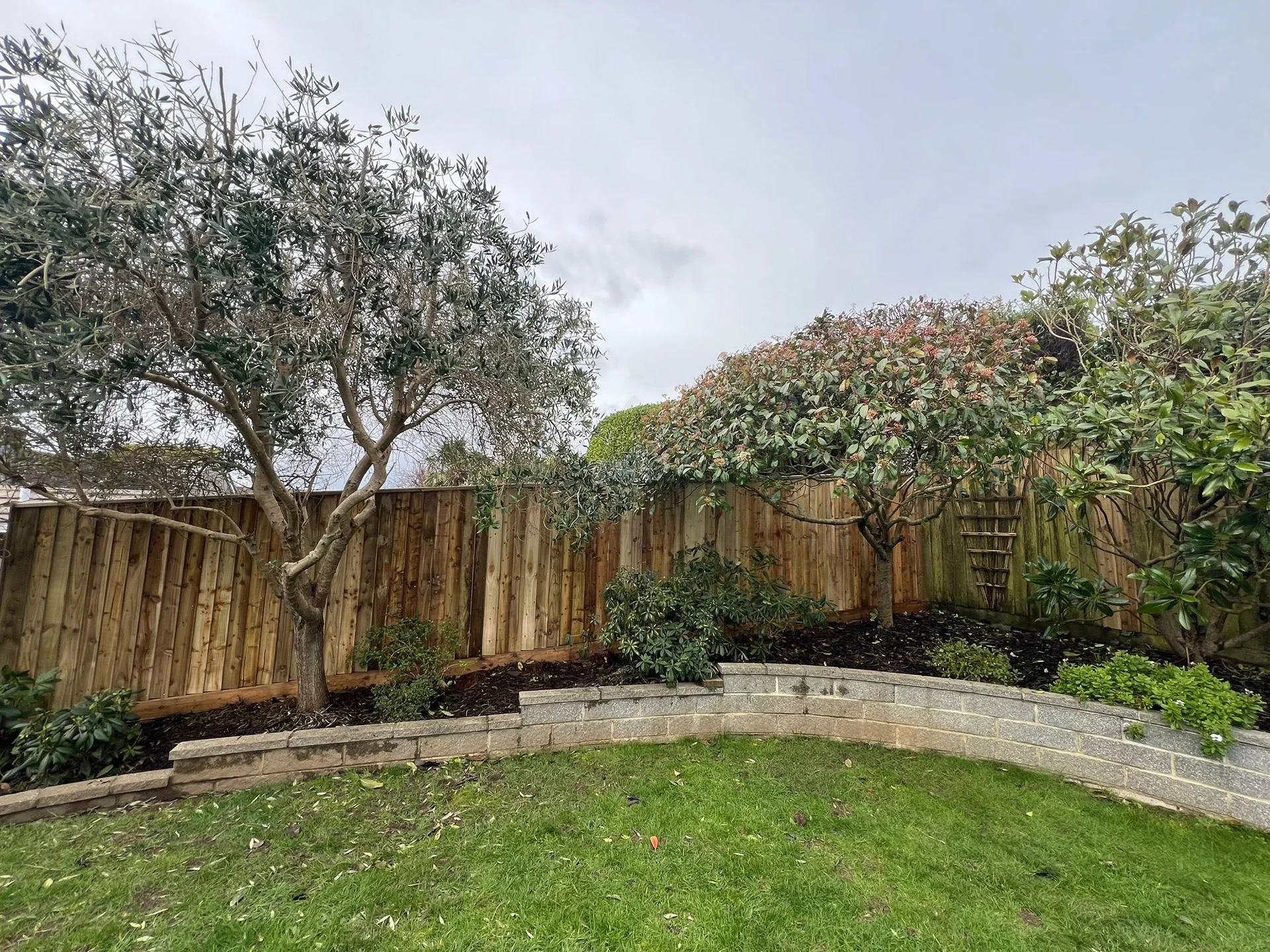
Closeboard fencing solves this elegantly. Because the boards are individual, you can rake the bottom of each board to follow the contour of the ground. The top of the fence can be kept level, or it can follow the slope, depending on the look you want. There are no triangular gaps, no awkward steps, and no stress on the structure. The fence simply flows with the land. On a steep garden in Shaldon that drops sharply towards the Teign estuary, we recently built a closeboard fence that followed a 1.5-metre fall over a 12-metre run without a single step. It looked like it had always been there.
Privacy Benefits for Overlooked Gardens
Torbay is a densely populated area, and many gardens are overlooked by neighbouring properties. If your back garden is visible from three or four upstairs windows, a solid boundary fence is one of the most effective ways to reclaim your privacy. Closeboard fencing is completely gap-free, so unlike hit-and-miss or slatted fencing, there is no line of sight through the fence at any angle.
A 1.8-metre (6ft) closeboard fence is the standard choice for rear boundaries, and it is tall enough to screen most ground-level views. If you need more height, you can go to 2 metres, which is the maximum permitted without planning permission in most circumstances. We will cover the rules on fence height in detail in a separate guide, but the key point here is that closeboard fencing gives you a true solid screen, not a semi-transparent one.
For front gardens, where a 1-metre height limit applies next to a highway, a lower closeboard fence at 1 metre or 1.2 metres still provides a neat, solid boundary that defines the space without looking fortress-like. We have installed plenty of these in the conservation areas around Wellswood and Tor Park Road, where a tidy, well-proportioned fence is far more in keeping with the streetscape than a tall, imposing one.
Longevity: Pressure-Treated Timber and the Right Posts
A closeboard fence is only as durable as the materials it is built from, and the single biggest decision you will make is the choice of post material. Timber posts, even pressure-treated ones, will eventually rot at ground level where they sit in constantly damp soil. In Torbay's climate, with our wet winters and heavy clay soils in places like Paignton and Brixham, a timber post might last 12 to 15 years before the base becomes spongy. Some do better than that: we recently replaced a Torbay fence that had stood for around 30 years before the timber finally rotted through, and you can see how we rebuilt it in our 6ft featherboard fence replacement case study.
Concrete posts, by contrast, will outlast the fence itself. They do not rot, they do not warp, and they are not affected by insects. The downside is that they are heavier to handle, more expensive to buy, and some people do not like the look of bare concrete. The good news is that you can recess concrete posts into the ground and clad them, or use timber posts with a concrete gravel board at the base so the timber never touches the soil. This combination gives you the natural look of timber with the rot resistance of concrete where it matters most.
For the boards and rails themselves, always specify pressure-treated timber. Pressure treatment forces preservative deep into the wood under high pressure, which is fundamentally different from dip treatment, where the timber is briefly dunked in preservative and only the surface is protected. Pressure-treated feather-edge boards should last 15 to 20 years, even in a coastal environment, provided they are maintained properly. We will cover maintenance in our winter preparation guide, but the basics are simple: apply a quality wood preservative every two to three years, keep the post tops sealed, and ensure the gravel boards are doing their job of keeping the boards clear of the soil.
Cost Versus Value
We are not going to pretend that closeboard fencing is the cheapest option. It is not. A lap panel fence will typically cost less per metre than a closeboard fence of the same height, and if your budget is tight and your garden is sheltered, a panel fence may be perfectly adequate. But the comparison is not as straightforward as the initial price suggests.
First, consider lifespan. A lap panel in an exposed Torbay garden might last 5 to 8 years before it needs replacing. A closeboard fence on concrete posts can last 20 to 25 years. Over a 20-year period, you might replace the panel fence two or three times, while the closeboard fence is still standing. The lifetime cost of closeboard is often lower, even though the upfront cost is higher.
Second, consider repairability. If a storm damages three boards in a closeboard fence, you remove those three boards and nail on three new ones. The repair is almost invisible and costs very little. If a storm destroys a lap panel, you have to replace the entire panel, and matching the weathering of the surrounding panels is impossible, so you end up with one bright new panel in a row of grey ones.
Third, consider the value it adds to your property. A well-built closeboard fence is a feature, not just a boundary. Estate agents in Torquay and Paignton will tell you that tidy, solid fencing is one of the things buyers notice immediately. It signals that the property has been looked after, and it creates an immediate sense of privacy and seclusion that buyers are willing to pay for.
Choosing the Right Contractor
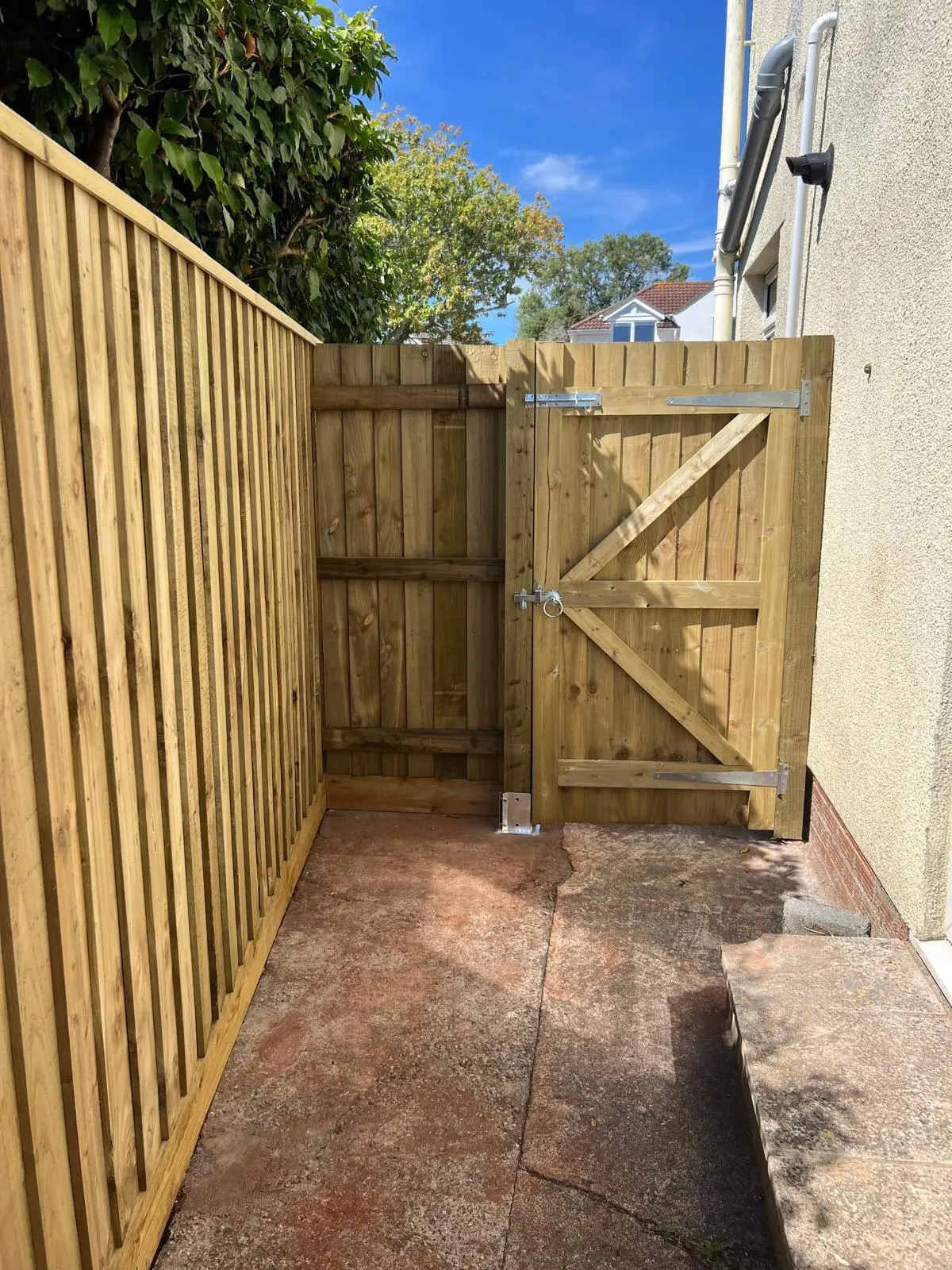
A closeboard fence is only as good as the installation, and there is more to it than knocking in posts and nailing on boards. The posts need to be set at the correct depth, typically 600mm for a 1.8-metre fence, in properly compacted concrete. The rails need to be level and securely fixed. The boards need to be spaced with consistent overlap and nailed with galvanised or stainless steel fixings that will not rust in our coastal air. The gravel boards need to sit on the ground, not in it, and the post tops need to be capped or cut at an angle to shed water.
When you get quotes, ask your contractor exactly what materials they use, how deep they set their posts, and what fixings they use. A suspiciously cheap quote usually means corners are being cut somewhere, and in a coastal environment those shortcuts will show up within a few years. We are always happy to walk you through our specification in detail so you can compare like for like.
Is Closeboard Right for Your Garden?
For most gardens in Torquay, Paignton, Brixham, and the surrounding areas, closeboard fencing is the best all-round choice. It handles wind, it follows slopes, it provides complete privacy, and it lasts for decades when it is built well. The only situations where we would steer you towards something different are very exposed coastal sites where wind permeability matters more than privacy (in which case hit-and-miss or slatted fencing lets wind through rather than blocking it), and front gardens in conservation areas where a more decorative style like palisade or woven willow might be more appropriate.
If you are thinking about a new fence this autumn, before the winter weather arrives, we would be glad to come and look at your garden, talk through the options, and give you a no-obligation quote. We work across Torbay and the surrounding areas, from Teignmouth to Totnes and everywhere in between.
Related services: Closeboard Fence Installation
Give Joe a call on 01803 494348 or visit our contact page to book a free site visit. We will measure up, assess the ground conditions, and recommend the best fencing solution for your garden, your budget, and your location.