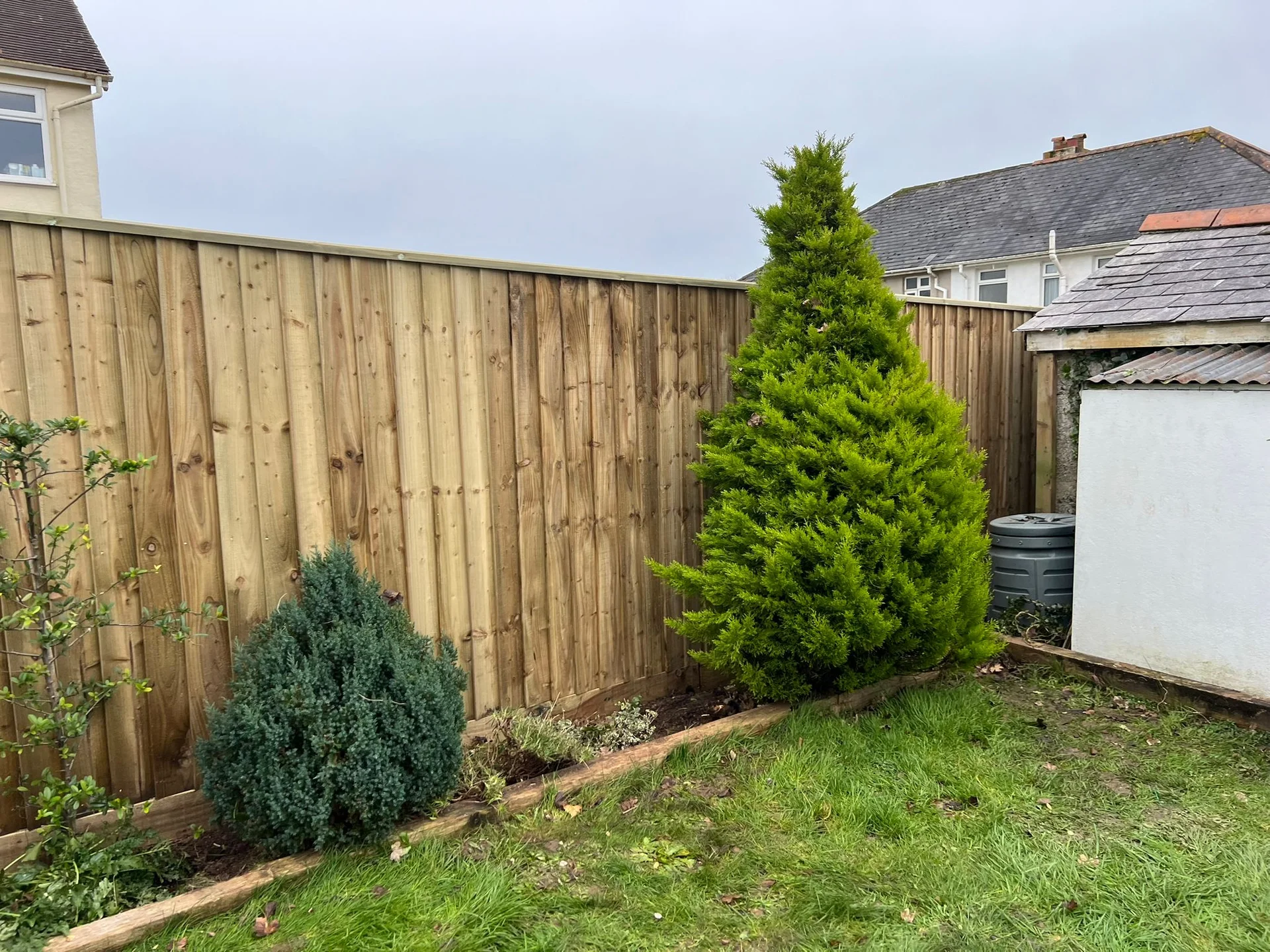
Some fences give you years of good service and then quietly reach the end of the road. This one in Torbay had been up for around 30 years, and the timber had finally rotted through. We took the old 7m run down and built a brand new 6ft featherboard fence in its place.
It is one of the most common calls we get across Torquay, Paignton and Brixham: a boundary that has stood for decades, but is now soft, leaning and past the point where patching it up makes sense.
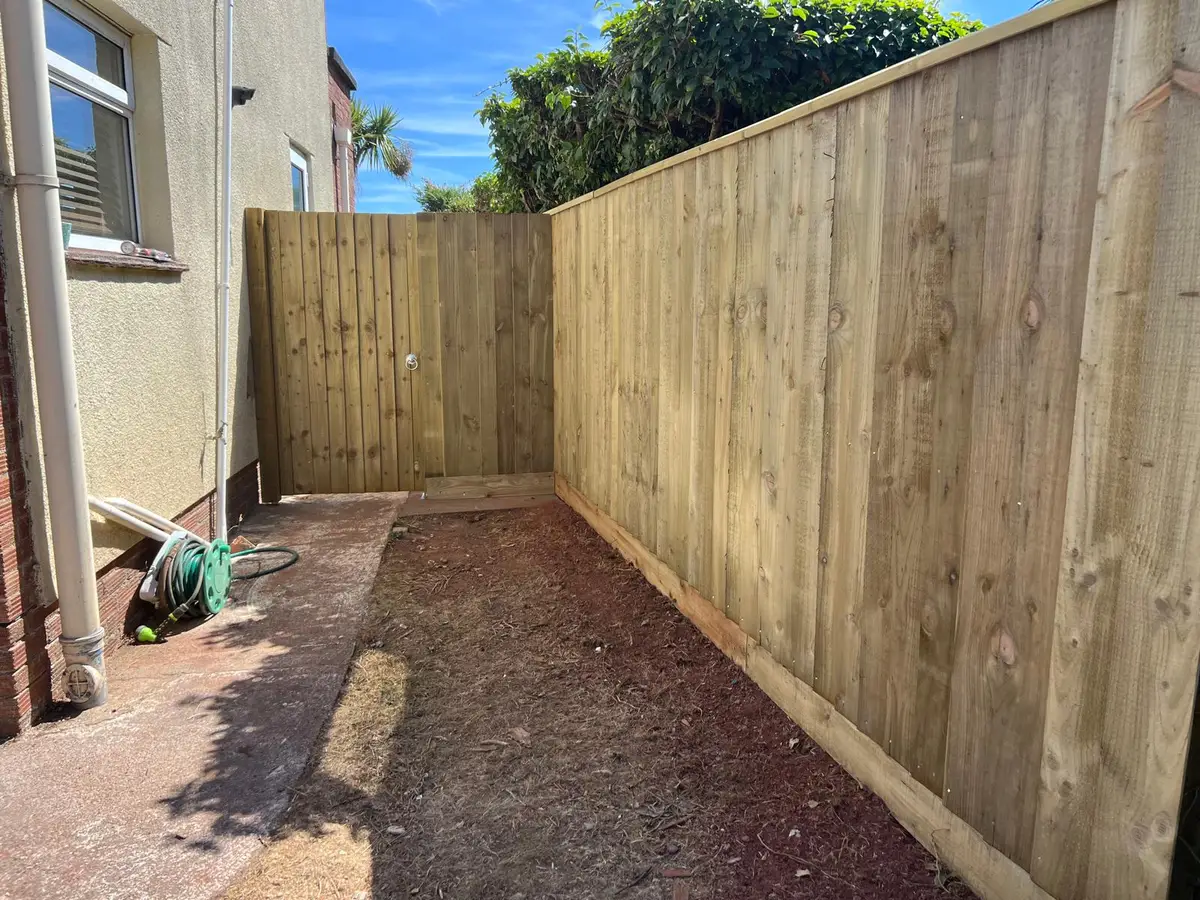
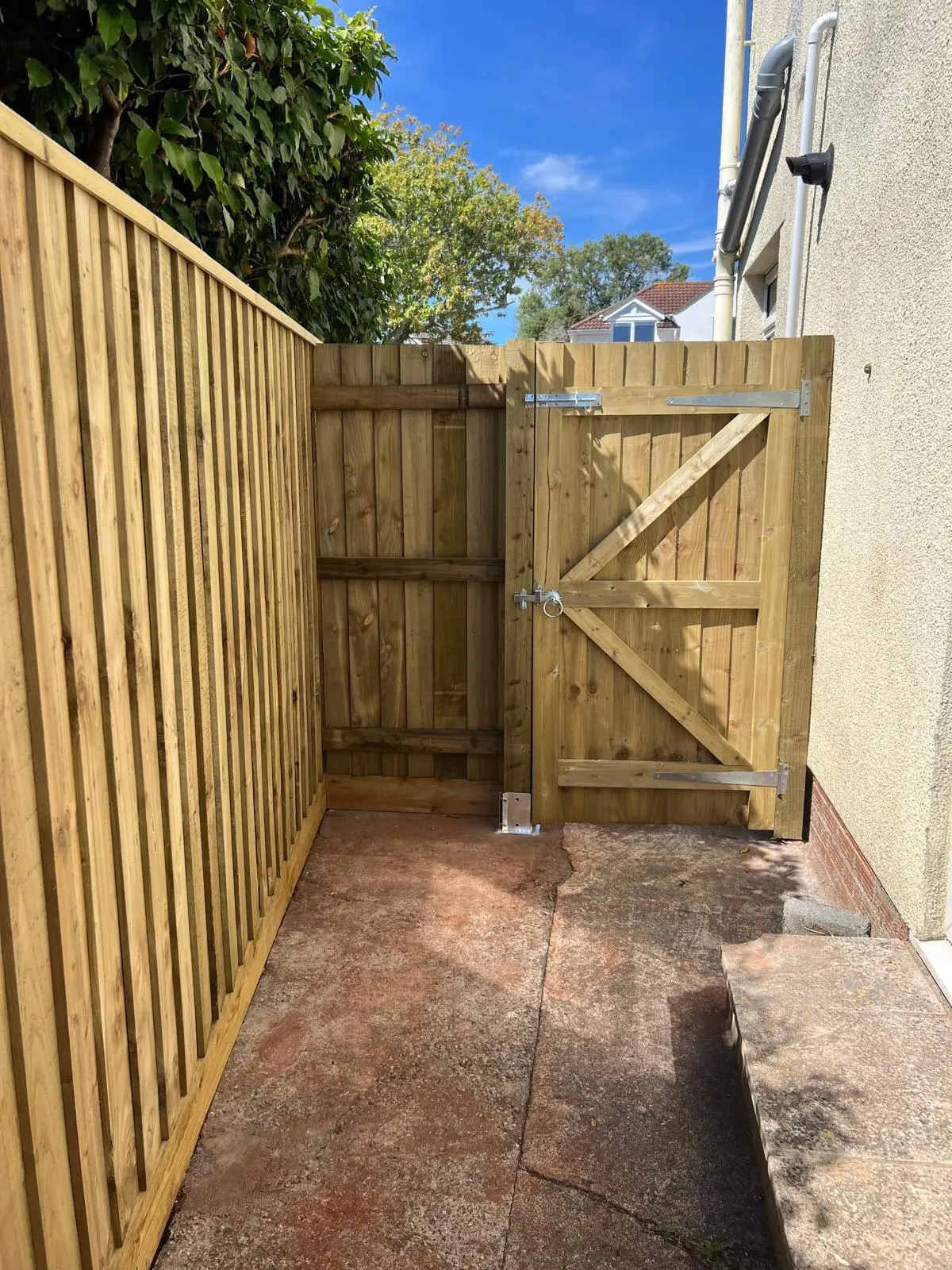
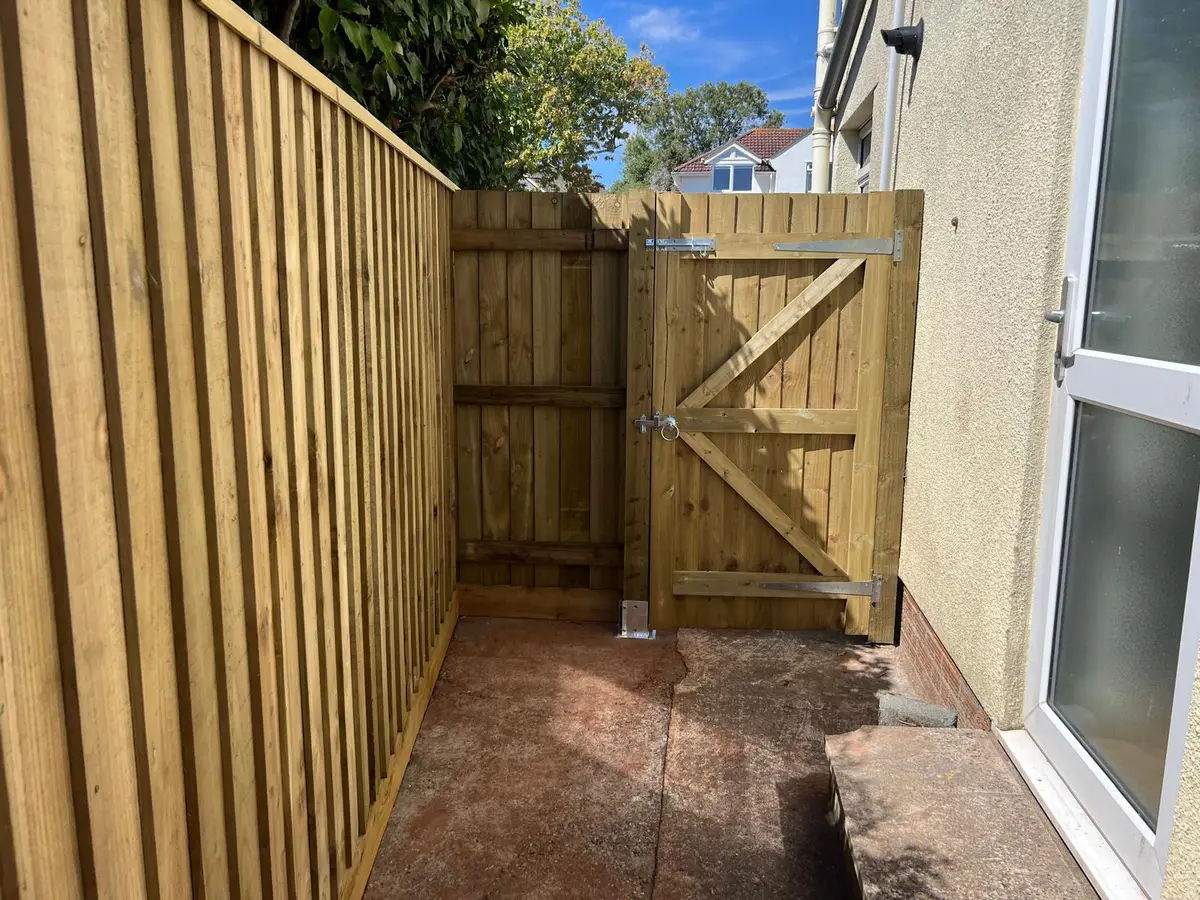
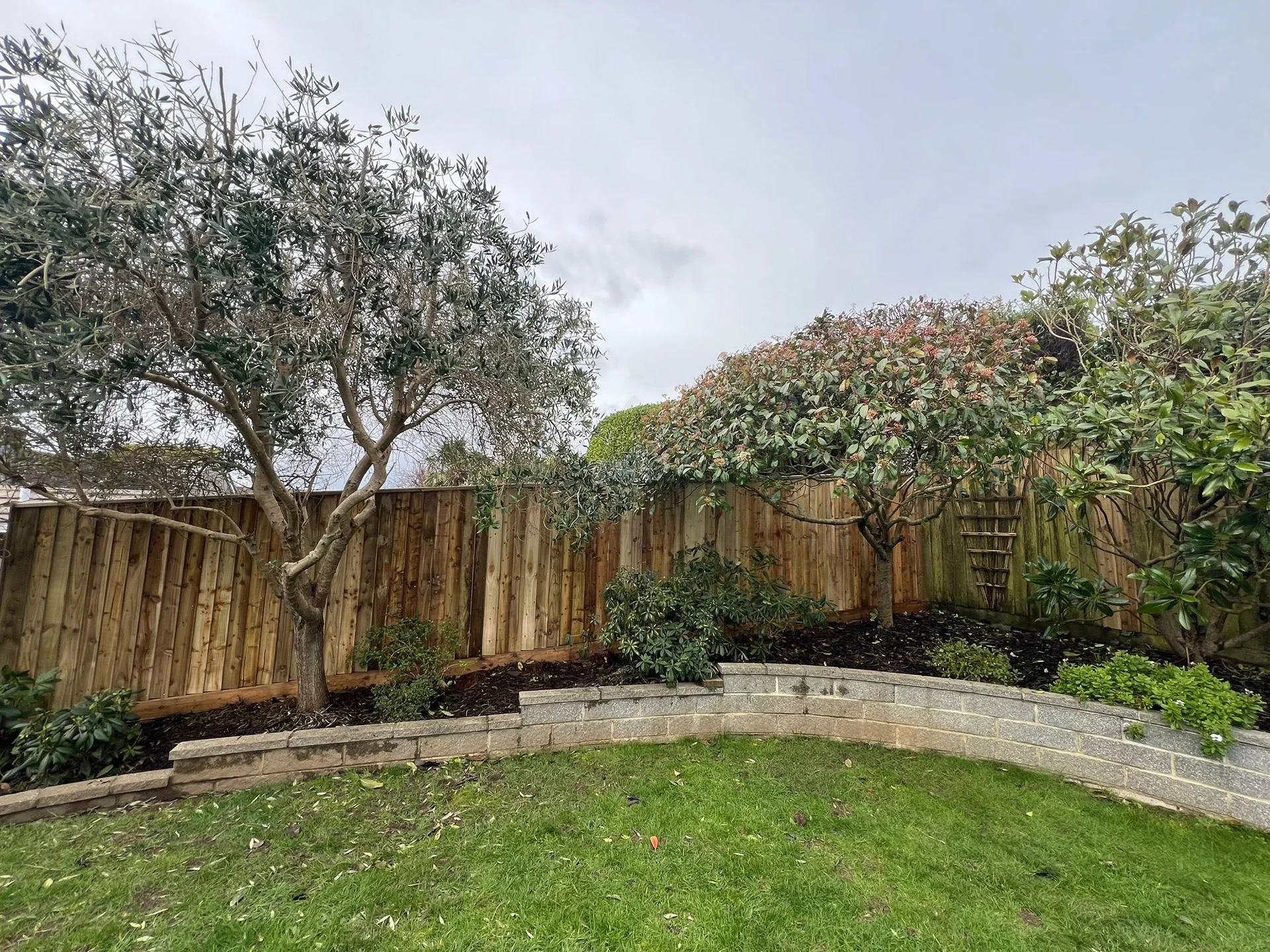
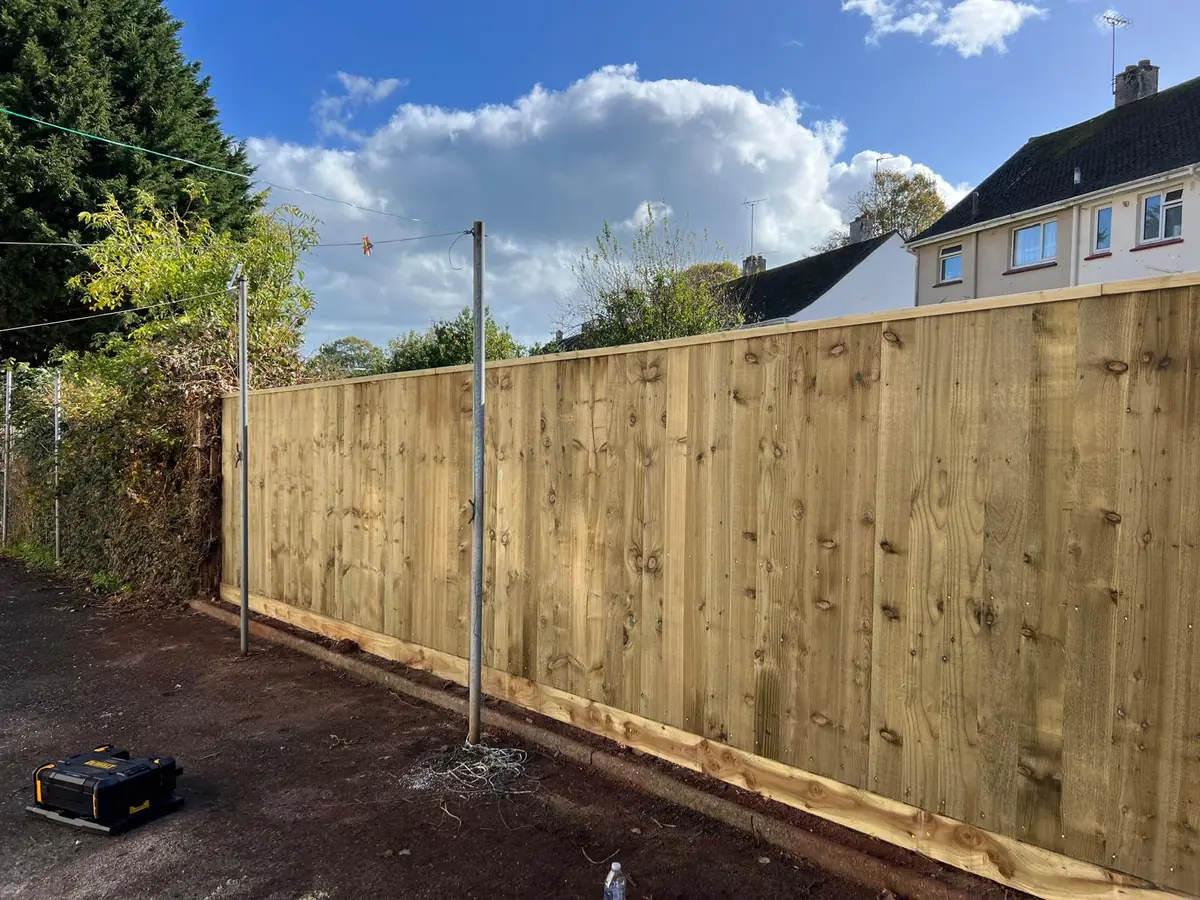 The finished 6ft featherboard fence, with a timber gravel board along the base and a capping rail along the top.
The Project: Replacing a 30-Year-Old Fence
Thirty years is a very good innings for a timber fence. But by the time we arrived, the old boundary was rotten and needed replacing rather than repairing. One side of the fence faces a tarmac parking area and the other a garden, so the new fence had to look smart and stand up to everyday life on both sides.
Joe's brief was simple: take down the old 7m fence and build a new 6ft featherboard fence that would last.
What the project involved:
- Taking down the old 7m rotten fence and clearing it away
- Setting new timber posts along the original boundary line
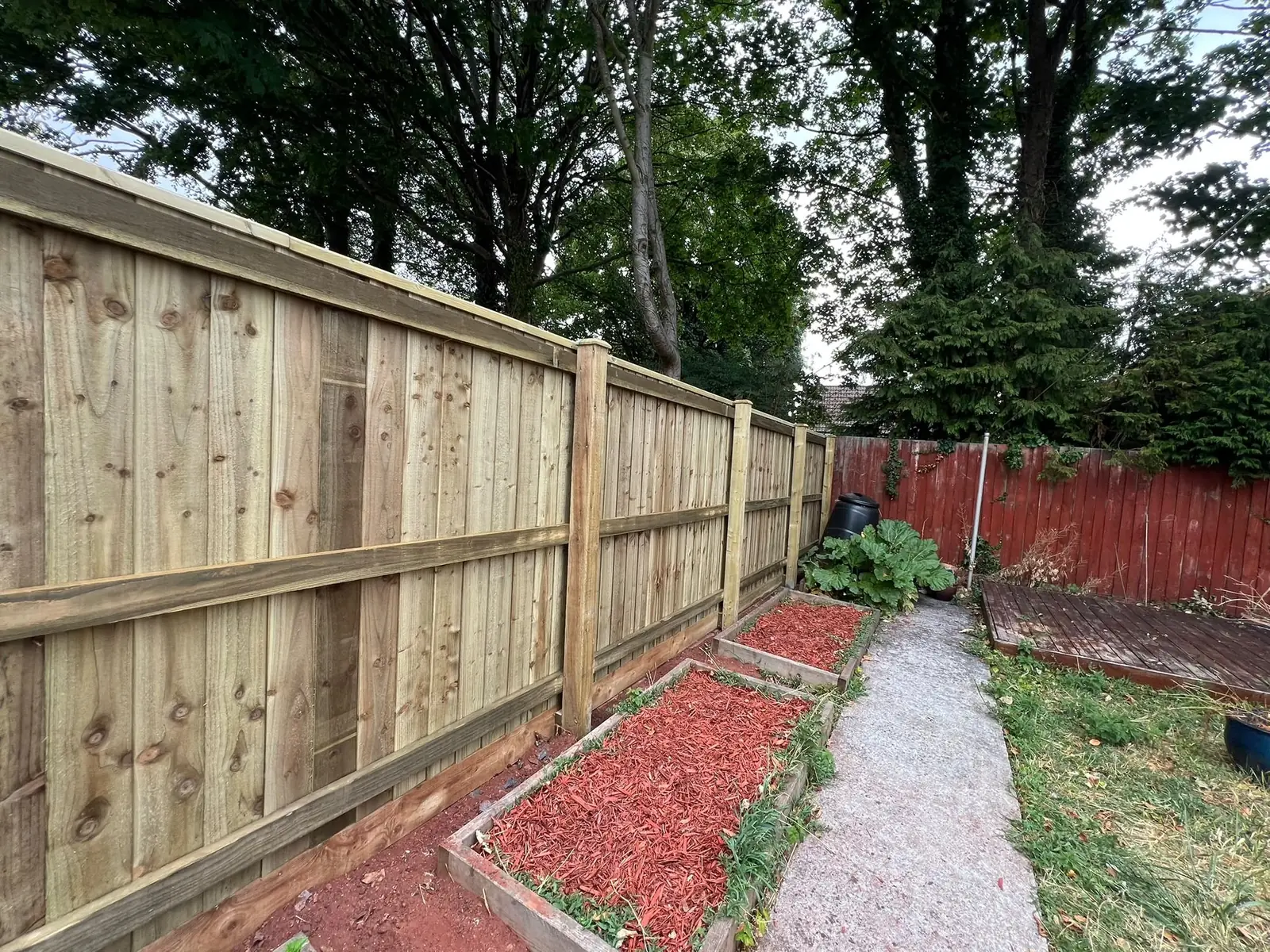
- Fixing three horizontal rails between the posts for a strong frame
- Fitting a timber gravel board along the base
- Building the face from overlapping vertical featherboards, fixed board by board
- Finishing the top with a capping rail
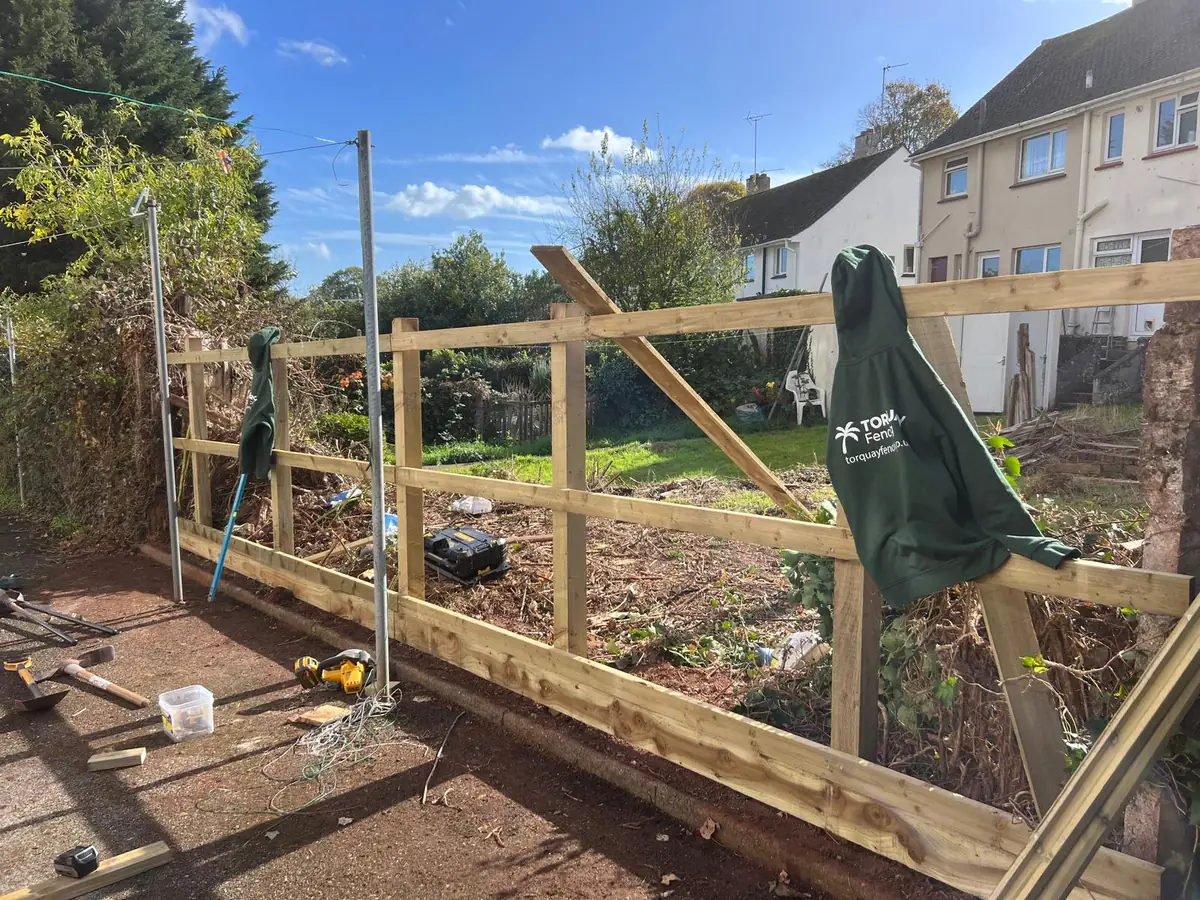 The new frame going in: timber posts, horizontal rails and the gravel board, ready for the featherboards.
Why Old Fences Rot
Most fences do not fail all at once. They fail from the bottom up. The weak spot is usually where a post meets the ground, because that is where the timber stays wet and has plenty of air around it. Rot sets in there first, the post softens, and the whole run starts to lean.
Boards that sit right down on the soil suffer in the same way, soaking up water every time it rains. Add three decades of damp South Devon winters and salty breezes off the bay, and even well built timber eventually gives up. If you want to know what to look out for on your own fence, our guide to how salt air affects coastal fencing in Torquay is a good place to start.
That is why we fitted a gravel board along the bottom of this fence. It keeps the featherboards up off the ground, takes the splash and the damp instead, and can be swapped out on its own in years to come without touching the rest of the fence. The capping rail does a similar job at the top, covering the end grain of the boards so rain runs off rather than soaking in.
Why Featherboard?
Featherboard, also called feather-edge or closeboard fencing, is built on site from vertical boards that are thicker on one edge than the other. Each board overlaps the one next to it, giving a solid face with no gaps. That means proper privacy, and a fence that copes well with the wind we get around Torbay.
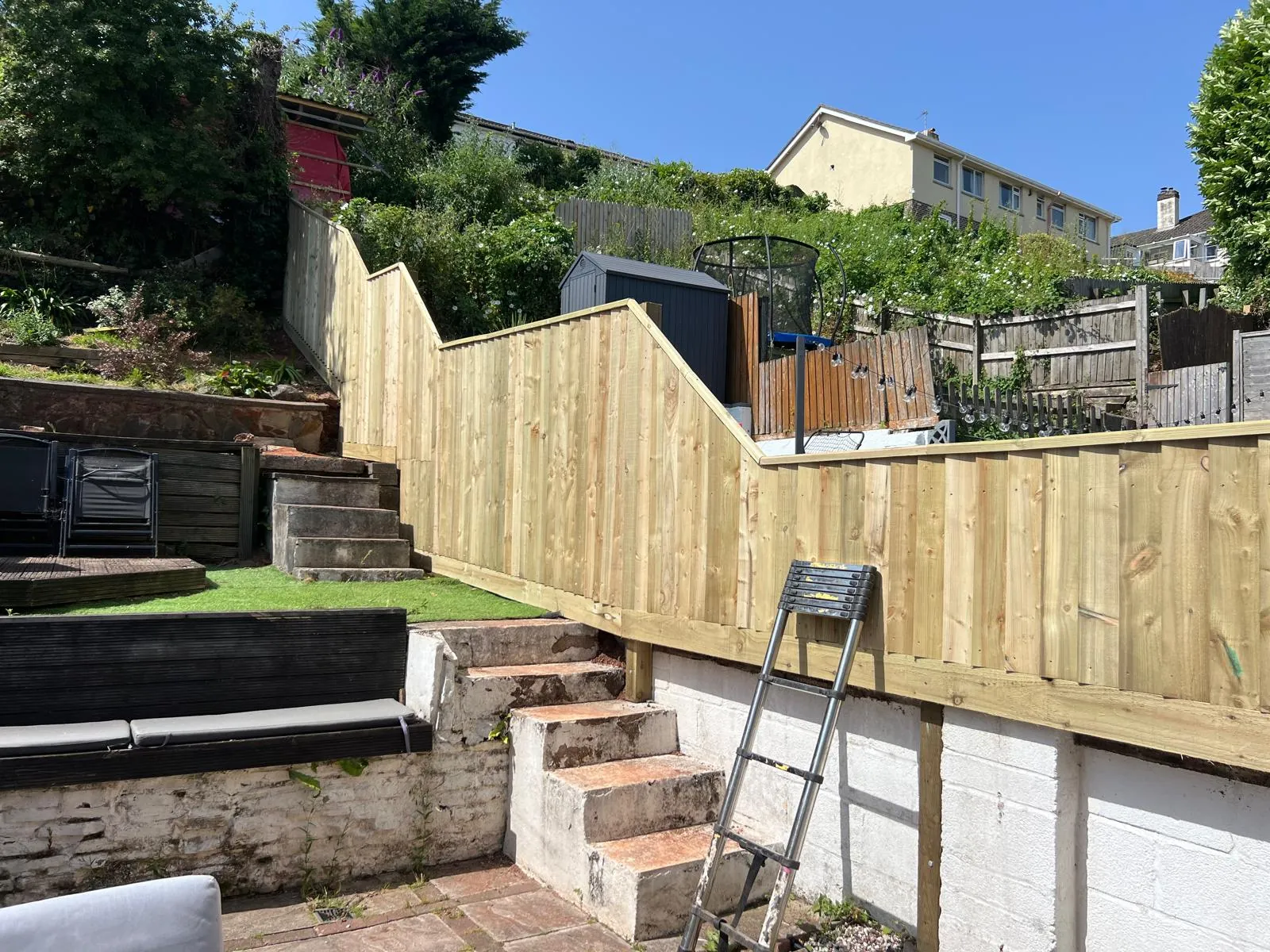
Because it is built board by board rather than dropped in as panels, it can follow the boundary exactly. It is also easy to repair, as a single damaged board can be replaced without taking out a whole section. For a closer look at why so many local homeowners choose it, see why closeboard fencing is perfect for Torbay gardens.
How High Can a Fence Be?
A 6ft fence is about 1.8m tall, which keeps it comfortably under the 2m height you can usually build to without needing planning permission. The rules are different next to a road, where the usual limit drops to 1m, and some properties have their own restrictions, so it is always worth checking. Our guide to choosing the right fence height for your Torquay property explains the usual limits in plain English.
The Installation
Once the old fence was down and cleared away, we set out the line and put in the new timber posts. The three rails were fixed between them, then the gravel board went in along the base so the featherboards would have a level, dry line to sit above.
The featherboards were then fixed one at a time, each overlapping the last, before the capping rail went on along the top to finish the run.
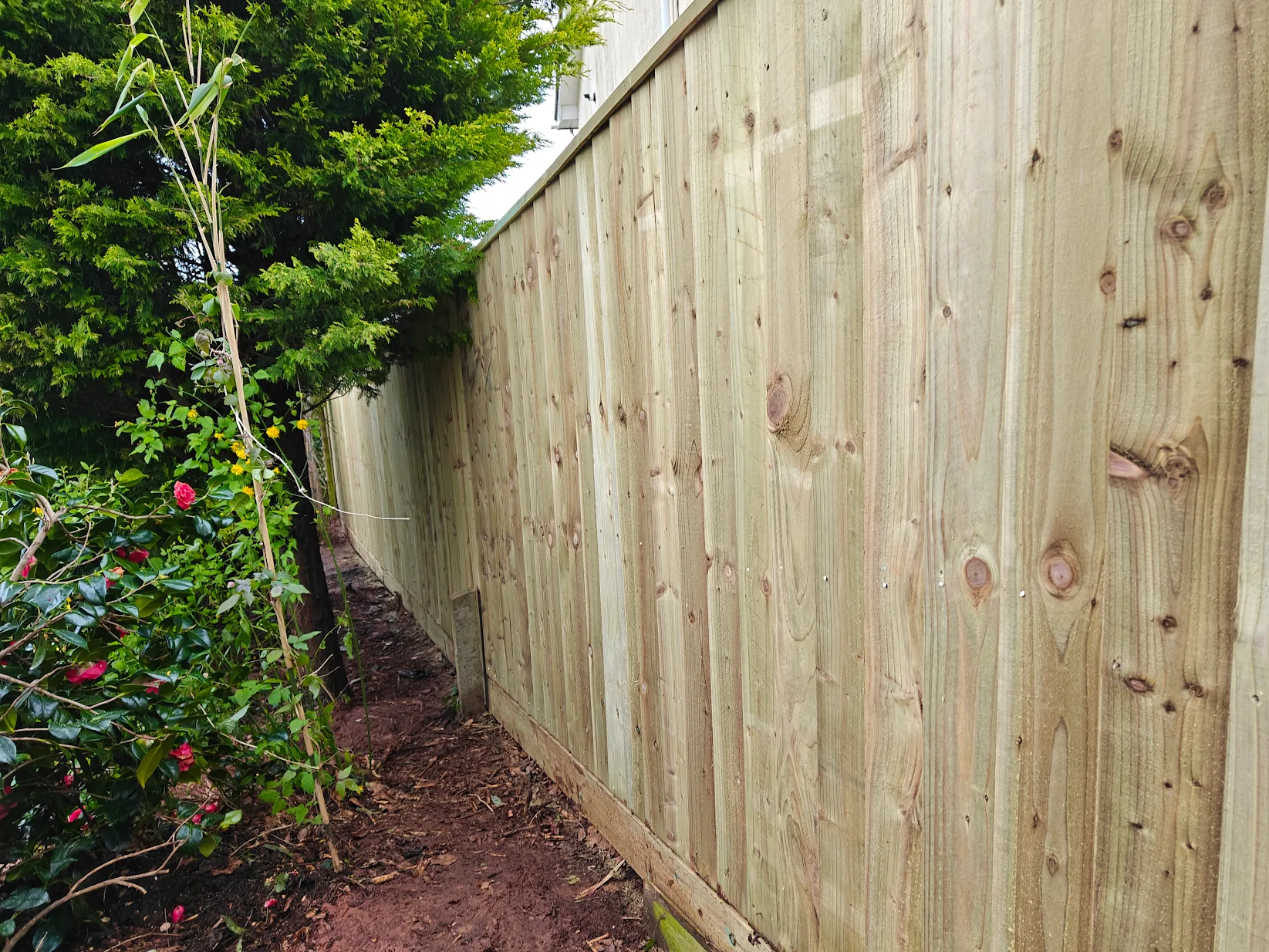
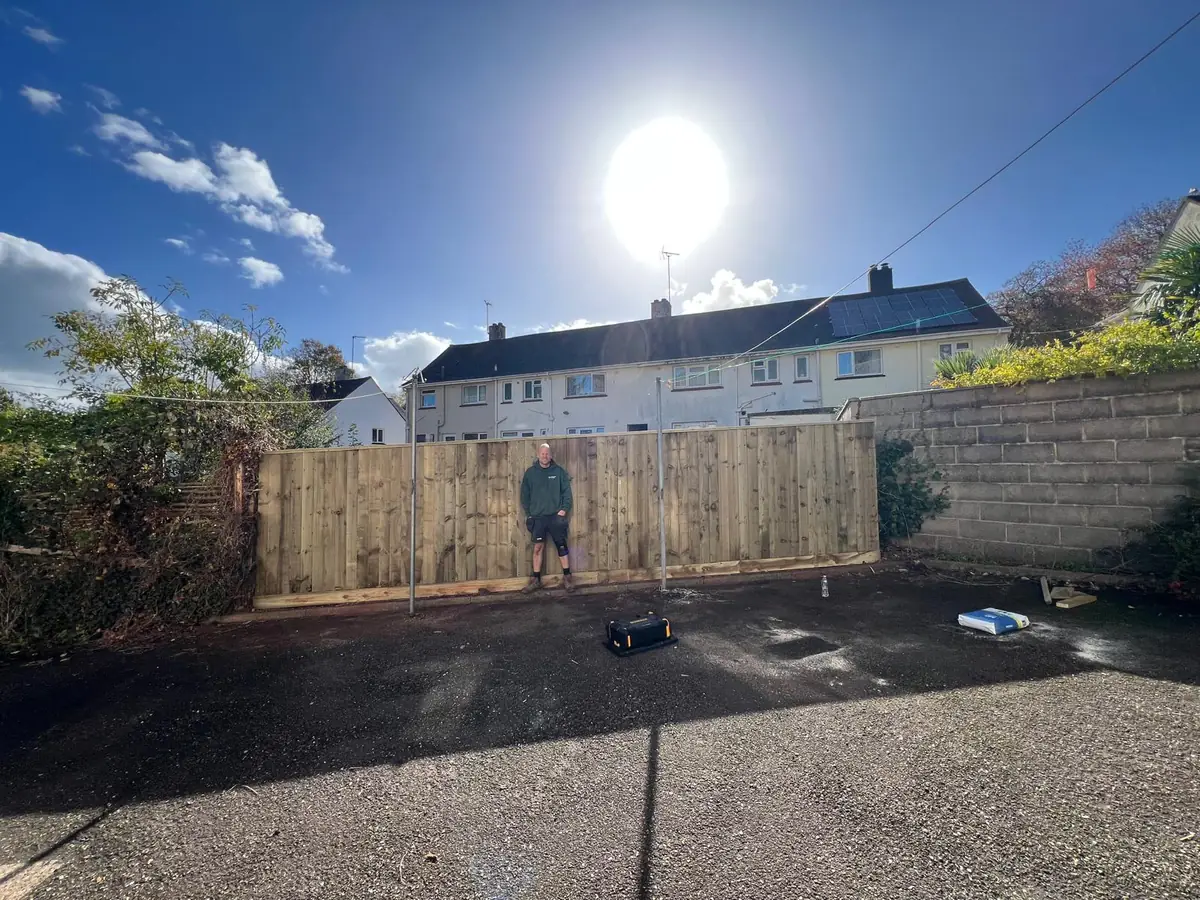 The full 7m run of new 6ft featherboard, seen from the parking area side.
The Result
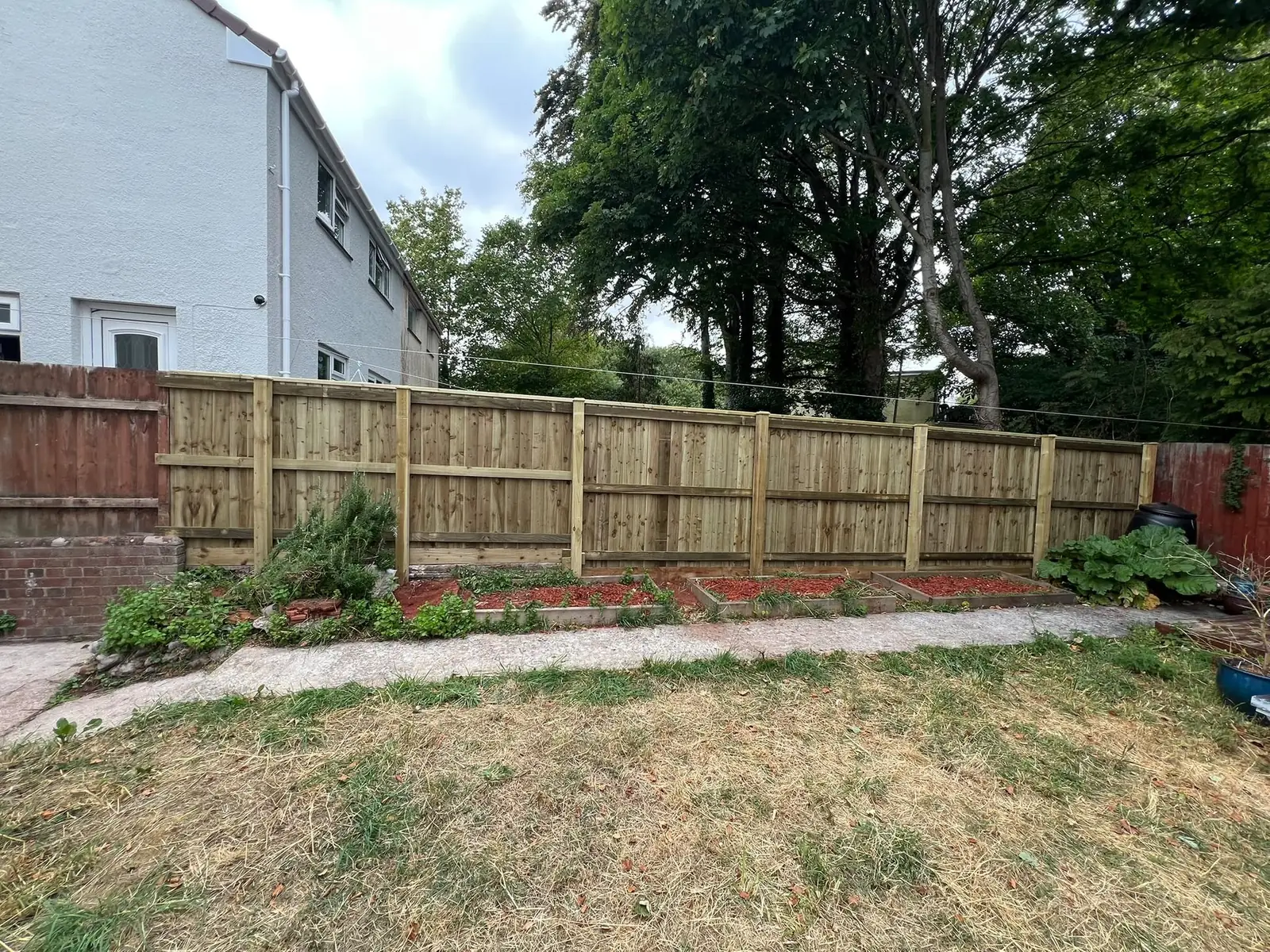
Where there was a tired, rotten fence, there is now 7m of solid, private 6ft featherboard. From the parking side it is a clean, even face of boards with a neat capping rail on top. From the garden side you can see the posts and three rails that give it its strength.
With new timber, a gravel board keeping the boards off the ground and a capping rail on top, this boundary is set up to look after itself for many years to come.
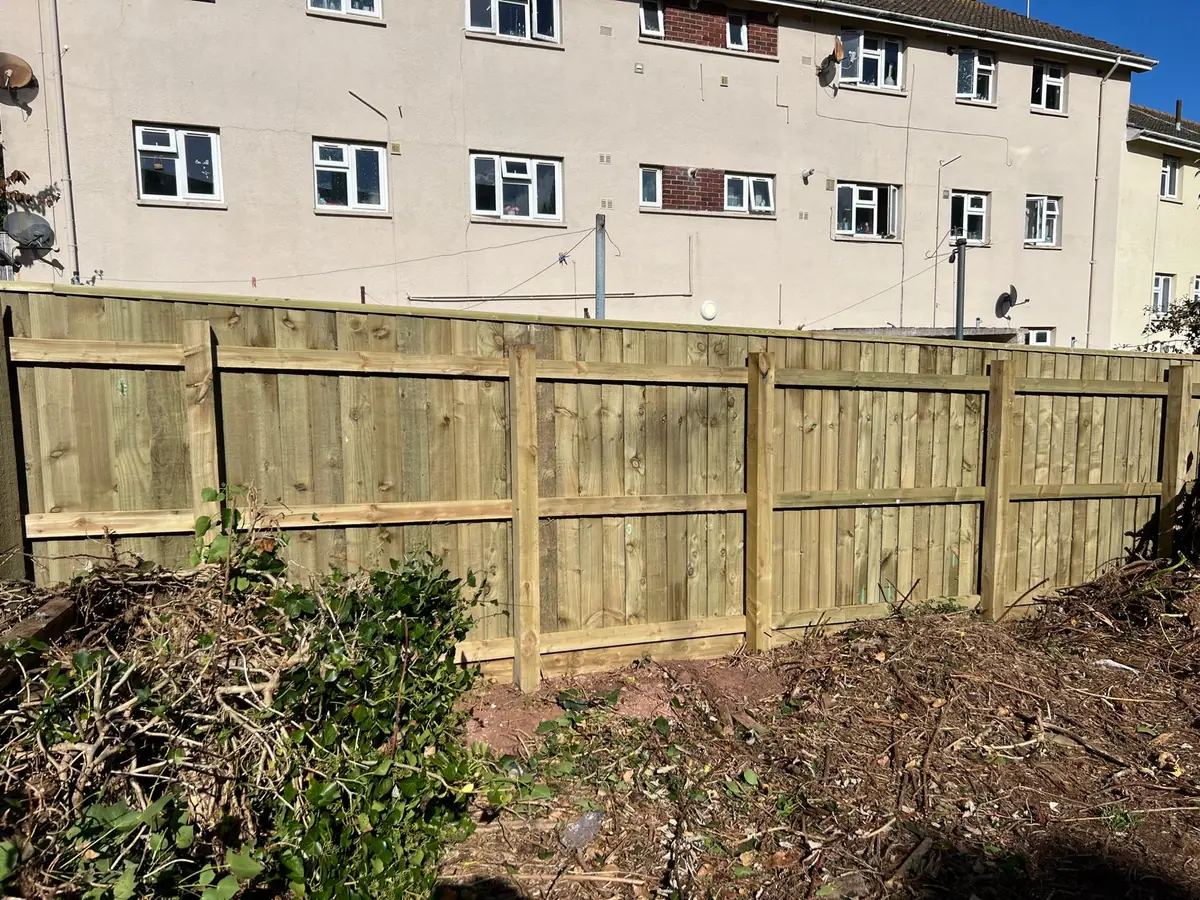 The garden side of the new fence, showing the posts and three rails behind the featherboards.
If your fence is soft, leaning or simply getting on a bit, whether you are in Torquay, Paignton, Brixham or elsewhere in Torbay, get in touch for a free site visit and quote.
Call Joe on 01803 494348.
You can also see another recent job in our 6ft closeboard fence installation in Torquay case study.