We were asked to look at a fence beside a set of concrete garden steps in Paignton. It was not just a boundary. It was holding back a raised bed of soil, and the old featherboard had started to lean out over the steps. We rebuilt it as a proper timber retaining fence, using 2in tongue and groove boards with a damp-proof membrane behind.
Steep, terraced gardens are common across Paignton and the rest of Torbay. When a fence is asked to hold back soil as well as mark an edge, standard boards are often not up to the job.
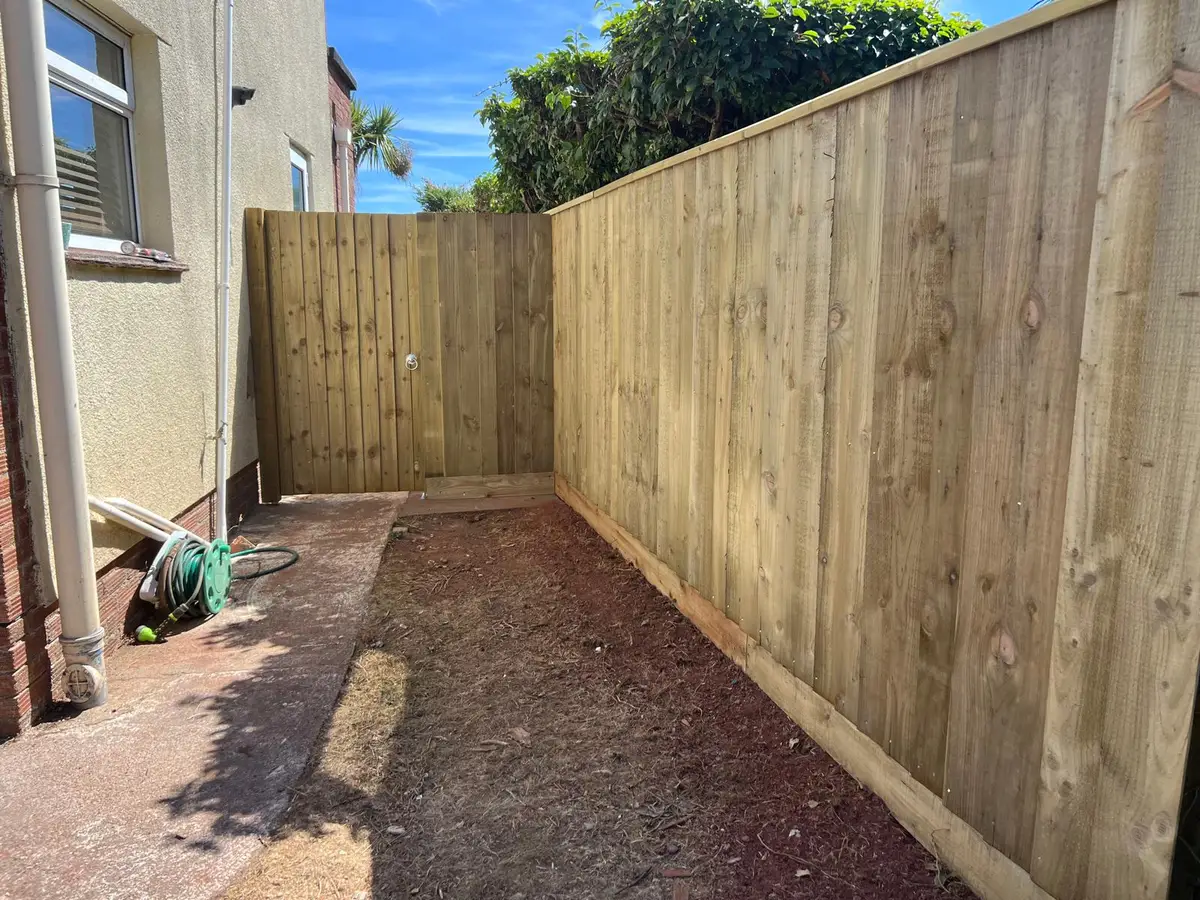
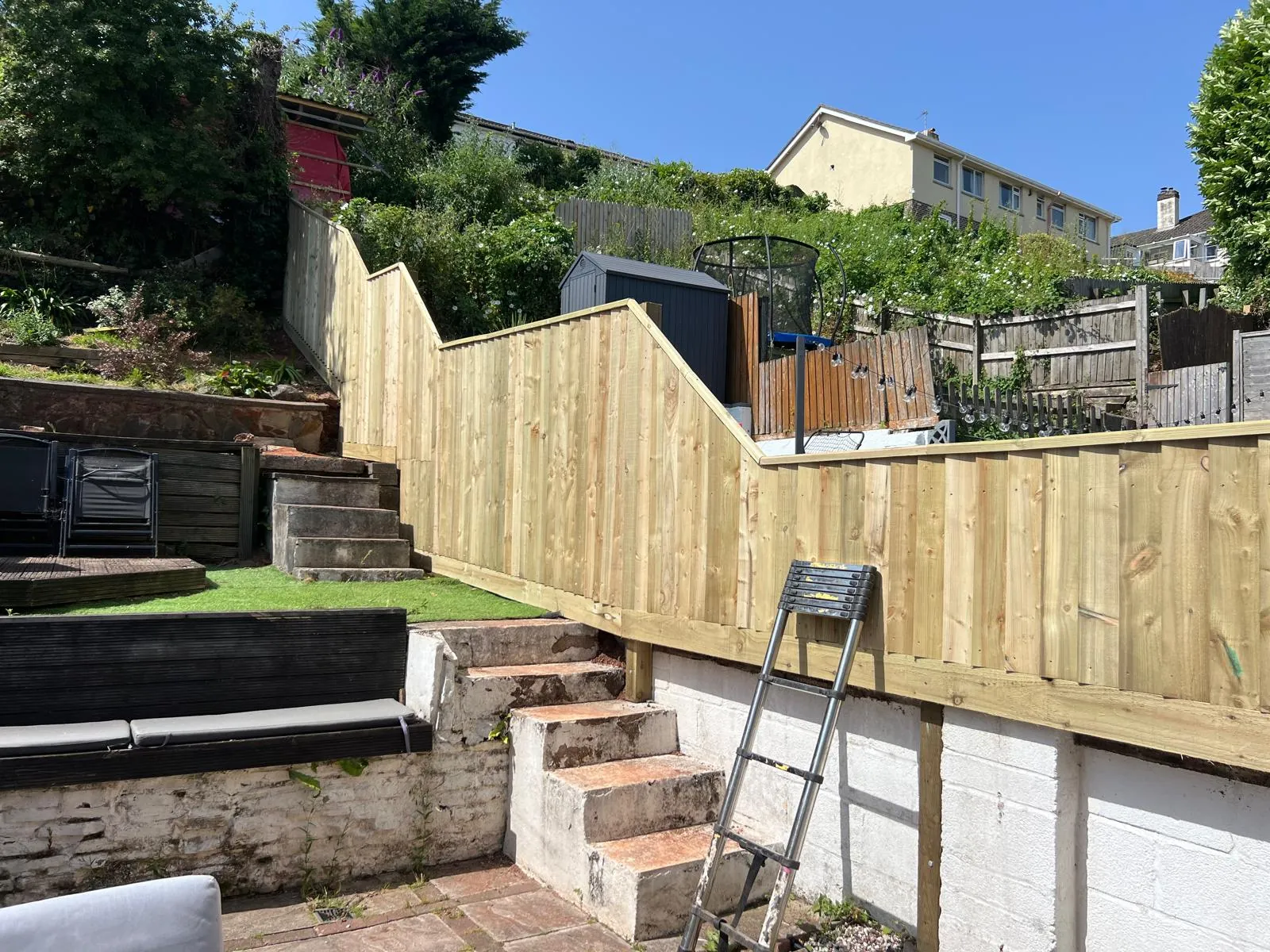
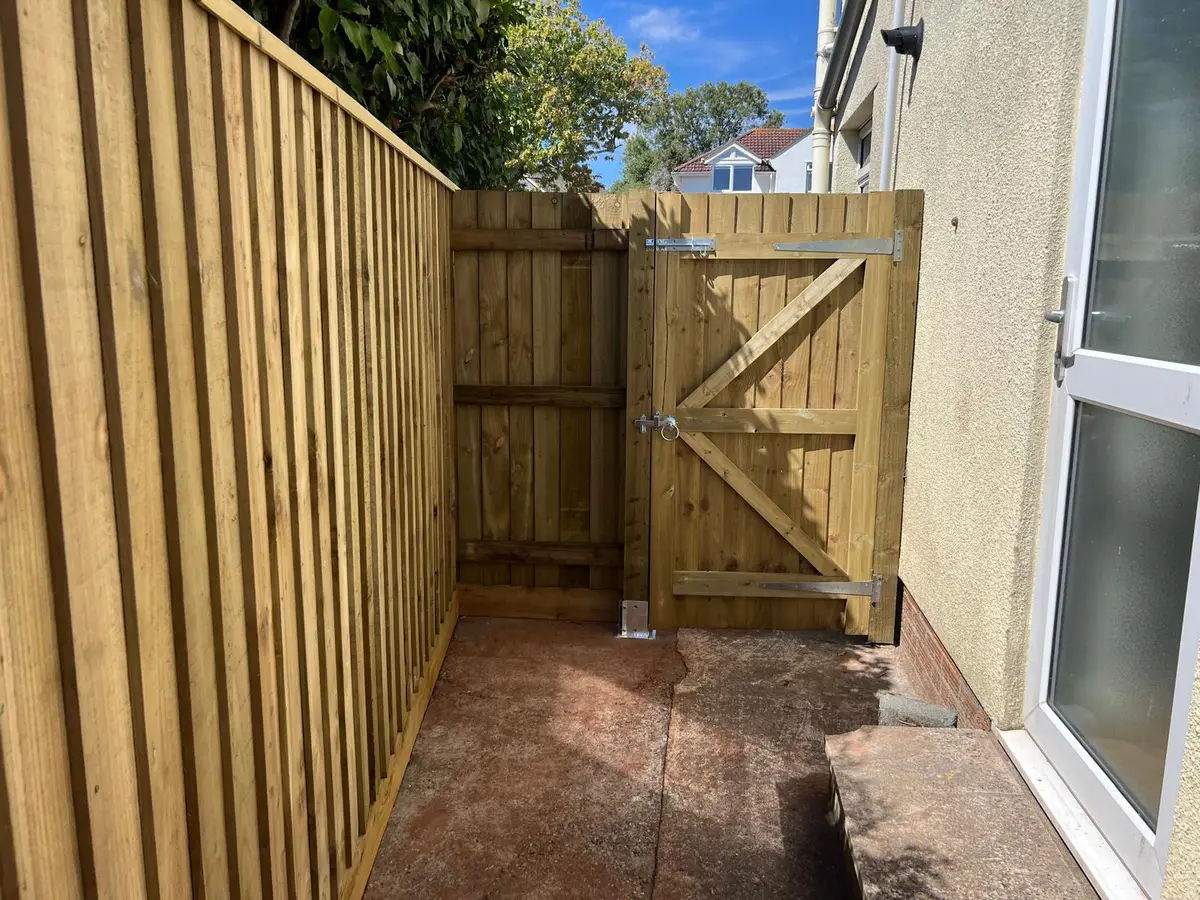
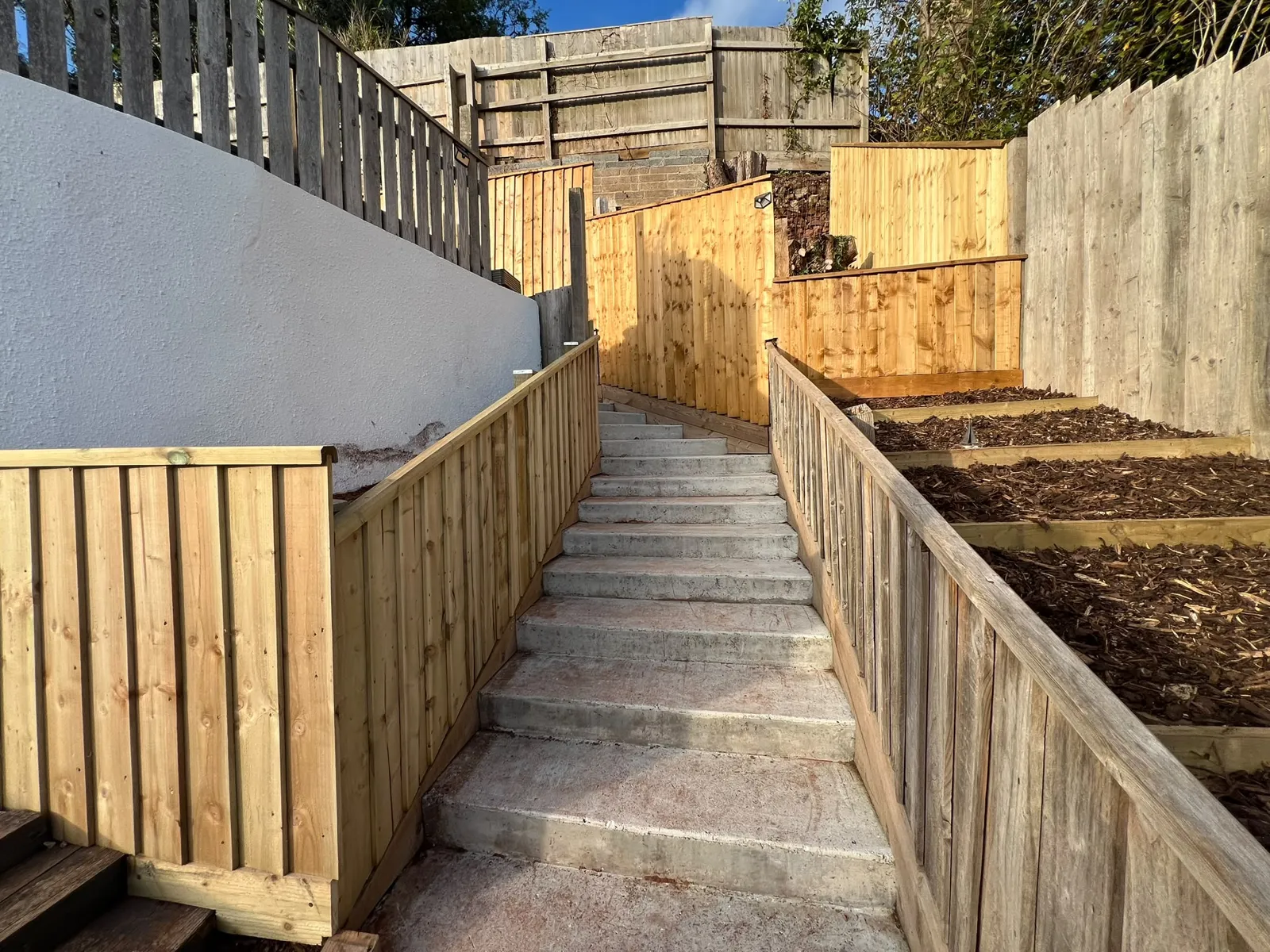
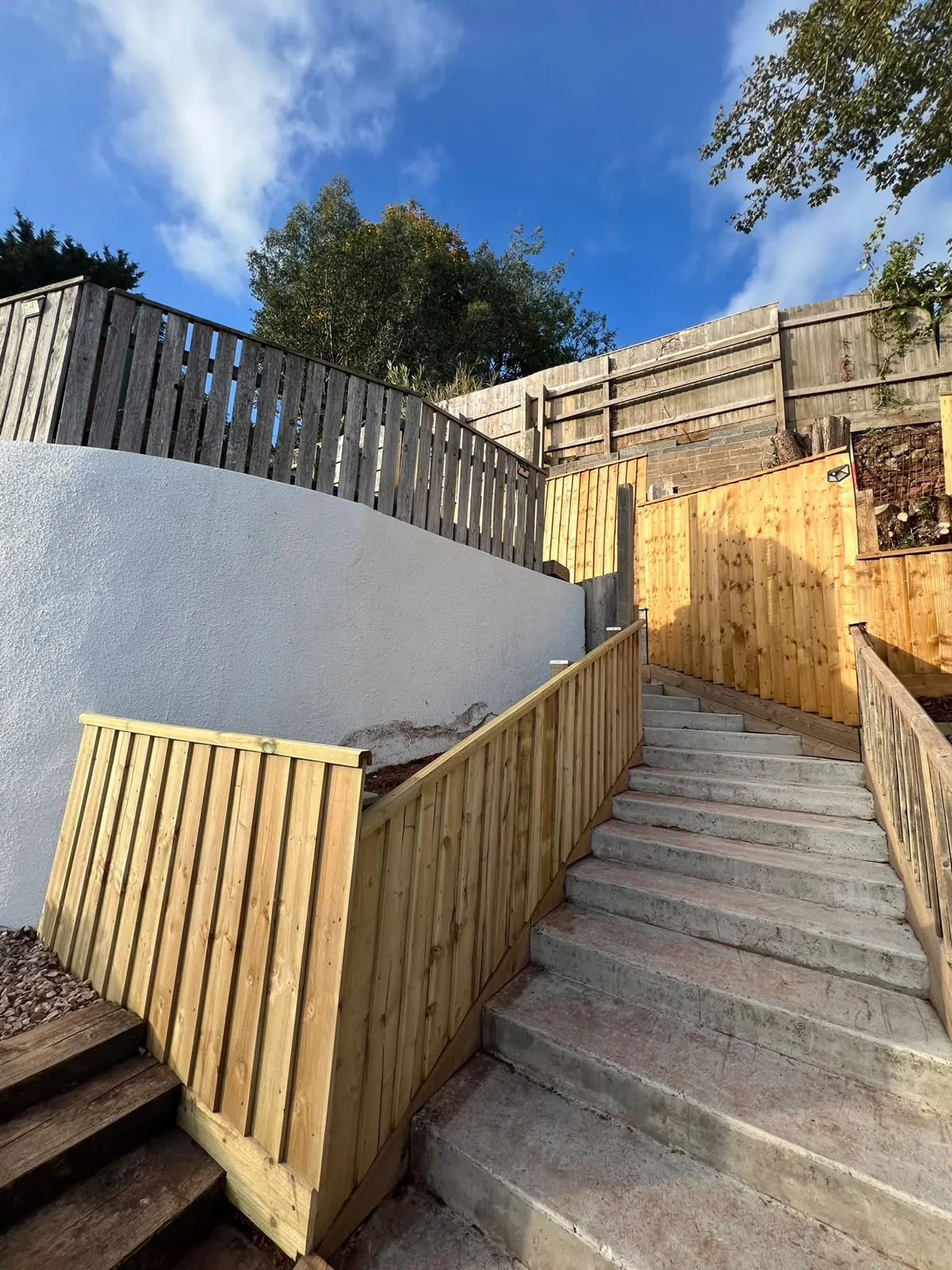 The finished retaining fence running up beside the concrete garden steps, with a capping rail following the line of the steps.
The Project: A Fence That Was Being Asked to Be a Wall
The garden steps run up the side of the plot, with a raised planted bed on one side. The earlier fence along that edge was featherboard. Featherboard makes a good boundary, but the boards are thin and only lightly overlapped, so they are not designed to have soil pressing against them. Over time, the weight of the soil, and the water it holds after rain, had pushed the fence out over the steps.
The aim was simple: a fence that would actually hold the soil, look tidy from the steps, and keep the line of the steps clear.
What the project involved:
- Taking out the old leaning featherboard fence
- Digging the soil back from the edge of the steps to give working room
- Setting new posts along the run
- Building the retaining face from 2in tongue and groove boards, fixed horizontally between the posts
- Fitting a damp-proof membrane behind the boards, between the timber and the soil
- Finishing the step side with vertical boards and a capping rail that follows the rake of the steps
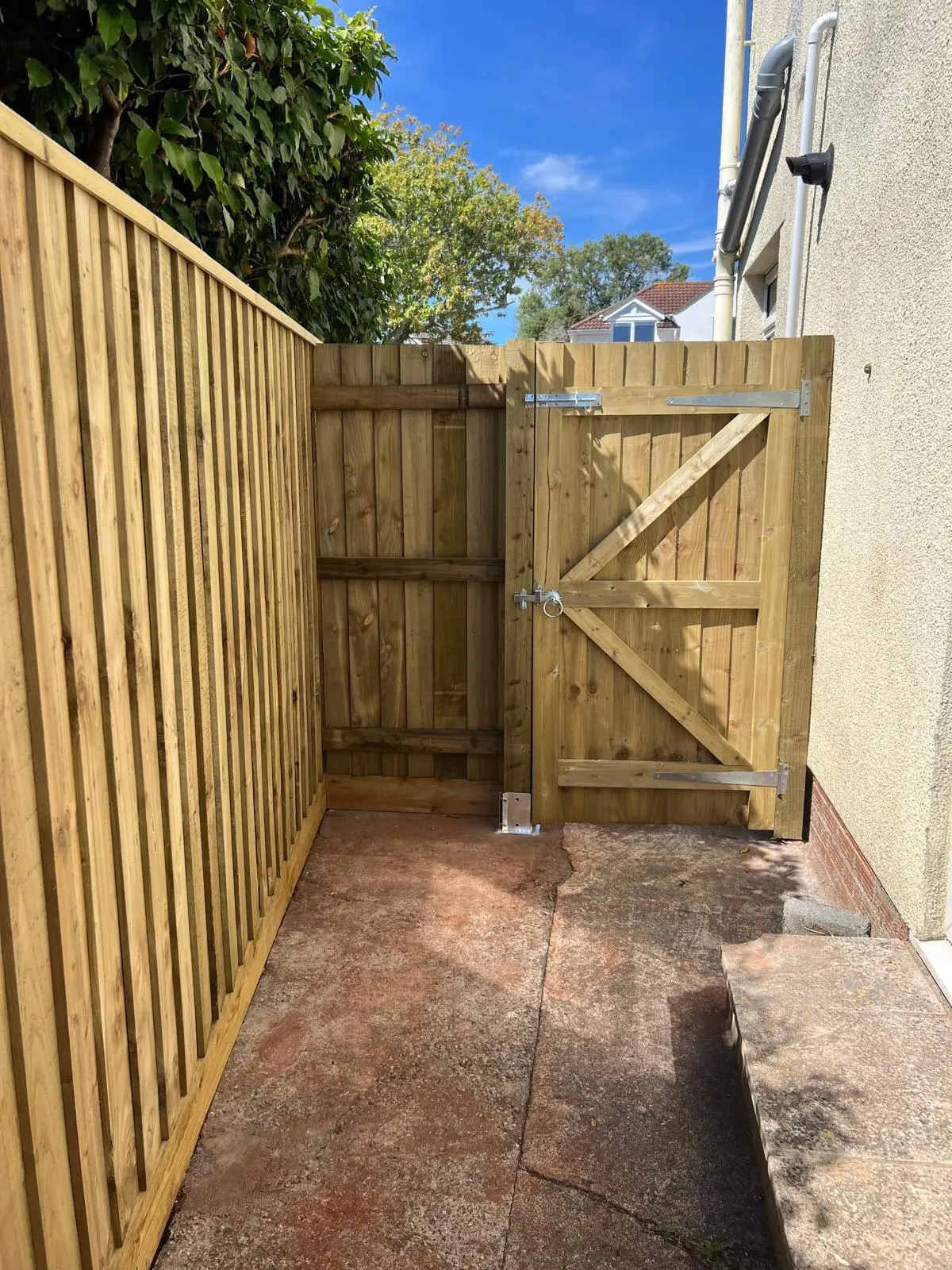
- A short level return at the bottom of the steps to close off the end of the bed
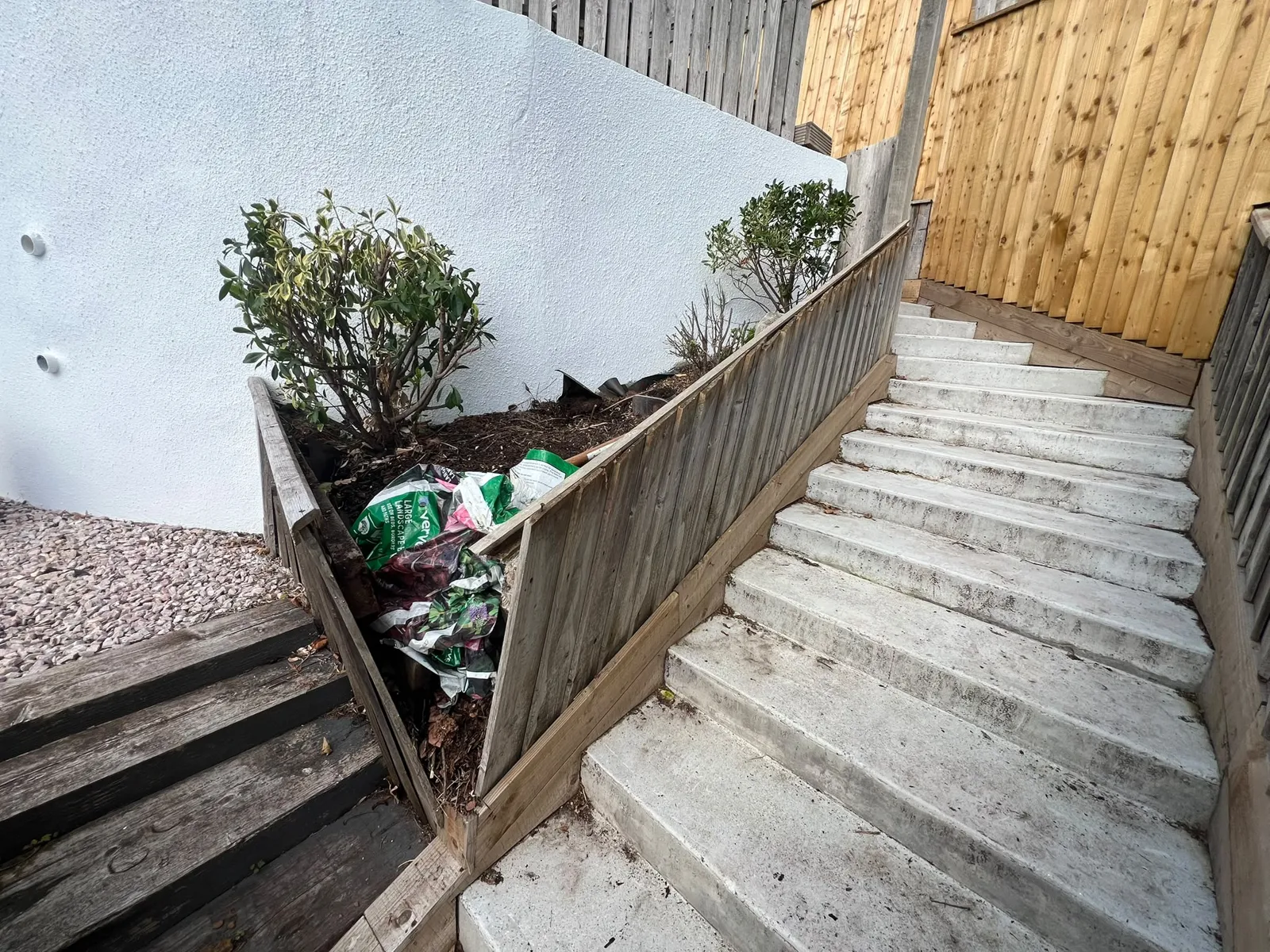 Before: the old featherboard fence was leaning out over the steps under the weight of the raised soil bed behind it.
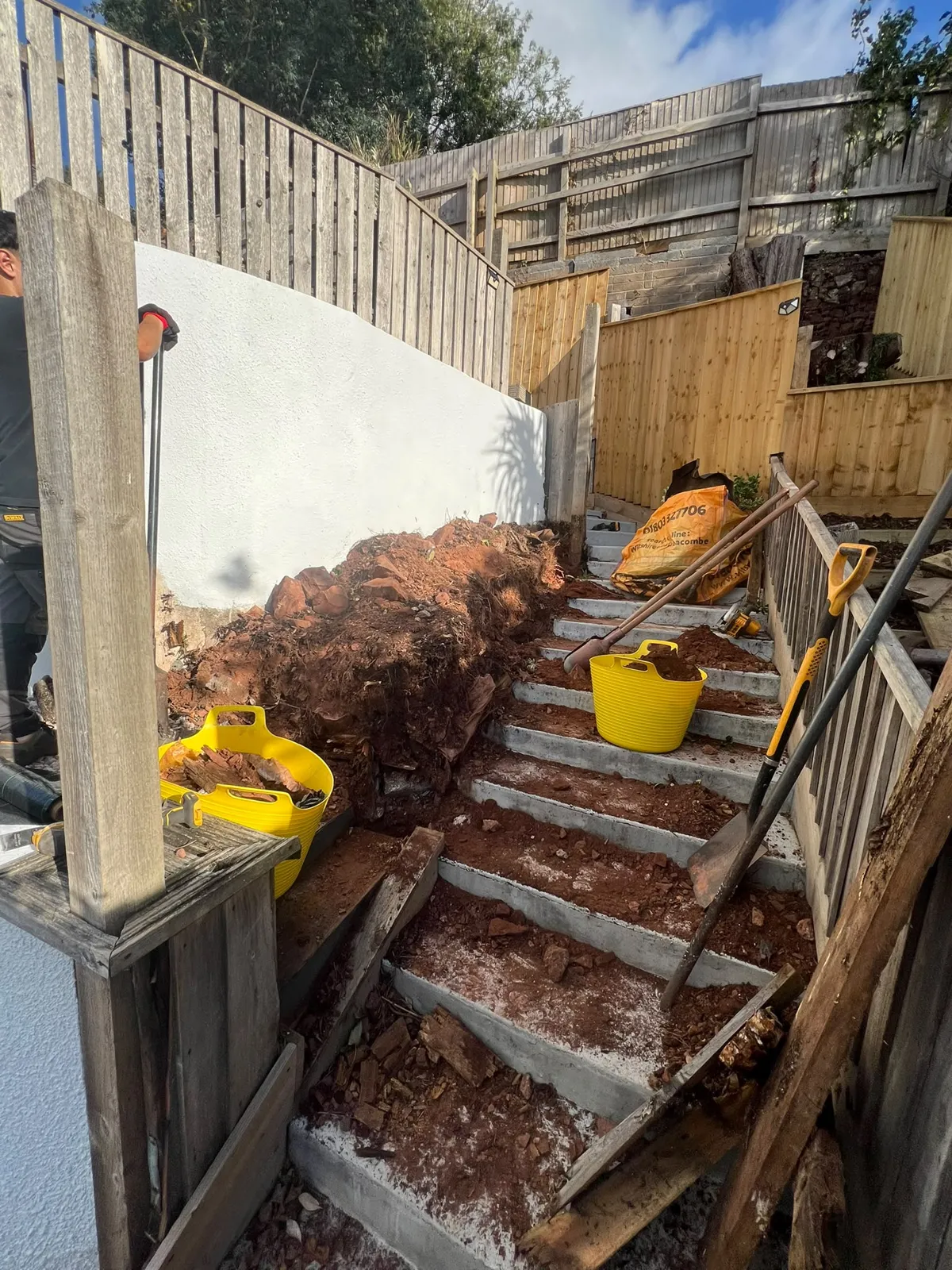 With the old fence out, the soil was dug back from the steps to make room for new posts.
Why Tongue and Groove Works for Retaining Soil
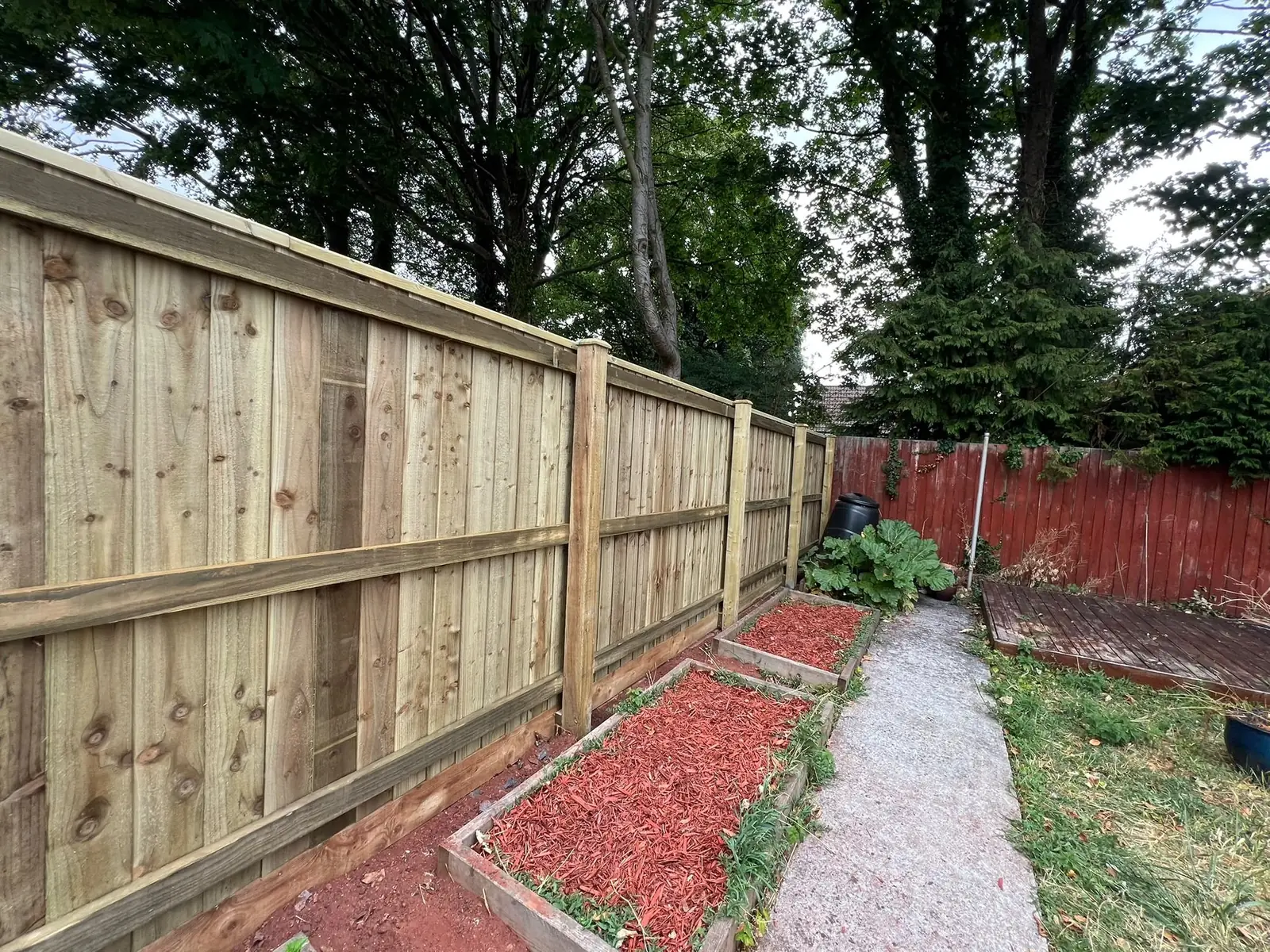
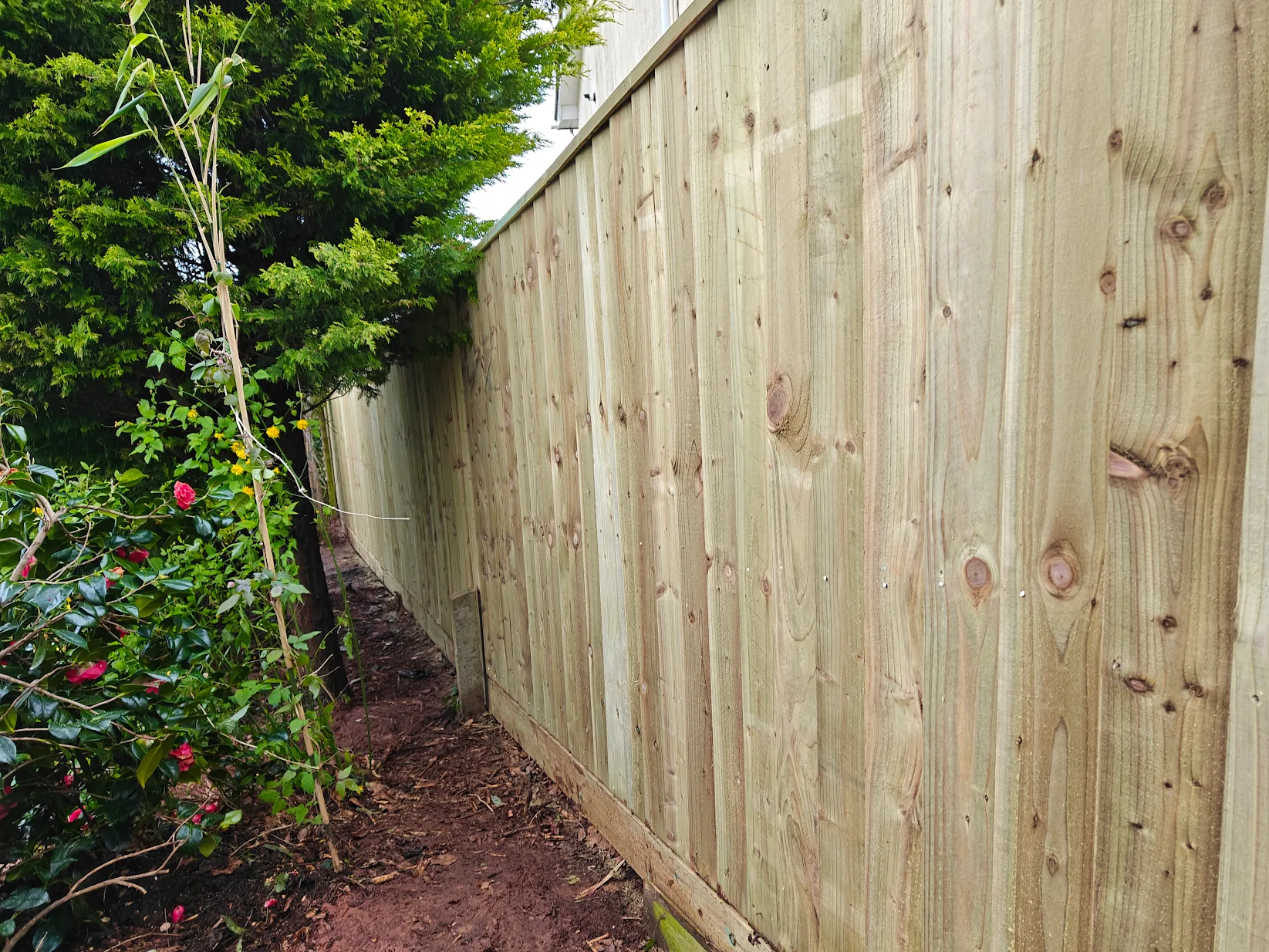
Tongue and groove boards slot into each other along their length. Once they are stacked between posts, they form a solid, continuous face with no gaps for soil to push through. At 2in thick, they are also far stiffer than featherboard, so they resist the steady sideways pressure of a raised bed much better.
The membrane matters just as much. Wet soil sitting directly against timber is what shortens the life of any garden structure. A damp-proof membrane behind the boards keeps most of that moisture off the timber, which helps the fence last longer through a damp Devon winter. For more on looking after timber in the colder months, see our guide to protecting your fence before winter.
On the step side, the vertical boards and capping rail give a neat finish, so from the steps you see a tidy fence rather than the working face behind it.
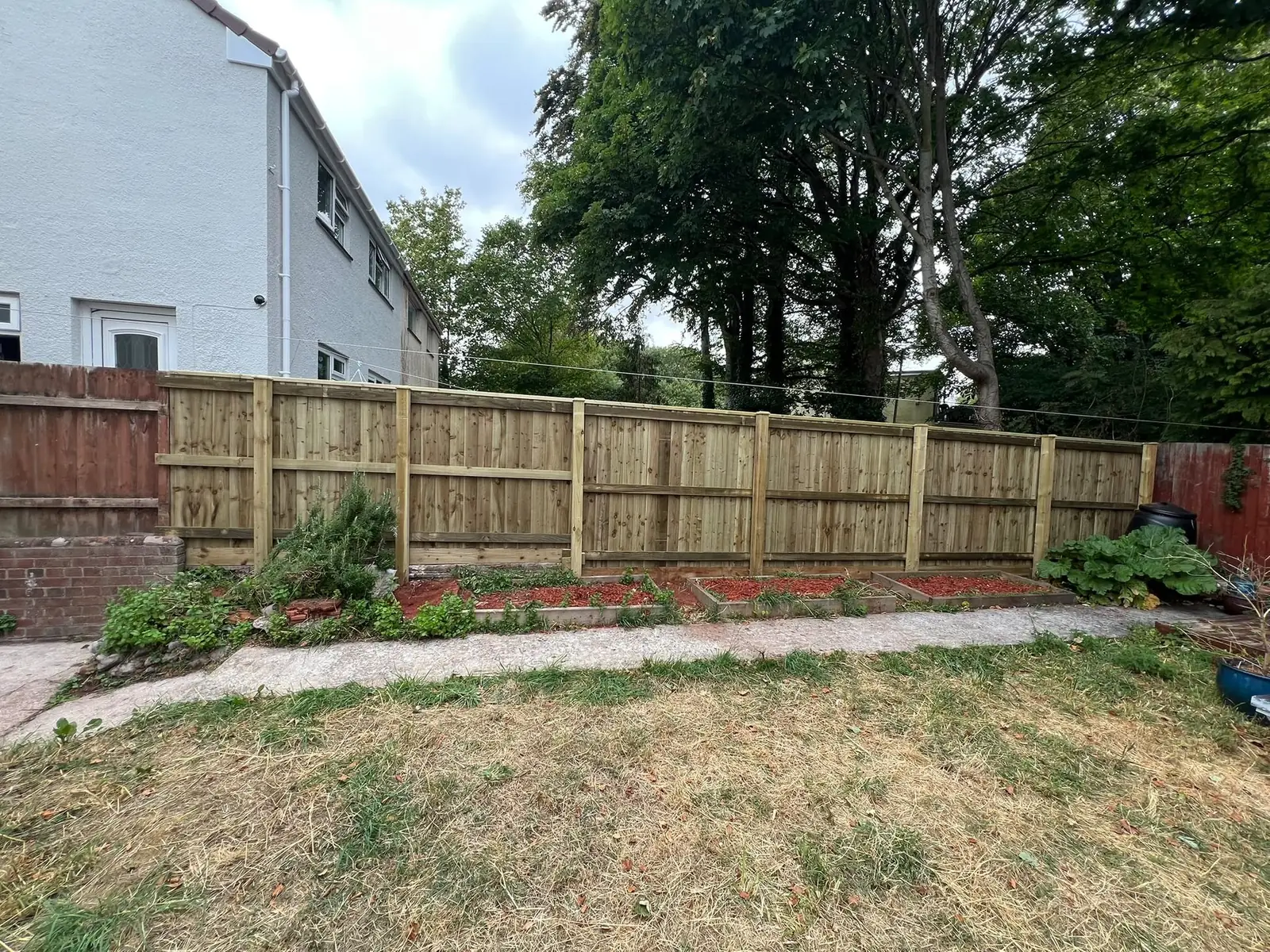
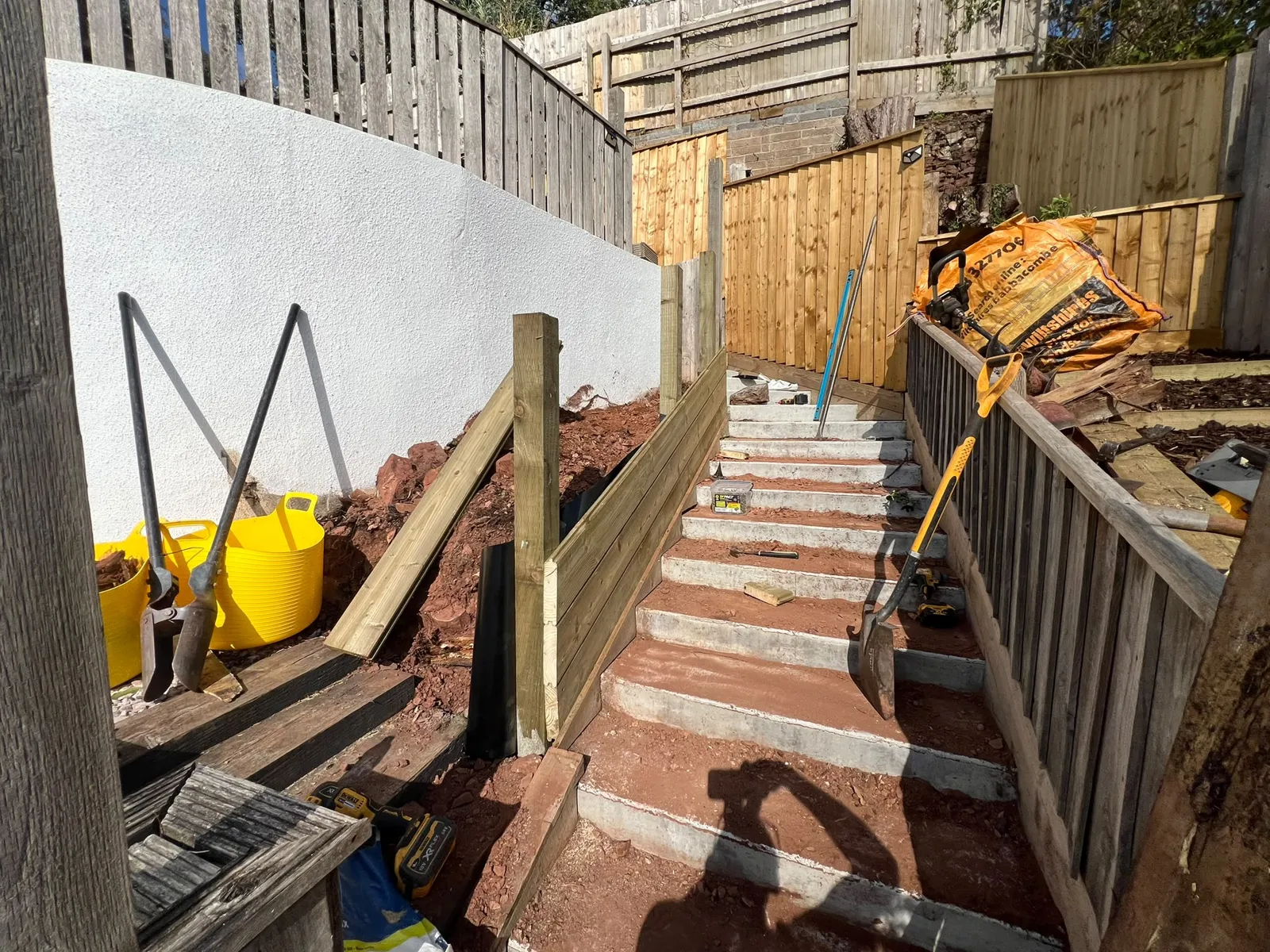 New posts in and the first 2in tongue and groove boards fixed, with the damp-proof membrane going in behind.
The Installation
Once the old fence was out, the soil was dug back and moved clear of the steps so the new posts could be set in line with the edge of the concrete. The tongue and groove boards were then built up between the posts, following the slope of the steps, with the membrane fitted behind as the boards went up.
With the retaining face in place, the soil was returned behind it and the step side was boarded and capped. The capping rail runs at the same angle as the steps, which keeps the top line clean all the way up.
Steep sites like this take careful planning, because materials, spoil and tools all have to share a narrow flight of steps. We have tackled similar ground before, including a job in difficult, waterlogged conditions.
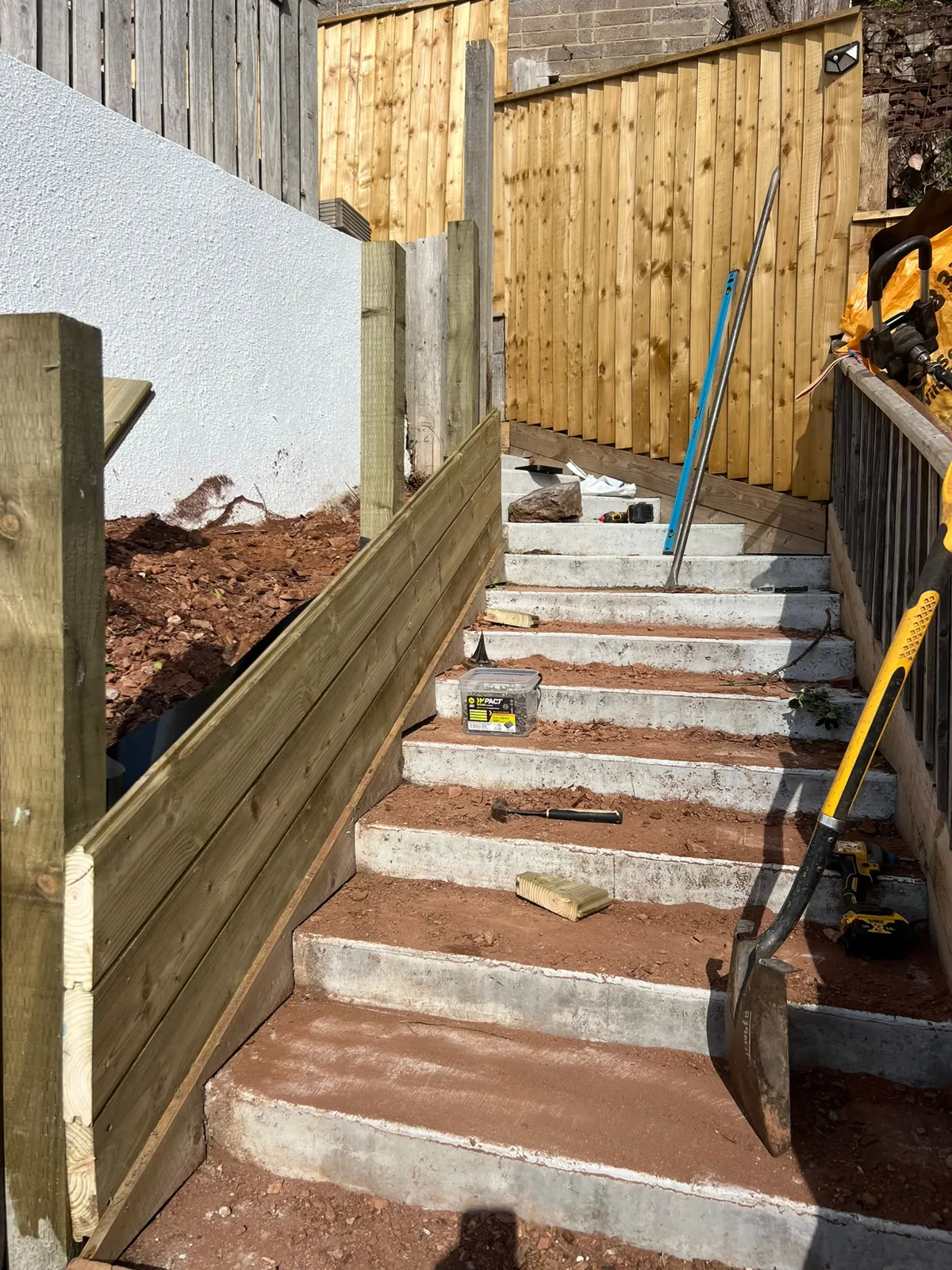 The tongue and groove boards lock together to form a solid face against the soil as the run climbs the steps.
The Result
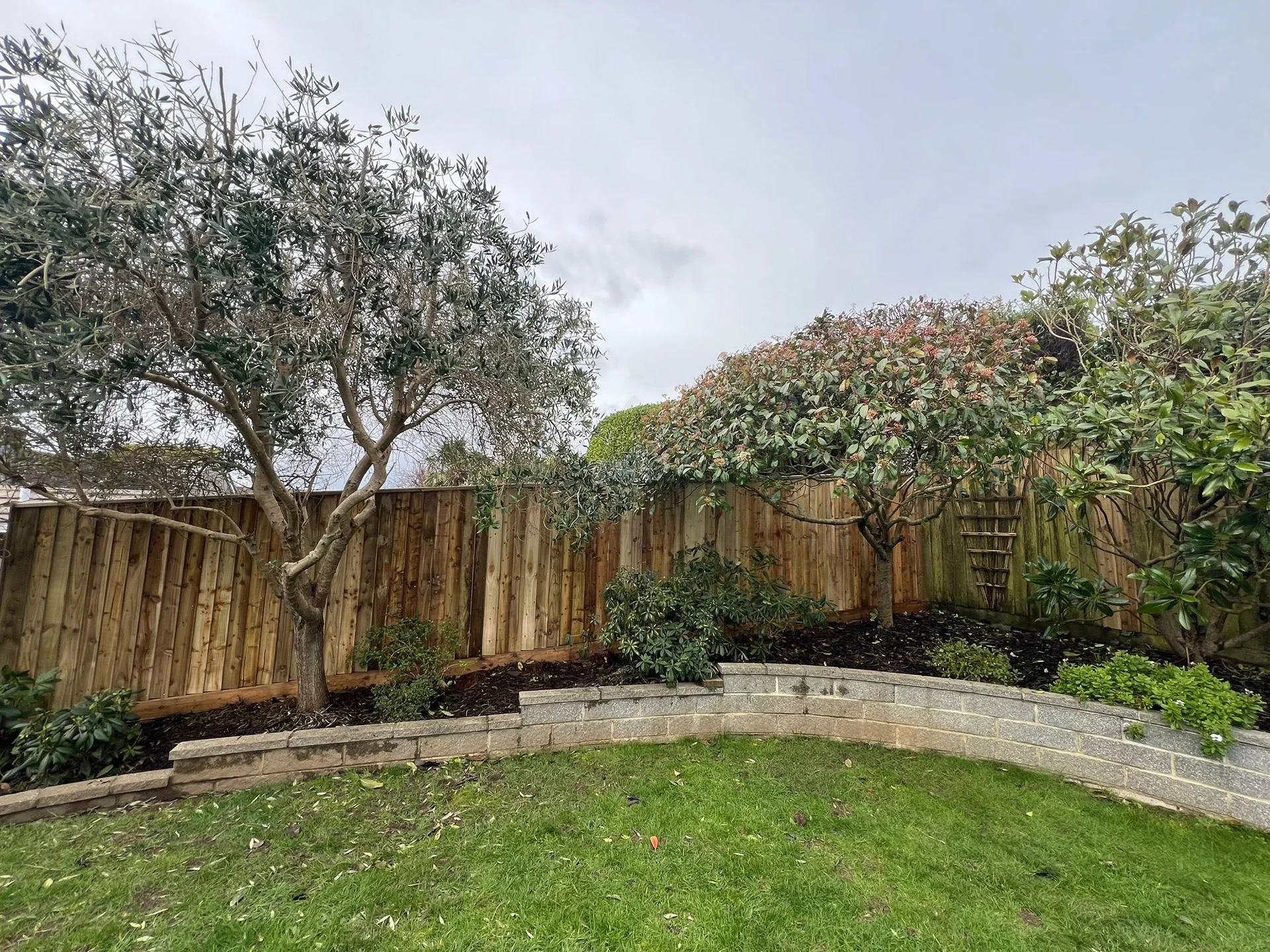
The garden now has a straight, solid timber edge beside the steps that is built to hold the soil behind it. The raised bed is contained, the steps are clear, and the new timber finish sits neatly alongside the rest of the terraced garden.
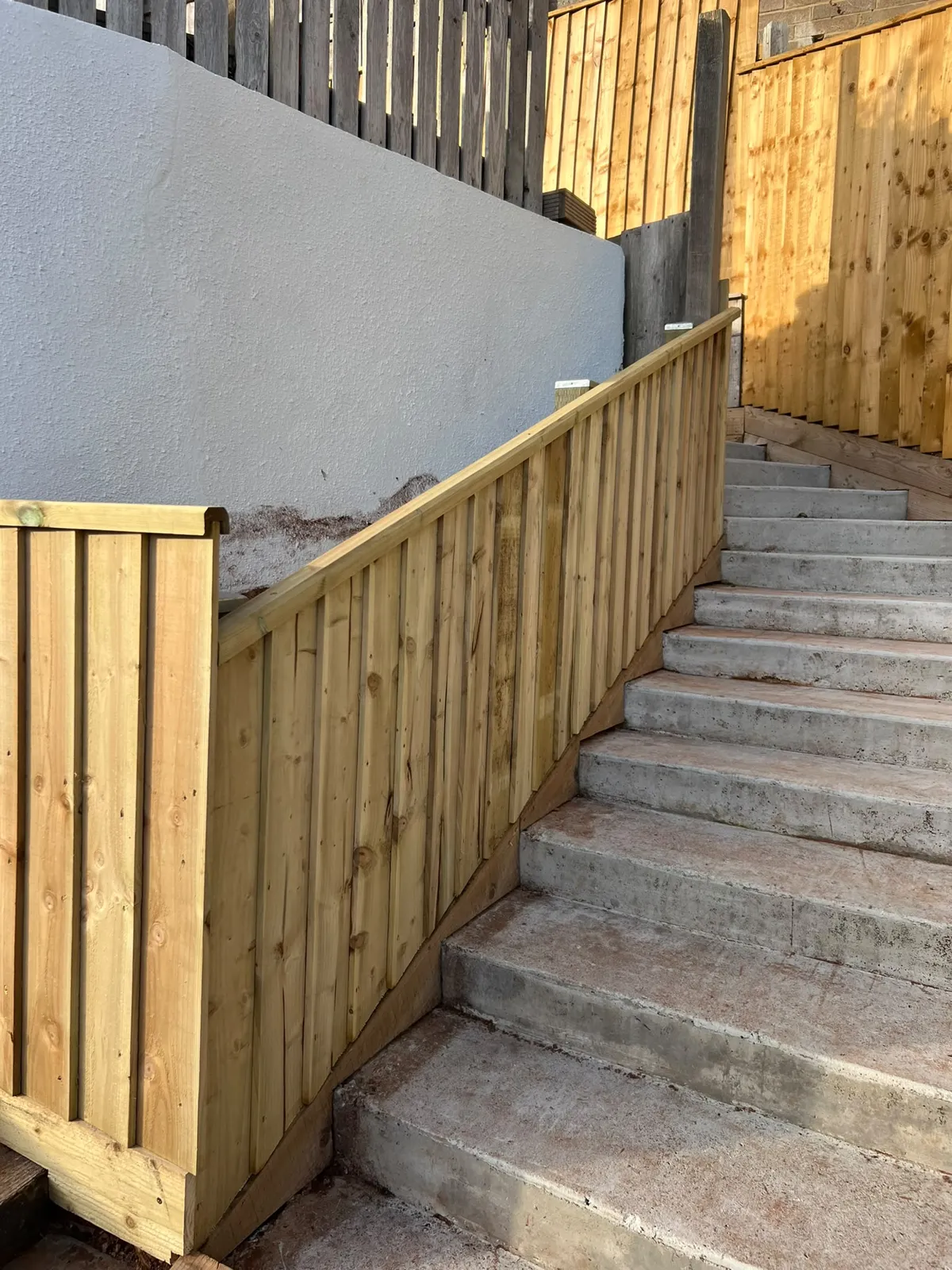 The step side is finished in vertical boards with a capping rail, and a short level return at the bottom of the steps.
If you have a fence that is leaning because it is holding back soil, or a sloping garden in Paignton or elsewhere in Torbay that needs a stronger edge, get in touch for a free site visit and quote.
Call Joe on 01803 494348.
You can also see how we handled a raised retaining wall in our closeboard fence on a sloping Torquay garden case study.