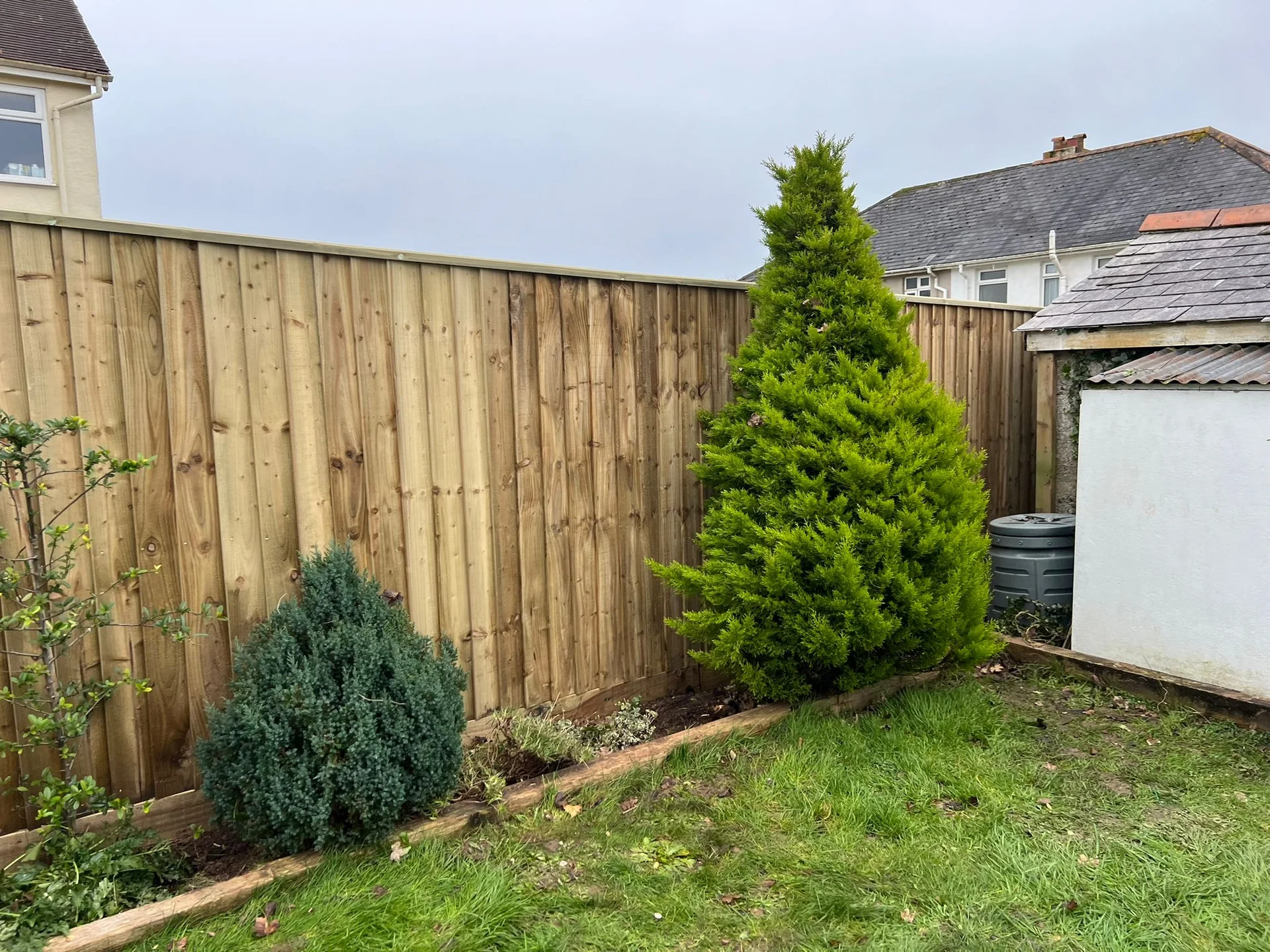
There are few nicer places to spend a working day than Brixham, and this job came with blue skies, palm trees and a very well prepared customer. We built 12m of brand new 6ft featherboard fencing, finished with rebated capping along the top and galvanised caps on the posts.
The customer had kindly taken the old fence down before we arrived, so we could get straight on with the build. At their request, we also left the original concrete boundary posts exactly where they were, which is something we always think is a sensible idea. More on that below.
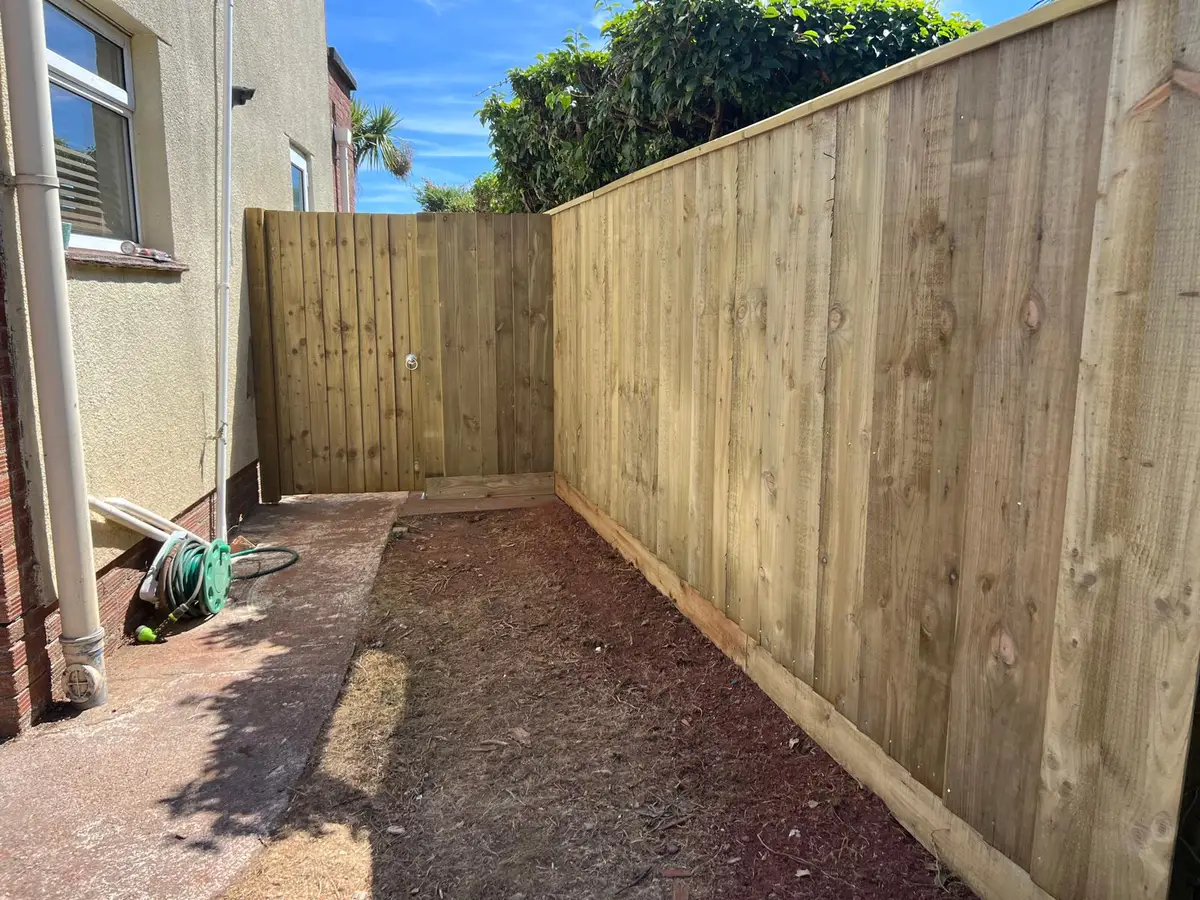
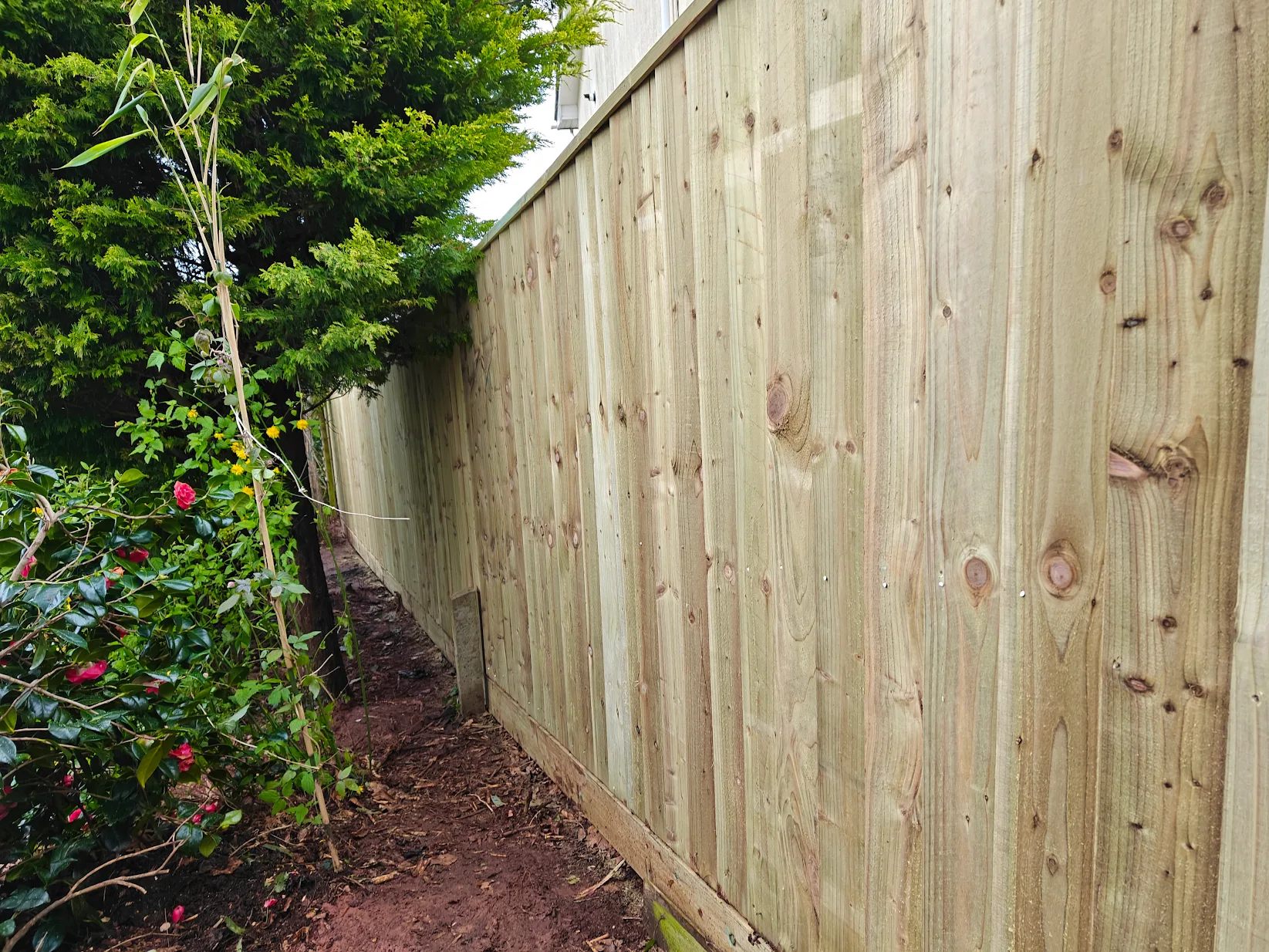
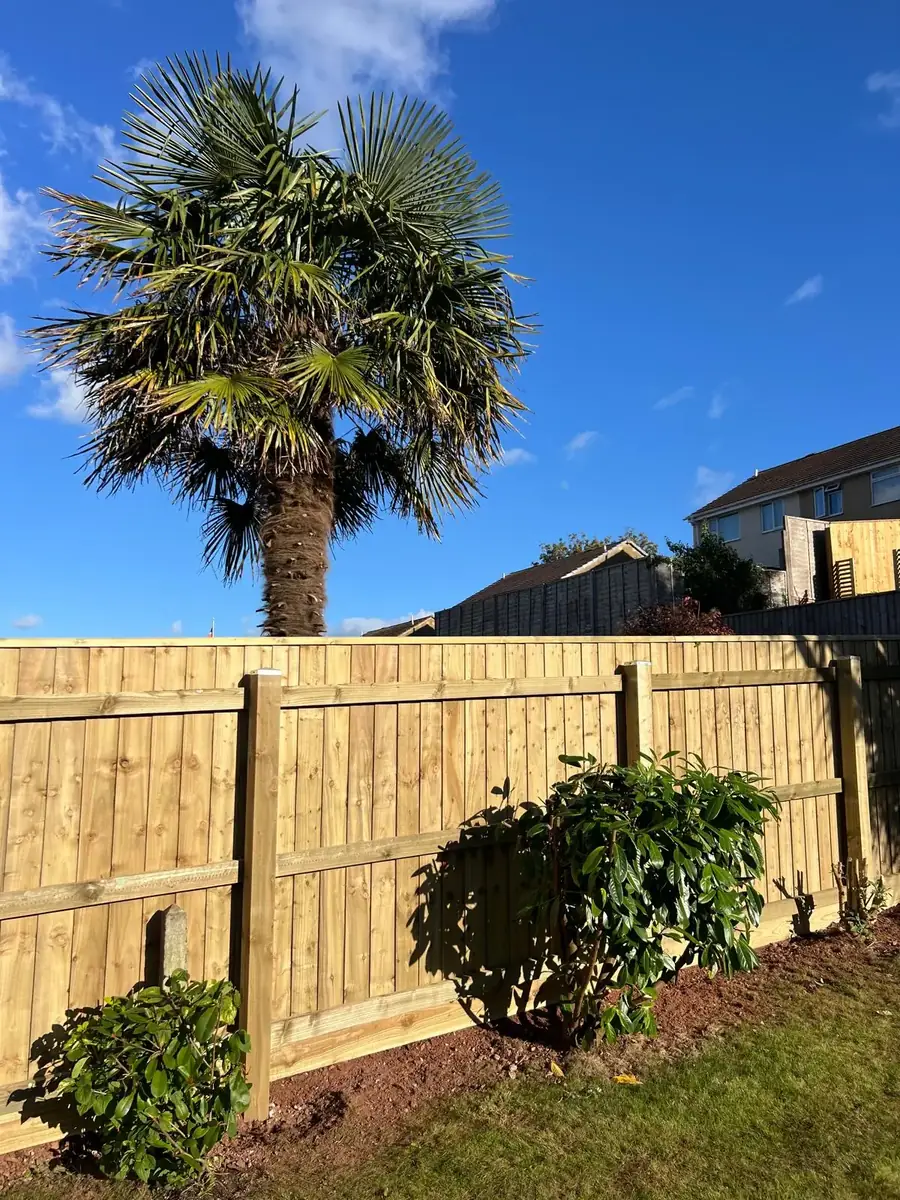
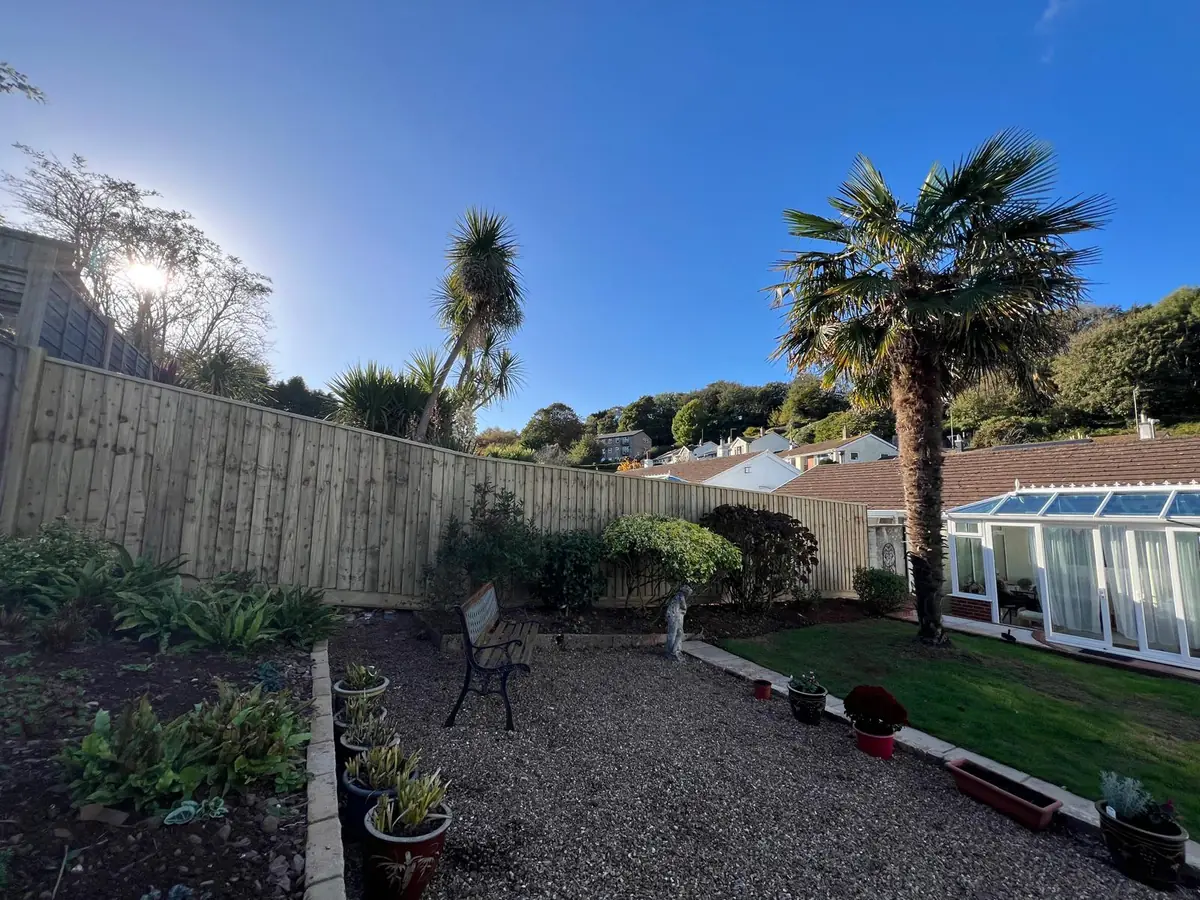 The finished 12m run of 6ft featherboard, seen from the board side of the fence.
The Project: 12m of New 6ft Featherboard in Brixham
The brief was straightforward: a new 6ft featherboard fence along a 12m boundary between two gardens, built to look smart and stand up to everything the Brixham weather can throw at it.
What the project involved:
- Building a 12m run of new 6ft featherboard fencing on a clear boundary
- Setting new timber posts along the line, alongside the original concrete posts
- Fixing horizontal rails between the posts to make a strong frame
- Fitting a timber gravel board along the base
- Building the face from overlapping vertical featherboards, fixed board by board
- Finishing the top with rebated capping
- Fitting galvanised caps to the posts
Because the customer had already removed the old fence, the site was ready for us from the start, so a big thank you to them.
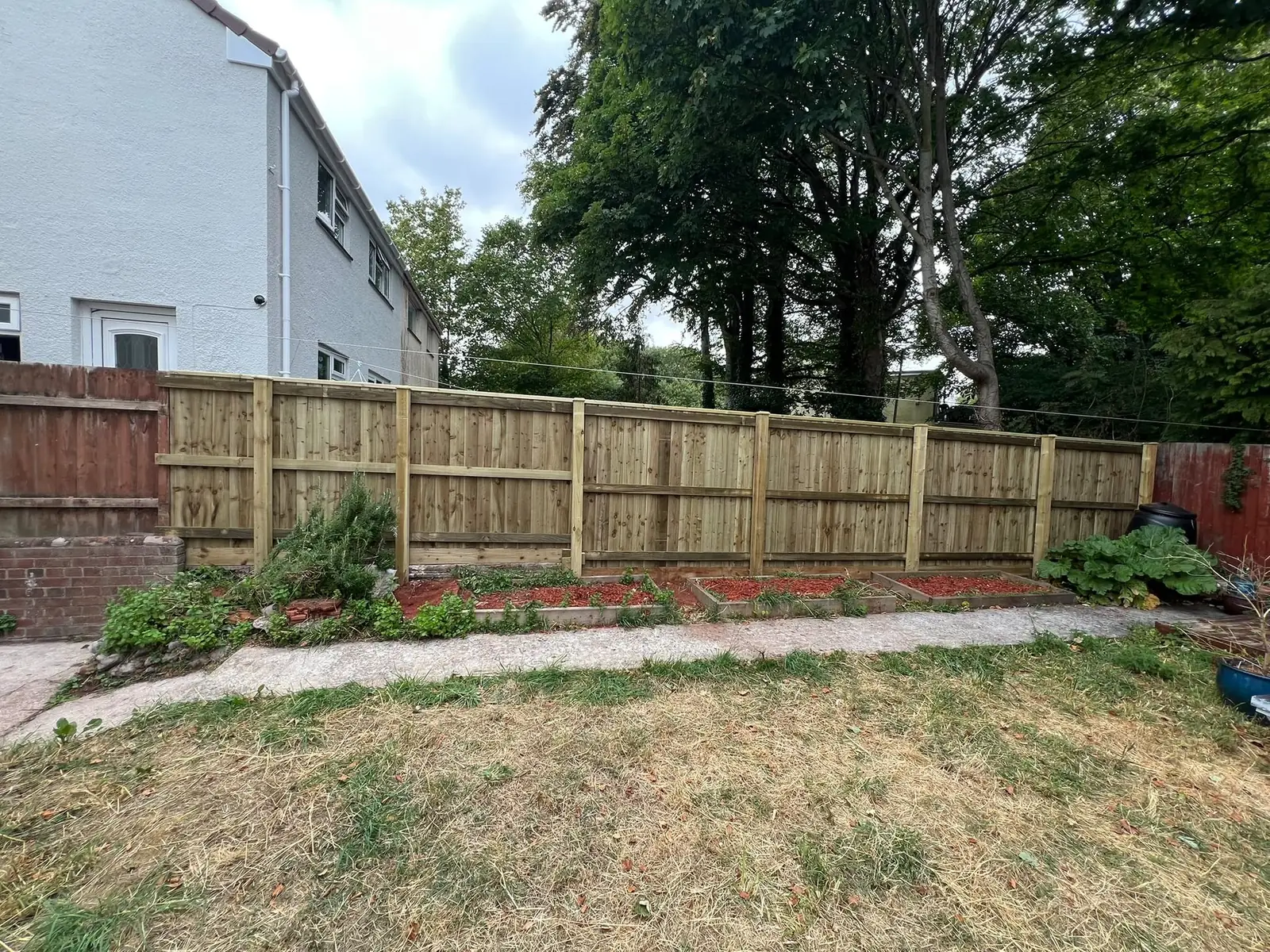
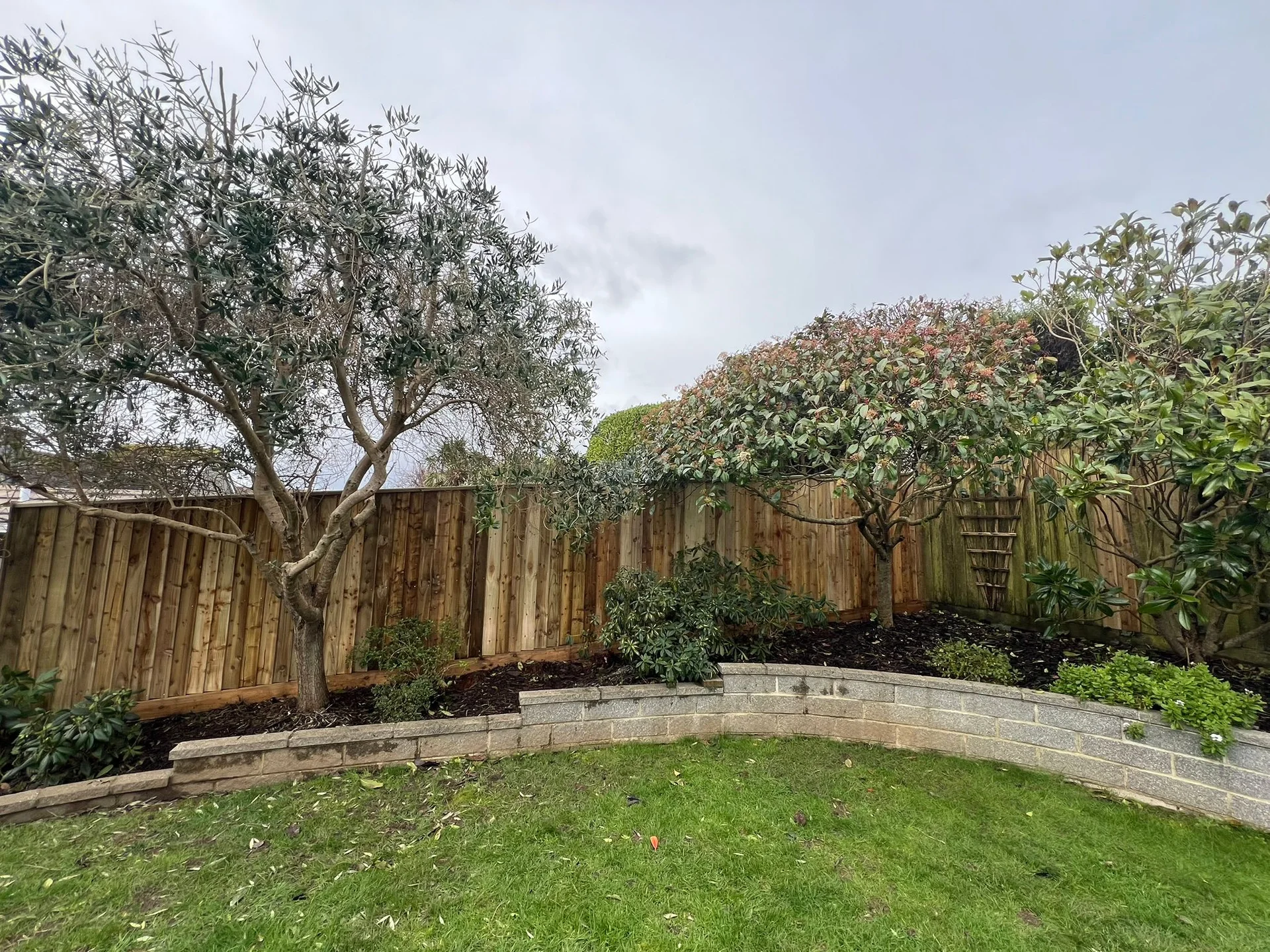
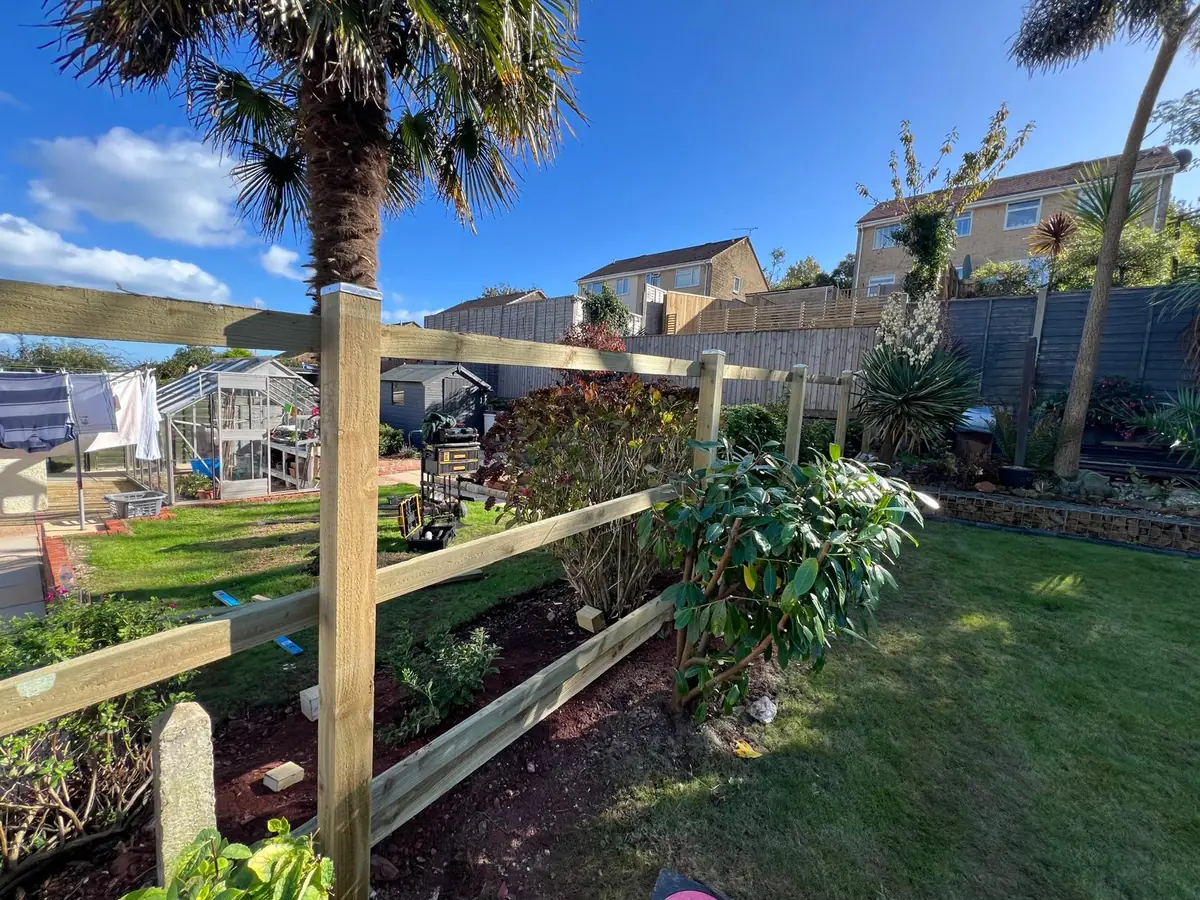 The new frame going in. You can see one of the original concrete boundary posts on the left, left in place at the customer's request.
Why We Left the Old Concrete Posts in Place
When we replace a fence, the old posts usually come out with it. On this job, the customer asked us to leave the original concrete boundary posts in the ground, and we were more than happy to.
It is always advisable to keep those original posts where you can. They show where the boundary has been for years, which can be really helpful if there is ever a question or disagreement about the boundary line in the future. Once old posts are dug out, that record is gone. Leaving them in costs nothing and could save a lot of worry later on.
If you are not sure who looks after which fence, or where your boundary runs, our fencing questions answered guide covers the basics, including checking your title plan or deeds.
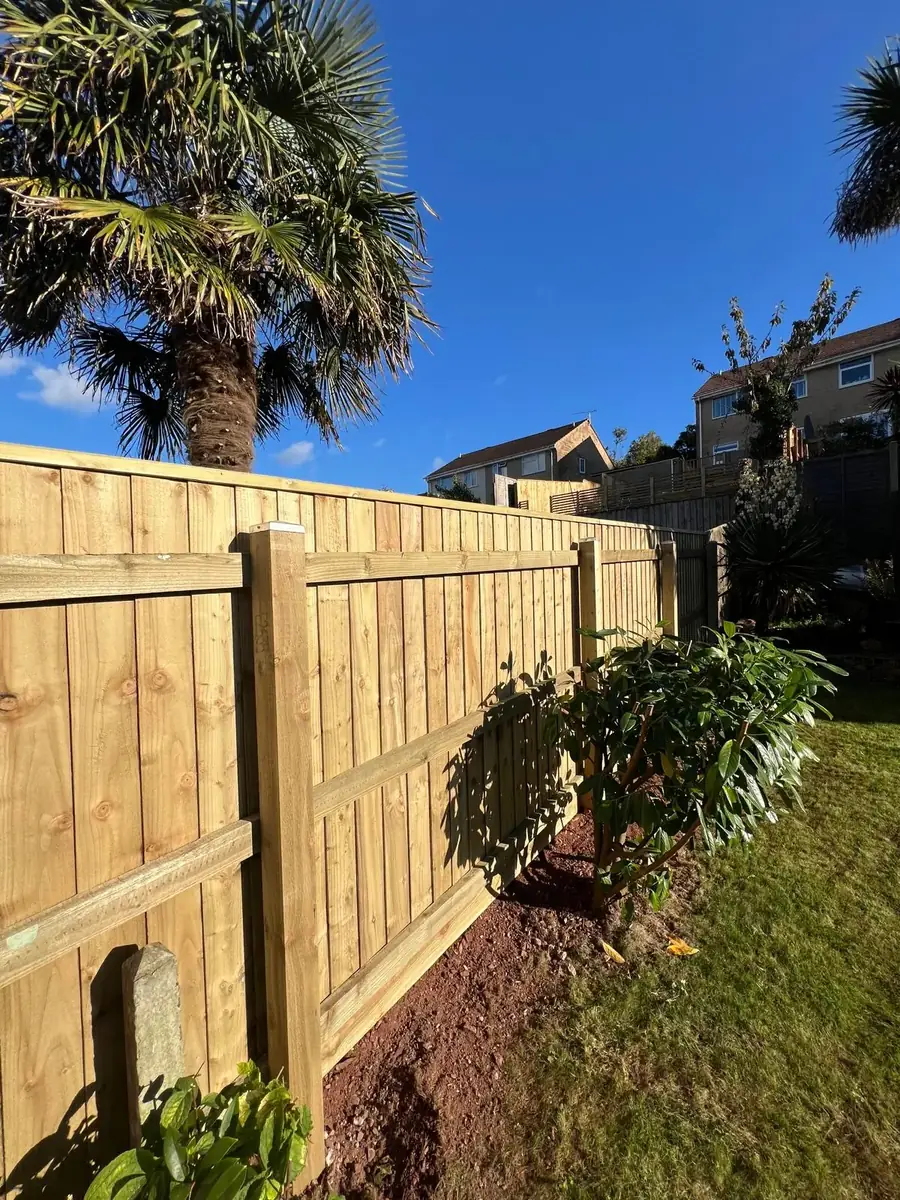 One of the original concrete boundary posts, kept in place in front of the new fence.
Why Featherboard?
Featherboard, also called feather-edge or closeboard fencing, is built on site from vertical boards that are thicker on one edge than the other. Each board overlaps the next, giving you a solid face with no gaps. That means proper privacy in the garden, and a fence that copes well with the wind.
Because it is built board by board, it can follow your boundary exactly, and a single damaged board can be swapped out without touching the rest. For more, have a read of why closeboard fencing is perfect for Torbay gardens.
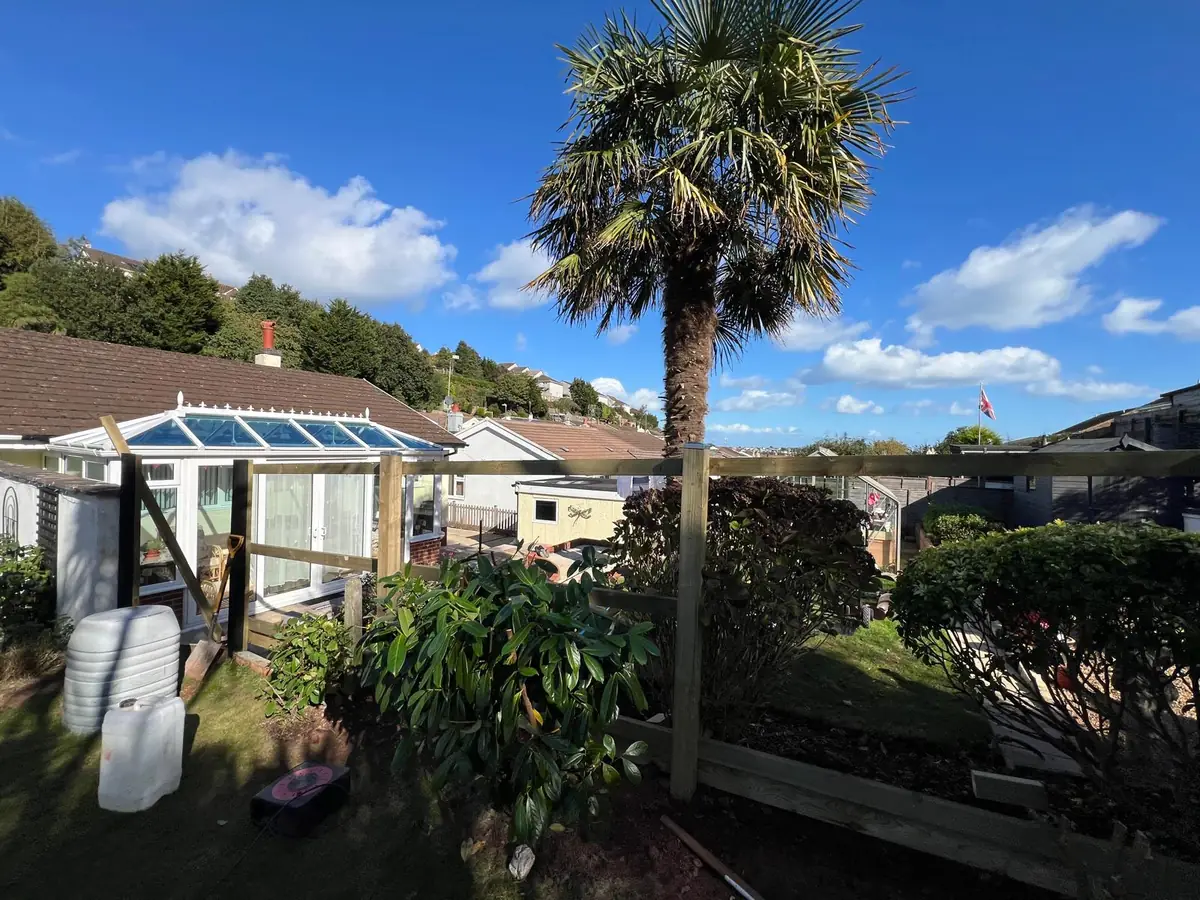 Posts and rails in place along the run, ready for the featherboards.
The Finishing Touches: Rebated Capping and Galvanised Post Caps
The details at the top of a fence make a big difference to how long it lasts.
Rebated capping runs along the top of the boards and covers their end grain. That is the part of the timber that soaks up water most easily, so keeping it covered means rain runs off rather than sinking in. It also gives the fence a neat, finished line. We explain more about how it works in our feather-board fence case study from Torquay.
Galvanised post caps do a similar job for the posts. The top of an uncapped post is another place where water gets in, and the galvanised finish means the caps will not rust in the damp, salty air we get around Brixham and the rest of Torbay. Our guide to protecting your fence before winter explains why capping posts is one of the simplest ways to help a fence last.
Built for Brixham Weather
Brixham sits right on the coast, so fences here have to cope with wind, rain and salt in the air. Along with the capping, we fitted a timber gravel board along the base. It keeps the featherboards up off the soil, and it can be replaced on its own in years to come.
If you live near the sea, our guide to how salt air affects coastal fencing is well worth a read.
The Result
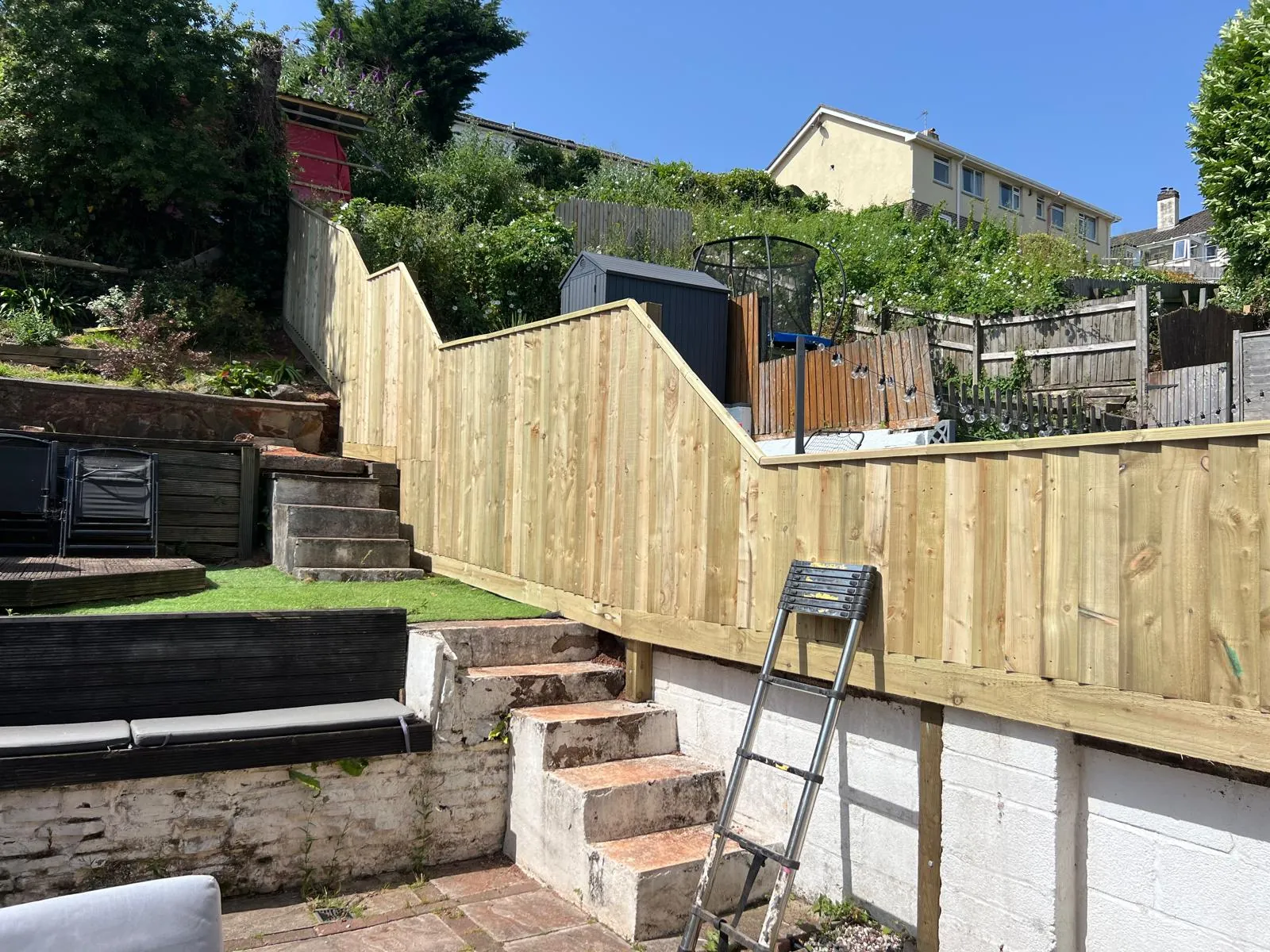
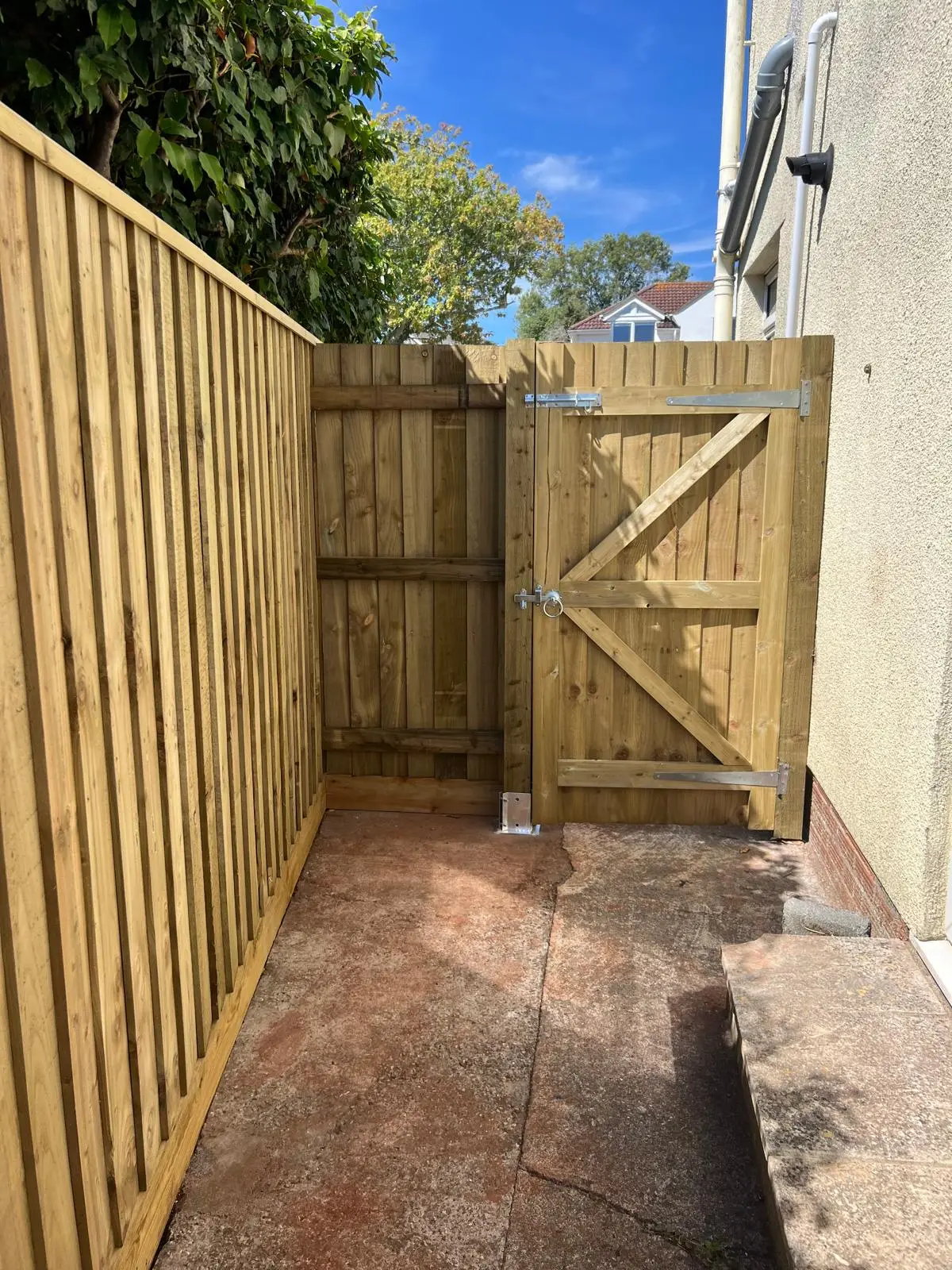
Where there was a bare boundary, there is now 12m of solid, private 6ft featherboard. From one side, it is a clean, even face of boards with the rebated capping running neatly along the top. From the other, you can see the timber posts and rails that give it its strength, with the original concrete posts still standing in front as a record of the boundary line.
At 6ft, which is about 1.8m, it gives the garden real privacy while staying under the 2m height you can usually build to without planning permission. Our guide to choosing the right fence height explains the usual limits.
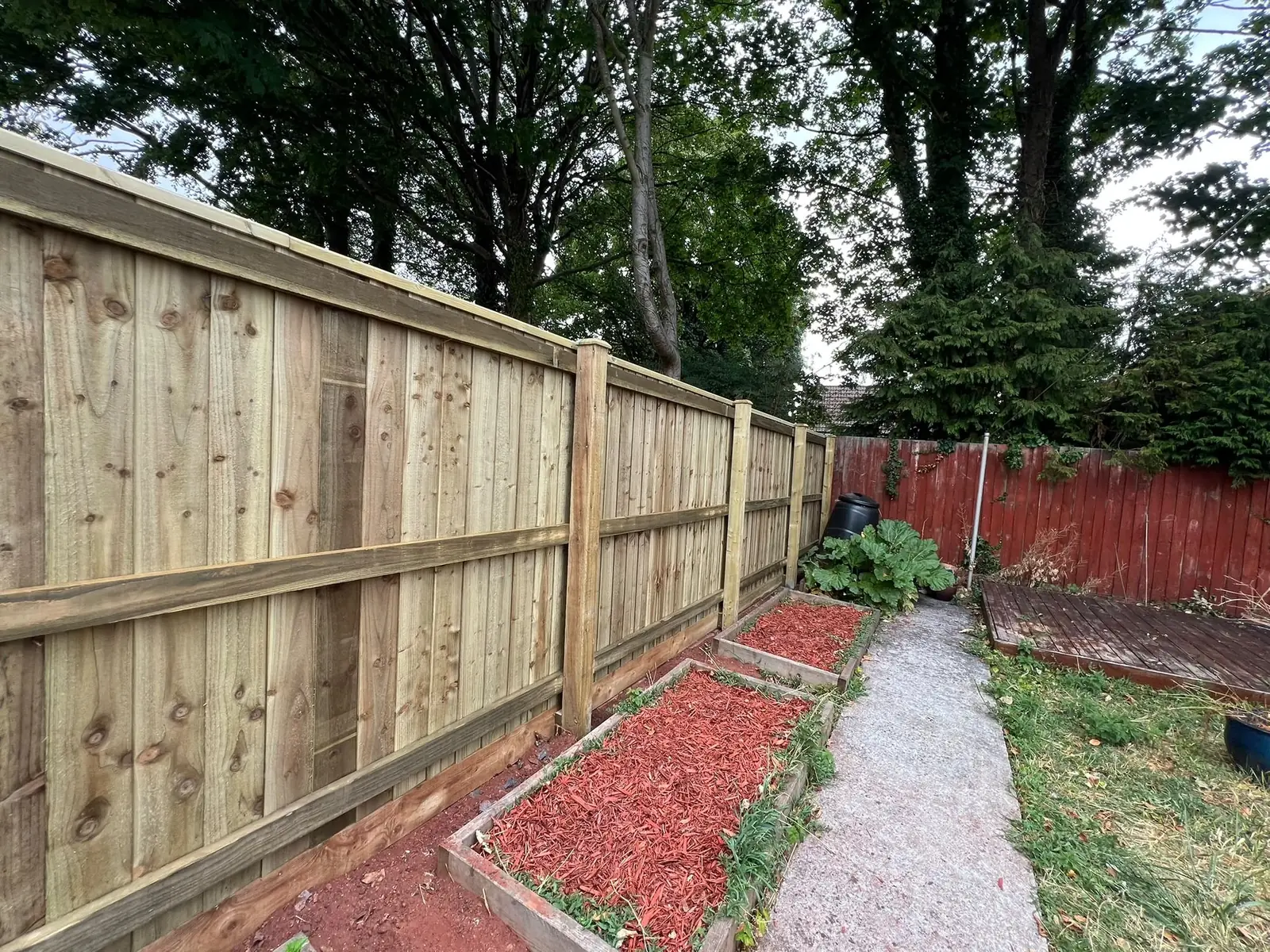
 The rail side of the new fence, with the posts, rails and gravel board on show.
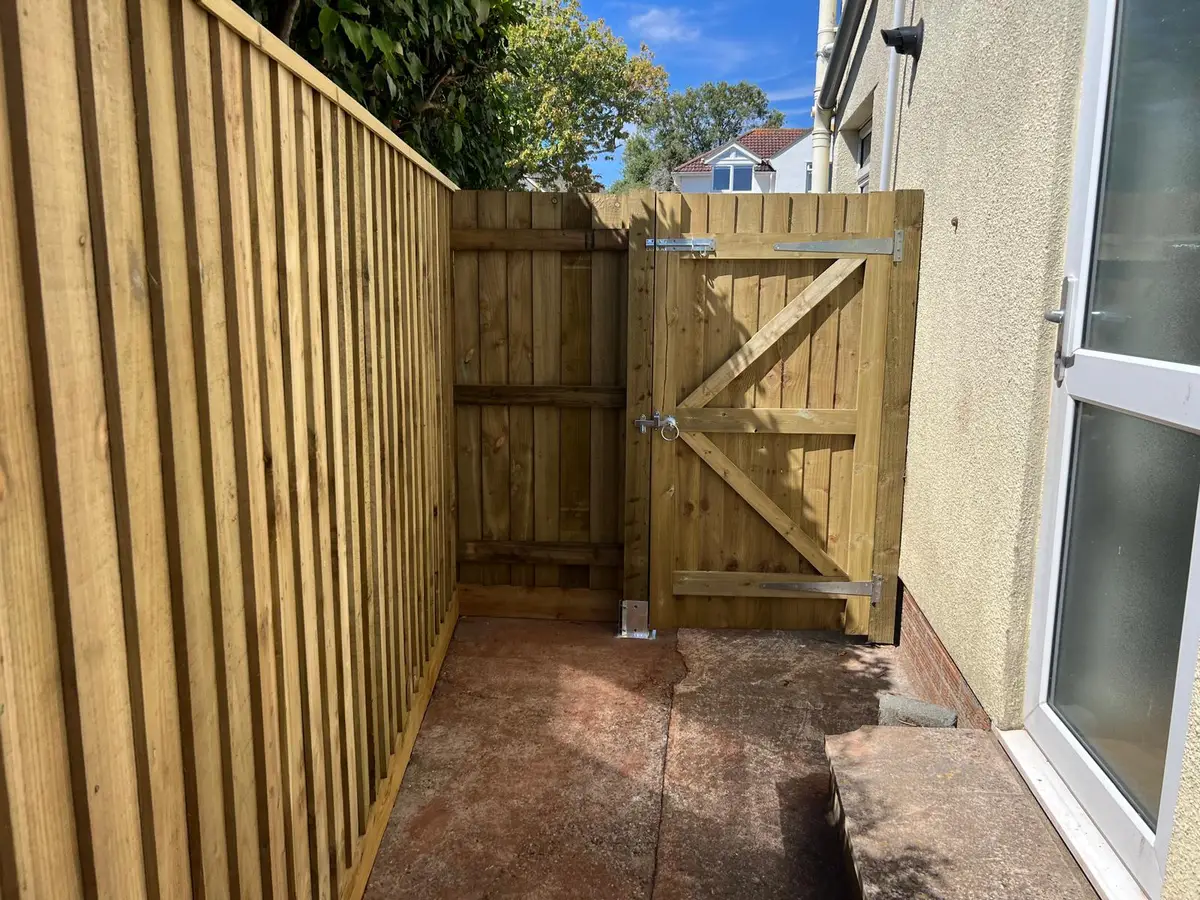
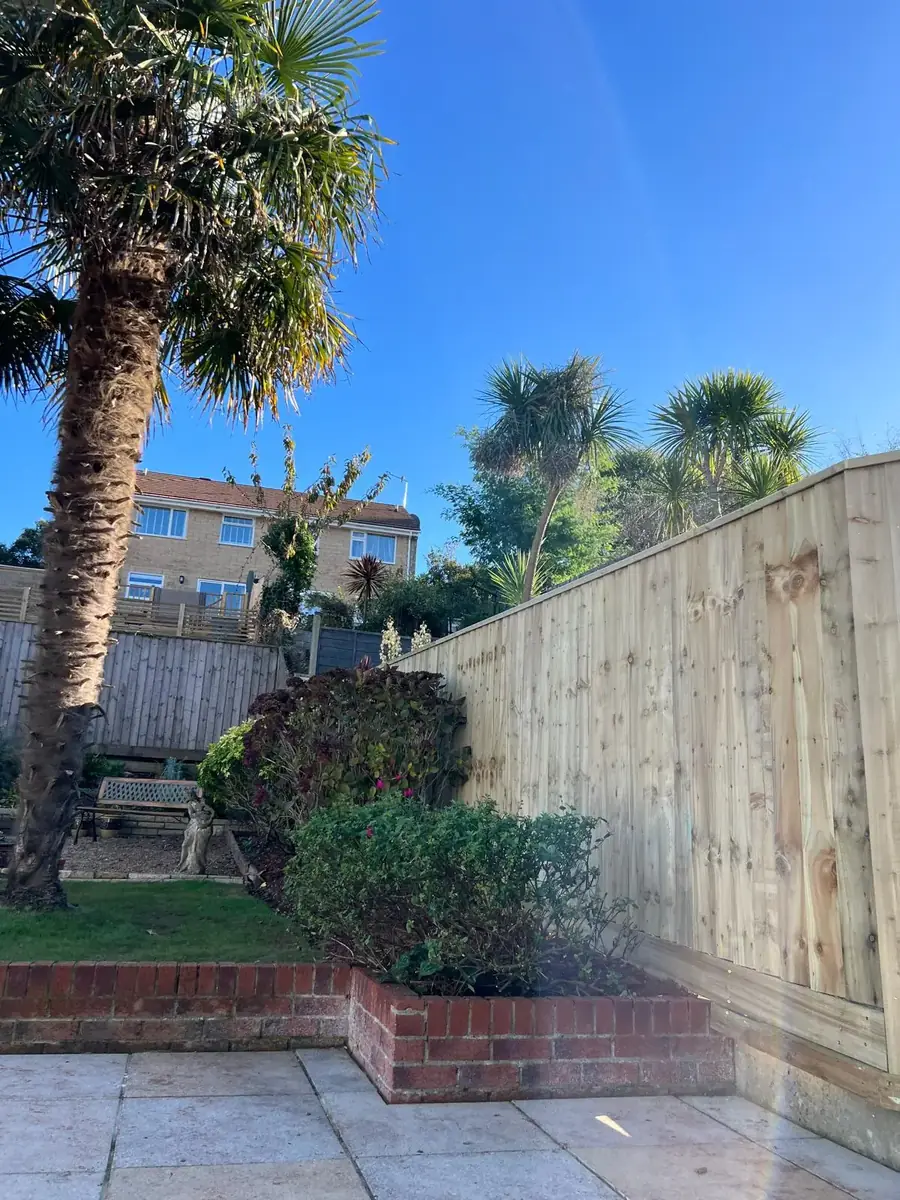 The board side of the finished fence, sitting neatly alongside the patio.
Planning a New Fence in Brixham?
Whether you have already taken your old fence down or need us to do it for you, we would love to help. We cover Brixham, Churston, Galmpton and the rest of Torbay, and we are always happy to talk through options such as keeping original posts in place.
Get in touch for a free site visit and quote, or call Joe on 01803 494348.
You can also see another recent job in our 6ft featherboard fence replacement in Torbay case study, or an earlier garden fencing project in Brixham.